Submerged Container Use
Grow plants in wide, heavy containers without drainage holes, then sink the pots 5–15 cm below the water surface so the root zone stays stable while allowing easy removal for division or maintenance.

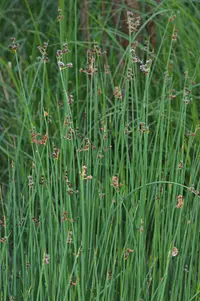
Softstem bulrush (Schoenoplectus tabernaemontani) is a perennial aquatic sedge often found in shallow water, marshes, and along lake or pond edges. It forms dense clumps of smooth, round, upright stems with small, clustered flower heads near the stem tips.
This species provides shelter and food for wildlife and helps stabilize shorelines. It spreads by rhizomes, so it can colonize suitable wet areas quite quickly.
In cultivation, it suits naturalistic ponds, water gardens, and restoration plantings. Understanding how to care for softstem bulrush starts with providing consistently wet conditions, full sun, and nutrient-rich, mucky or silty soil.

Care Difficulty
Moderate Care

Light Preference
Full Sun

Water Requirements
Aquatic

Temperature Preference
Cold Hardy

Hardiness Zone
3–9

Soil Texture
Loamy, Silty, Organic-rich

Soil pH
Slightly acidic (6.5–7.0), Neutral (7.0)

Soil Drainage
Waterlogged tolerant

Fertilization
Minimal (feed rarely)
Scan your plant to receive care tips personalized for your specific plant
Available on iOS and Android
This wetland species grows best in full sun but also tolerates some light shade.
This species is adapted to saturated soils and shallow standing water rather than periodic drying.
This hardy rush tolerates a wide temperature range but grows most actively in mild, warm conditions.
This wetland species requires consistently high humidity to thrive.
This species prefers permanently wet, organic-rich, low-drainage substrates rather than standard potting soil.
This species grows reliably in containers designed to stay waterlogged or shallowly submerged.
This wetland species needs only modest feeding when grown in containers or nutrient-poor ponds.
Light pruning keeps Schoenoplectus tabernaemontani tidy and supports healthy new growth in ponds or wet beds.
This rhizomatous rush is usually divided and transplanted rather than frequently repotted.
Division is the most reliable method for increasing Schoenoplectus tabernaemontani in gardens and managed wetlands.
This species is cold hardy in much of the US and generally needs minimal winter attention outdoors.

Plant Health Check
Not sure what's wrong with your plant? Check your plant's health inside the app.
This species has almost no true leaves; instead, it photosynthesizes mainly through its smooth, cylindrical stems, which can reach 1–3 m tall in favorable wetland conditions.
It spreads through thick, creeping rhizomes that knit together soft, silty substrates, helping to reduce erosion along pond margins, marsh edges, and slow-moving waterways.
This bulrush can grow rooted in shallow water or in saturated soils that periodically dry, which is why it is widely used in constructed wetlands and stormwater ponds for long-term bank stability.

Softstem bulrush is frequently planted in engineered wastewater treatment wetlands because its extensive rhizome network and oxygen-transporting stems support microbial communities that help break down organic pollutants in the root zone.
This species spreads readily by rhizomes and seed, forming dense clumps and colonies. In small ponds or rain gardens, use barriers or containers and remove unwanted shoots regularly to prevent it from overtaking more delicate plants.
Keep your plants happy and healthy with plant identification, disease detection, and easy care guidance.