Stabilize Substrate Depth
Maintain a uniform sand or fine sediment layer of 10–20 cm and periodically top up low areas so rhizomes stay buried while leaf shoots remain exposed, which reduces uprooting and mechanical stress.

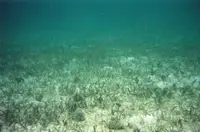
Turtlegrass, Thalassia testudinum, is a slow-growing marine seagrass that forms dense underwater meadows in shallow, clear, warm coastal waters. It is not a typical aquarium or houseplant, but it interests advanced aquarists and restoration projects.
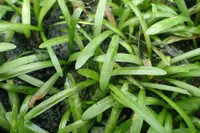
The plant has flat, ribbon-like green leaves that grow from creeping rhizomes anchored in sandy or muddy seabeds. These meadows stabilize sediments and provide critical habitat and food for many marine animals.
Because it needs full saltwater conditions, strong light, and stable water quality, it is challenging to maintain outside its natural habitat. Anyone wanting to learn how to care for turtlegrass should understand that it performs best in conditions that closely mimic natural seagrass beds.

Care Difficulty
Hard Care

Light Preference
Full Sun

Water Requirements
Aquatic

Temperature Preference
Tropical / Frost Sensitive

Hardiness Zone
10–11

Soil Texture
Sandy, Silty, Organic-rich

Soil pH
Neutral (7.0), Slightly alkaline (7.0–7.5)

Soil Drainage
Waterlogged tolerant

Fertilization
Minimal (feed rarely)
Scan your plant to receive care tips personalized for your specific plant
Available on iOS and Android
Thalassia testudinum thrives in clear, shallow marine water with abundant direct sunlight.
This seagrass requires fully submerged, stable marine water rather than intermittent watering.
This species prefers stable, warm tropical to subtropical water temperatures without sudden swings.
This marine species relies on full submersion, so air humidity is not a care factor for turtlegrass.
Thalassia testudinum anchors and feeds from soft coastal sediments rather than terrestrial potting soil.
This species is not realistically suitable for conventional container growing.
Thalassia testudinum is usually not fertilized in natural or well-balanced marine systems, as excess nutrients can harm seagrass beds.
Pruning Thalassia testudinum is rarely required and mainly done in managed aquaria or research settings rather than natural beds.
In practice, growing turtlegrass in containers is uncommon, so care focuses on cautious transplanting in marine restoration or display tanks.
Thalassia testudinum propagation is specialized and usually limited to scientific, conservation, or advanced public aquarium projects.
Thalassia testudinum is a tropical to subtropical seagrass that does not tolerate cold or frost and is unsuitable for outdoor winter conditions in most temperate regions.

Plant Health Check
Not sure what's wrong with your plant? Check your plant's health inside the app.
This species is the primary food source for green sea turtles in many Caribbean and Gulf of Mexico seagrass meadows, shaping turtle foraging behavior and movement patterns.
Its dense, creeping rhizomes and extensive root system bind sandy and muddy sea bottoms, reducing erosion and helping maintain clear, shallow coastal waters.
Large, persistent meadows of this species create structured habitats that support diverse fish, invertebrates, and epiphytic algae, functioning as key nursery grounds for many coastal species.

Large, long-lived meadows of this species preserve environmental history in their buried rhizome and sediment layers, which can store information on past water quality, climate events, and human impacts through trapped pollen, organic matter, and chemical signatures.
This seagrass flowers only under very stable, high‑light, marine conditions. Insufficient light, unstable salinity, physical disturbance, or nutrient imbalance commonly prevent flowering. Even in suitable lagoons and bays, flowering is often irregular and varies year to year.
Keep your plants happy and healthy with plant identification, disease detection, and easy care guidance.