Streamside-style planting
Plant in a shallow, lined trench or near a water feature where excess water can seep away slowly, mimicking a cool stream bank and helping maintain the consistently moist conditions this species prefers.

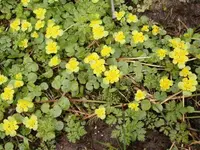
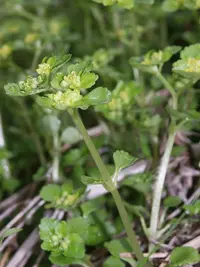
Alternate-leaved Golden-saxifrage (Chrysosplenium alternifolium) is a small, creeping woodland perennial often found along cool, shaded stream banks and damp forest floors. It forms low mats of round, scalloped leaves with bright yellow-green flower clusters that sit close to the foliage. In its natural range across Europe and parts of Asia, it thrives in consistently moist, humus-rich soils under light to moderate shade. This plant prefers stable moisture and cooler conditions, which makes it easier to grow in shaded gardens with damp spots than in dry or hot sites. Gardeners who want to care for Alternate-leaved Golden-saxifrage should focus on keeping the soil moist and protecting it from strong sun and drying winds.

Care Difficulty
Moderate Care

Light Preference
Partial Shade

Water Requirements
Keep Soil Moist

Temperature Preference
Cold Hardy

Hardiness Zone
4–8

Soil Texture
Loamy, Silty, Organic-rich

Soil pH
Strongly acidic (4.5–5.5), Acidic (5.5–6.5)

Soil Drainage
Waterlogged tolerant

Fertilization
Minimal (feed rarely)
Scan your plant to receive care tips personalized for your specific plant
Available on iOS and Android
This moisture-loving woodland perennial prefers cool, low-light conditions that mimic its natural streamside habitat.
This plant needs constantly moist to wet soil and declines quickly if allowed to dry out.
This species is a hardy, cool-climate perennial adapted to shaded, moist woodland conditions.
This moisture-loving woodland plant prefers cool, humid air to thrive.
This plant prefers consistently moist, humus-rich substrates that resemble shaded stream banks.
This species can be grown in containers when moisture and shade are carefully managed.
This woodland perennial usually thrives without fertilizer in rich, moist soil, so feeding Alternate-leaved Golden-saxifrage is optional.
Chrysosplenium alternifolium needs only light pruning to keep the clump tidy and healthy.
This species is usually grown in the ground, so care focuses on gentle transplanting rather than frequent repotting.
Chrysosplenium alternifolium is commonly propagated by division and self-sown seed in moist woodland conditions.
This plant is generally hardy in temperate climates and needs little special winter care in the ground.

Plant Health Check
Not sure what's wrong with your plant? Check your plant's health inside the app.
This species often flowers very early in spring on moist, shaded forest floors, and its presence is considered an indicator of relatively undisturbed, humid woodland habitats in parts of Europe.
The bright yellow-green “flowers” are actually small clusters surrounded by modified upper leaves called bracts, which turn golden and help attract pollinators in low-light forest conditions.
It naturally grows along cool streams, seepages, and springs, anchoring in constantly moist, often calcareous soils, and contributes to stabilizing fine substrates in these microhabitats.

Pollen from this species has been recorded in late-glacial and early Holocene sediment cores in parts of Europe, showing that it colonized moist forest and streamside habitats very soon after the last Ice Age and has long been part of early temperate woodland ecosystems.
This species spreads slowly to moderately by short creeping stems and self-seeding, forming low carpets in moist shade. It usually is not aggressive, but in consistently damp, cool locations it can gradually occupy available bare soil.
Keep your plants happy and healthy with plant identification, disease detection, and easy care guidance.