white marsh marigold Care (Caltha leptosepala)

Also known as: elkslip marshmarigold, Slender-sepal Marsh-marigold
white marsh marigold

About white marsh marigold

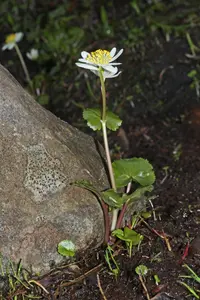
White marsh marigold (Caltha leptosepala) is a small perennial wildflower from wet mountain meadows, stream edges, and bogs in western North America. It forms low clumps of bright green, rounded leaves and produces star-like white flowers with a yellow center in spring to early summer.

This species prefers cool conditions and consistently moist to wet soil, which can make it challenging in hot or dry gardens. It suits water features, bog gardens, or very damp beds where soil does not dry out. Understanding how to care for white marsh marigold starts with matching its natural, cool wet habitat as closely as possible.

Main Plant Requirements

Care Difficulty

Moderate Care

Light Preference

Partial Sun

Water Requirements

Aquatic

Temperature Preference

Cold Hardy

Hardiness Zone

3–8

Soil Texture

Loamy, Silty, Organic-rich

Soil pH

Acidic (5.5–6.5), Slightly acidic (6.5–7.0)

Soil Drainage

Waterlogged tolerant

Fertilization

Minimal (feed rarely)

Get Personalized Care Plan

Scan your plant to receive care tips personalized for your specific plant

Available on iOS and Android

How to Care for the white marsh marigold

This mountain wetland perennial prefers bright, cool light conditions similar to open stream edges and wet meadows.

  • Provide 4–6 hours of sun daily with morning sun and light afternoon shade; in hotter lowland sites, use dappled or filtered light to prevent leaf scorch.
  • In cool, high-elevation or northern climates, it tolerates full sun as long as soil stays saturated; in warmer areas, partial shade supports better flowering.
  • Too much intense afternoon sun can yellow or crisp foliage, while too much shade reduces blooms and produces weak, elongated stems on white marsh marigold.

This species is adapted to saturated soils and shallow water, so it needs consistently wet conditions during the growing season.

  • Keep soil constantly moist to saturated; in naturalistic plantings near ponds or streams, allow water to cover the crown by up to 2–5 cm during spring.
  • Do not let the root zone dry out; wilting, dull leaves, and slowed growth signal underwatering, while foul odor or slimy, collapsing roots indicate waterlogged anaerobic soil without enough oxygen.
  • During peak growth in spring and early summer, maintain high moisture; later in the season it tolerates slightly less water but still prefers damp, never fully dry, soil.

This cold-hardy wetland plant thrives in cool climates with cold winters and mild summers.

  • Optimal growth occurs around 50–65°F (10–18°C), especially in spring when soil is cool and moist; flowering is strongest under these conditions.
  • The plant tolerates winter cold down to about 0°F (−18°C) or lower when crowns are insulated by soil, snow, or water, and natural populations often experience freezing conditions.
  • Heat above 80°F (27°C), especially combined with warm, stagnant water, can stress plants, shorten bloom time, and may lead to summer dormancy, so cooler sites are preferred.

Humidity is not a key factor for this cold-climate wetland species if water needs are met at the roots.

This species needs constantly wet, organic-rich soil that mimics a bog or stream margin.

  • Use a heavy loam rich in decomposed organic matter such as leaf mold or well-rotted compost.
  • Maintain a saturated or very poorly drained profile; the crown can sit just above shallow standing water.
  • Aim for slightly acidic to neutral pH, roughly 5.5–7.0, which supports nutrient uptake and root health.
  • For Caltha leptosepala in garden beds, deepen and loosen the top 20–30 cm, then mix in high organic content to hold moisture.

This species can be grown in containers if the pot is managed like a small bog or water garden.

  • Choose a wide, heavy container that resists tipping when filled with saturated soil and water.
  • Use few or no drainage holes and stand the pot in an outer tray or basin so water can remain above soil level.
  • Pack soil firmly to limit large air pockets, which helps keep the root zone consistently submerged or saturated for white marsh marigold.

This alpine wetland perennial generally needs little feeding when grown in rich, consistently moist soil.

  • In naturalistic or bog beds, rely mainly on organic matter such as compost worked into the soil once each spring for balanced nutrition.
  • For container-grown white marsh marigold, use a dilute balanced NPK fertilizer at 1/2 strength every 4–6 weeks in spring–early summer.
  • Avoid heavy feeding; excess nutrients reduce flowering and can stress roots in saturated soils.
  • Stop fertilizing in late summer and do not feed during winter dormancy.

Caltha leptosepala benefits from light, targeted pruning to keep clumps tidy and flowering well.

  • In late spring to early summer, remove spent flower stems at the base to direct energy into root and foliage health.
  • Trim yellowing or damaged leaves with clean, sharp scissors or hand pruners to reduce disease risk.
  • Thin congested growth lightly after flowering to improve air flow and maintain a compact, attractive clump.
  • Avoid hard cutting back during active bloom; leave healthy foliage to support photosynthesis.

This marsh perennial is more often transplanted within garden beds or bog edges than repotted in containers.

  • Transplant in early spring or early fall when temperatures are mild and soil is cool but workable.
  • Move clumps when growth becomes crowded, flowering declines, or plants creep beyond their allotted space.
  • Lift the root mass with ample surrounding soil, keep roots constantly moist, and replant at the same depth in saturated ground.
  • Water thoroughly after transplanting, then shade temporarily if needed to reduce stress until strong new growth appears.

Caltha leptosepala is most reliably propagated by division, with seed used mainly for larger, naturalistic plantings.

  • Divide mature clumps in early spring or early fall, when soil is moist and temperatures moderate.
  • Lift plants carefully, then separate sections so each division carries several buds and healthy roots.
  • Replant divisions immediately into wet, humus-rich soil, keeping crowns at the original depth and watering well.
  • Sow fresh seed in cool, consistently damp conditions outdoors; germination often improves after natural winter chilling.

This species is cold hardy in much of its native range and usually needs minimal winter care in the ground.

  • Dormant crowns tolerate freezing, provided soil stays moist and does not dry out completely.
  • In very exposed sites, apply a light mulch layer after the ground cools to buffer temperature swings around the roots.
  • Container-grown plants in cold regions can be sunk into the ground or moved to a cold, frost-free area to protect roots.

Care Tips

Seasonal Water Level

In outdoor ponds or bog gardens, allow slightly higher water levels in late spring during active growth, then lower them by 2–5 cm in late summer to reduce rot risk as foliage begins to decline.

Cool Root Zone

Mulch lightly with clean, coarse gravel or small river stones around the crown in ground or container setups to keep the root zone cool and stable without smothering the plant.

Stream Edge Placement

If sited along an artificial stream or water feature, position plants just above the main flow so roots contact saturated soil while crowns are not constantly submerged, which helps prevent crown rot.

Divide In Dormancy

Divide crowded clumps in late summer or early fall once foliage yellows, lifting and splitting the root mass into sections with at least 2–3 buds each, then replanting immediately into saturated soil.

Alpine Container Setup

For container culture, use a wide, shallow pot without drainage holes placed inside a watertight outer container, maintaining 2–4 cm of water around the inner pot to simulate a bog while simplifying caring for white marsh marigold in small spaces.

Common Pests and Diseases

Leaf spot

This disease causes irregular brown or black spots on leaves, often with yellow halos, and can appear after long periods of cool, wet weather in its marshy habitat.

Solution

Remove and discard affected leaves, avoid splashing water on foliage, and improve spacing so air can move through the clump; in persistently wet garden settings, a copper-based fungicide labeled for ornamentals can be used preventively at the start of the wet season as part of broader Caltha leptosepala care.

Powdery mildew

This disease produces a white, powdery film on upper leaf surfaces, which may lead to distorted or stunted foliage in overcrowded or poorly ventilated plantings.

Solution

Thin and divide clumps to increase airflow, remove heavily affected leaves, and if needed apply a sulfur or potassium bicarbonate product labeled for powdery mildew, making sure leaves dry between treatments whenever site conditions allow.

Aphids

These insects cluster on young stems and undersides of leaves, sucking sap and causing curling, distortion, and sticky honeydew that can attract sooty mold.

Solution

Rinse off colonies with a firm stream of water, pinch off or cut heavily infested shoots, and introduce or encourage natural predators such as lady beetles; in severe cases, use insecticidal soap or a light horticultural oil, applied in the early morning and repeated as needed.

Leaf-mining fly larvae

This pest creates winding, pale tunnels inside the leaves as larvae feed between leaf surfaces, giving foliage a blotchy or scribbled appearance.

Solution

Remove and dispose of mined leaves before larvae complete development, and avoid using broad-spectrum insecticides that harm natural predators; floating row covers can protect young plantings in garden situations where leaf miners are persistent.

Interesting Facts

High-altitude specialist

This species is native to the high mountains of western North America and commonly grows near late-melting snowbanks and alpine streams, tolerating cold, short growing seasons that many other flowering plants cannot survive.

Snowmelt timing strategy

It often flowers right after snowmelt, using the abundant moisture and reduced competition at that moment, which allows it to complete much of its life cycle before other alpine plants fully leaf out.

Buttercup family features

The flowers are actually petal-less; what look like white petals are enlarged sepals, a typical trait in the buttercup family Ranunculaceae, which helps the plant attract early-season pollinators in harsh alpine environments.

Botan icon

Did you know?

This plant is often used by botanists and ecologists as an indicator of moist, intact alpine and subalpine wetland habitats, so its presence in a site can signal relatively undisturbed high-elevation hydrology and water quality.

FAQs about white marsh marigold

The flowers provide early-season nectar and pollen, so they are valuable to native bees, small solitary bees, and some early-flying flies. Butterflies visit less often, but the plant still supports local pollinator activity in cool, wet habitats.

Grow Healthy Plants with Botan Care

Keep your plants happy and healthy with plant identification, disease detection, and easy care guidance.

Botan plant care app — identify plants on mobile

Explore More Plants