Alkaline-friendly site
Before planting, mix a small amount of garden lime into neutral or slightly acidic soil to raise pH toward 7.0–7.5, which improves vigor and winter hardiness for this hybrid lavender.

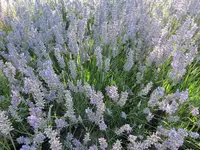
Lavandula x intermedia 'Provence' is a woody, evergreen subshrub grown mainly for its fragrant purple flower spikes and narrow, silvery-green foliage. It forms rounded, bushy clumps that bring a soft, textured look to borders and containers.
This hybrid lavender type originates from Mediterranean climates, so it is adapted to dry, sunny, and windy conditions. Once established, it tolerates drought and poor, rocky soils, which makes it relatively easy to maintain.
Good airflow, strong light, and well-drained soil are the key factors in how to care for Lavender, especially in humid or cooler regions.

Care Difficulty
Moderate Care

Light Preference
Full Sun

Water Requirements
Low Water

Temperature Preference
Cool Climate

Hardiness Zone
5–9

Soil Texture
Sandy, Loamy, Rocky

Soil pH
Slightly alkaline (7.0–7.5), Alkaline (7.5–8.5)

Soil Drainage
Well-drained

Fertilization
Minimal (feed rarely)
Scan your plant to receive care tips personalized for your specific plant
Available on iOS and Android
This cultivar thrives in open, sunny positions with more sun than shade for dense, fragrant growth.
Lavandula x intermedia 'Provence' prefers infrequent, deep watering and consistently dry surface soil between waterings.
This plant grows best in warm, temperate conditions with good air movement and avoids extremes of cold or heat.
This plant prefers relatively dry air and usually does not need extra humidity adjustment indoors.
This plant thrives in lean, very free-draining, slightly alkaline soil that prevents waterlogging around the roots.
This species is well suited to container growing when the pot is chosen to support its woody, drought-tolerant root system.
This lavender hybrid needs only light feeding to maintain compact growth and abundant bloom.
Thoughtful pruning keeps Lavandula x intermedia 'Provence' dense, long-lived, and floriferous.
Container-grown plants and young outdoor specimens benefit from occasional transplanting to maintain healthy roots.
New plants are most reliable from semi-ripe cuttings rather than seed.
This hybrid is moderately cold hardy but benefits from simple winter preparation in colder regions.

Plant Health Check
Not sure what's wrong with your plant? Check your plant's health inside the app.
This plant is a sterile hybrid between Lavandula angustifolia and Lavandula latifolia, selected because its flower spikes release a particularly strong, camphor-poor scent compared with many other lavandin cultivars.
It produces notably long, tapered flower spikes on upright stems, which makes it a preferred choice in commercial fields where dense, uniform rows of purple flowers are needed for visual impact and harvesting efficiency.
In commercial production it is grown specifically for its relatively high essential oil yield per plant, even though the oil is typically considered less fine than that of true lavender, Lavandula angustifolia.

This cultivar became widely planted in large-scale lavender landscapes in Provence and similar regions because its tall, uniform growth habit and heavy flowering create the classic purple bands often seen in photographs, even though it is not the traditional species historically associated with old Provençal lavender fields.
Poor flowering usually comes from too much nitrogen, excessive shade, or pruning at the wrong time. Avoid high-nitrogen fertilizer, ensure at least several hours of direct sun, and prune lightly right after flowering, not in late fall or winter.
Keep your plants happy and healthy with plant identification, disease detection, and easy care guidance.