Dead Man's Fingers Care (Codium fragile)

Also known as: Sponge Weed, Spaghetti Grass, Oyster Thief
Dead Man's Fingers

About Dead Man's Fingers

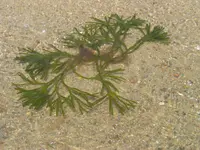
Dead Man's Fingers (Codium fragile) is a marine green alga, not a true land plant. It forms soft, finger-like branches that feel spongy and flexible. The clumps often attach to rocks, shells, or man-made structures in shallow coastal waters.

This species is native to parts of the Pacific but has spread widely to North Atlantic coasts, where it can become invasive. It grows quickly and tolerates a wide range of water conditions, which makes it resilient but also means it can outcompete native seaweeds.

For aquarists and marine hobbyists who care for Dead Man's Fingers in tanks, it usually prefers stable, clean, well-lit, and moderately nutrient-rich saltwater conditions.

Main Plant Requirements

Care Difficulty

Hard Care

Light Preference

Full Sun

Water Requirements

Aquatic

Temperature Preference

Cool Climate

Hardiness Zone

Unknown

Soil Texture

Sandy, Rocky, Organic-rich

Soil pH

Slightly acidic (6.5–7.0), Neutral (7.0)

Soil Drainage

Waterlogged tolerant

Fertilization

Minimal (feed rarely)

Get Personalized Care Plan

Scan your plant to receive care tips personalized for your specific plant

Available on iOS and Android

How to Care for the Dead Man's Fingers

Codium fragile, often called Dead Man's Fingers, needs bright conditions that mimic shallow coastal waters rather than harsh, drying sun.

  • Provide 4–6 hours of bright, indirect light or gentle morning sun; avoid strong midday sun that can bleach and dry the fronds.
  • Allow light partial shade during the hottest part of the day, especially in summer, to prevent tissue damage and rapid desiccation.
  • In winter, ensure an open, unobstructed exposure so daylength and light intensity remain high enough to maintain dense, firm growth.

Codium fragile requires consistently moist, saline conditions that resemble its native intertidal habitat rather than typical garden watering cycles.

  • Keep the surrounding water or substrate constantly moist; do not allow it to dry out, as limp, dull fronds indicate underwatering stress.
  • Ensure excellent drainage and water movement so the plant is not stagnant; foul odor or mushy, darkening tissue suggests oxygen-poor, overwatered conditions.
  • In warmer seasons, monitor more frequently since evaporation increases; in cooler months, reduce additions slightly but never let the environment become fresh or fully dry.

This marine alga grows best in cool to mild conditions and is sensitive to strong temperature extremes on either end.

  • Aim for 50–68°F (10–20°C) for steady growth, which reflects typical temperate coastal water temperatures where it naturally thrives.
  • Tolerates short drops to about 41°F (5°C) in cold seasons but extended exposure near freezing can damage or kill the tissue, especially when exposed at low tide.
  • Above 72–75°F (22–24°C), growth slows and stress increases; sustained temperatures over 77°F (25°C) combined with strong sun can cause bleaching and decay.

This marine alga requires constant water immersion rather than air humidity and shows stress quickly if exposed to drying air.

  • Target 100% humidity by keeping fronds fully submerged in clean seawater or a marine aquarium system.
  • Avoid exposure to dry indoor air or strong air movement, which rapidly desiccates Dead Man's Fingers tissue.
  • Signs of humidity and moisture stress include limp, fading, or crisping fronds and patchy discoloration where tissue has dried.

Codium fragile is a marine macroalga that anchors to hard surfaces and does not use soil in the terrestrial sense.

  • Provide attachment to rock, shell, or artificial reef material rather than any soil or potting mix, as the plant absorbs nutrients directly from seawater.
  • Maintain flowing, well-oxygenated seawater with stable salinity around 30–35 ppt, which replaces the role of drainage and aeration in land-plant substrates.
  • Avoid placing holdfasts in sand or mud where smothering and low oxygen can damage tissue and encourage decay.
  • If grown in a tank, use a bare-bottom or coarse rock substrate so detritus can be removed easily and water chemistry stays stable.

This species can be grown in containers only as part of a marine aquarium or outdoor seawater system.

  • Use a stable, low, wide tank so buoyant fronds do not tip or dislodge rocks as they grow and trap current.
  • Secure holdfasts to heavy rock or fixed structures to prevent the alga from floating into filter intakes or pumps.
  • Select container materials that resist salt corrosion and help maintain thermal stability, such as thick glass or marine-grade acrylic.

Codium fragile grown in aquaria or marine systems has modest nutrient needs and responds to light, balanced feeding.

  • Use a diluted balanced NPK liquid formulated for marine plants or reef-safe systems at 1⁄4–1⁄2 strength.
  • Apply during the main growth period every 2–4 weeks, monitoring water quality and algae competition.
  • Avoid fertilizing in winter or low-light periods unless growth is active, then reduce frequency and strength.
  • Prioritize stable salinity and micronutrients; excessive nitrogen or phosphate causes nuisance algal blooms around Dead Man's Fingers.

Pruning Codium fragile is mainly used to control size, remove weak tissue, and maintain healthy thalli in culture or aquaria.

  • Trim during active growth, usually spring to early fall, when recovery is fastest.
  • Remove decaying, pale, or mechanically damaged branches, along with overcrowded interior segments.
  • Use clean scissors or aquascaping shears and make smooth cuts to limit tissue tearing.
  • Thoughtful thinning improves light penetration, maintains compact shape, and encourages fresh branching growth.

Codium fragile is usually attached to rock or substrate rather than grown in pots, so focus on careful transplanting.

  • Transplant when growth slows, tissue lifts from its base, or the colony outgrows its rock or aquarium layout.
  • Best timing is during stable warm-season conditions, when light and water quality support fast recovery.
  • Typical intervals are 1–3 years, mainly to refresh rockwork, improve water movement, or adjust spacing.
  • Gently detach and re-anchor fronds to new rock using soft ties or mesh; minimize air exposure and sudden changes in light or salinity to reduce stress.

Codium fragile is commonly propagated in culture by simple vegetative cuttings rather than by spores or sexual reproduction.

  • Take healthy tip cuttings during warm, high-light months when growth is strongest.
  • Cut 3–8 cm segments from firm, green branches, discarding any pale or mushy tissue.
  • Secure pieces loosely to rock or mesh in well-lit, gently moving seawater with stable salinity.
  • Maintain clean water and moderate nutrients; cuttings usually attach and extend new branches once healed.

Outdoor Codium fragile in temperate marine environments tolerates cool water but is sensitive to hard frost and freezing air exposure.

  • For cultured or aquarium stock, maintain stable cool-season water temperatures, avoiding rapid drops below the species’ local norm.
  • If grown in outdoor tanks, move containers indoors or into sheltered spaces before freezing conditions.
  • Limit handling during the coldest months to avoid mechanical damage to chilled, more fragile tissue.

Care Tips

Use Flow-Through Tanks

Maintain Codium fragments in a flow-through or frequently exchanged seawater system to prevent stagnation, reduce biofilm buildup, and keep nutrient and temperature conditions stable for reliable growth.

Optimize Attachment Substrates

Secure thalli to rough, inert substrates such as PVC grids, oyster shells, or textured rocks using soft ties or mesh, then allow natural holdfasts to develop before reducing mechanical support.

Control Epiphytic Growth

Manually remove filamentous algae and encrusting organisms from the thallus surface with a soft brush or gloved fingers, since heavy epiphyte loads reduce light penetration and slow Codium fragile growth.

Rotate Culture Racks

Rotate baskets, ropes, or racks weekly within the tank or raceway so that all clumps receive similar flow and light conditions, which helps keep colony shape even and prevents shaded areas from deteriorating.

Quarantine New Stock

Hold new Codium material in a separate tank for 1–2 weeks to monitor for invasive hitchhikers, grazing invertebrates, or disease symptoms, which supports more stable systems when growing Dead Man's Fingers.

Common Pests and Diseases

Epiphytic algae overgrowth

Symptoms include a fuzzy coating or filamentous green, brown, or red algae growing on the surface of the thallus, often shading and smothering it. This condition reduces light reaching Codium tissues and can slow growth or cause localized dieback.

Solution

Limit nutrient enrichment in the water by avoiding fertilizer runoff or excess fish feeding in mixed systems, and maintain moderate water movement so the thallus stays clean. Gently rub or rinse the fronds in clean seawater to remove overgrowth, and, if possible, relocate specimens to slightly higher flow and brighter, stable light to discourage persistent epiphytes as part of general Codium fragile plant care.

Grazing amphipods

This pest consists of small crustaceans that hide within the sponge-like branches and chew on tissue, leaving pitted or shredded areas. Damage can appear as irregular bite marks and thinning of branch tips over time.

Solution

Inspect the thallus regularly and swish it in a separate container of clean seawater to dislodge amphipods mechanically. Reduce hiding places by trimming decayed tissue, and, in marine display systems, encourage natural predators such as small wrasses or gobies that pick at amphipods while maintaining stable salinity and temperature to support Codium recovery.

Herbivorous gastropods

These insects are not involved; instead, marine snails and sea slugs feed on softer branch tips, causing rounded bite marks and tip loss. This grazing can slow growth and deform the characteristic finger-like shape.

Solution

Manually remove visible snails or slugs from the thallus and surrounding hard surfaces during routine maintenance. If kept in aquaria, adjust stocking to avoid heavy herbivore loads, provide alternative macroalgae for grazers, and keep Codium in a section with moderate flow where small herbivores are easier to spot and remove.

Bacterial tissue decay

This disease starts as soft, dark, waterlogged patches on the branches that can quickly turn mushy and detach. Symptoms include a foul smell and rapid spread in stressed or injured tissue, especially after physical damage or sudden water-quality changes.

Solution

Promptly trim away all soft, discolored areas with clean scissors and discard the affected tissue, then rinse remaining parts in clean, well-oxygenated seawater. Stabilize water parameters (salinity, temperature, and nitrogen levels), increase gentle circulation around the plant, and avoid further mechanical damage so healthy tissue can seal and regrow.

Interesting Facts

Distinct spongy texture

This alga has a unique, soft, spongy, and slightly rubbery thallus with a central siphonous core, meaning the body is essentially one giant cell with many nuclei rather than many small cells joined together.

Highly invasive seaweed

Native to the northwest Pacific, this species has become invasive in parts of the North Atlantic and Mediterranean, where it can outcompete native seaweeds and alter coastal ecosystems.

Attachment by disc holdfast

The plant anchors itself to rocks and shells using a small disc-shaped holdfast, which allows storm-torn fragments to reattach and start new colonies, contributing to its spread.

Botan icon

Did you know?

In some invaded regions, this species has been observed growing on living shellfish such as blue mussels and oysters, adding drag and weight that can reduce shellfish survival and complicate aquaculture operations.

FAQs about Dead Man's Fingers

Growth is moderate under stable marine conditions. In a well-lit, nutrient-rich saltwater system, new branches form over several months, with noticeable thickening each season. Poor water quality, strong herbivory, or unstable salinity slows development significantly.

Grow Healthy Plants with Botan Care

Keep your plants happy and healthy with plant identification, disease detection, and easy care guidance.

Botan plant care app — identify plants on mobile

Explore More Plants