Black Plum Care (Vitex doniana)

Black Plum

About Black Plum

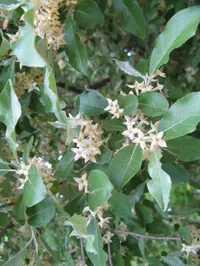
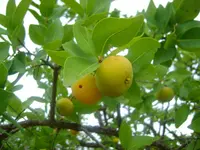
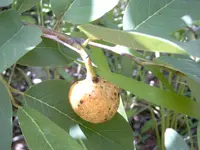
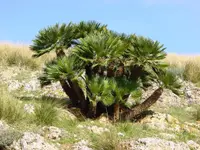
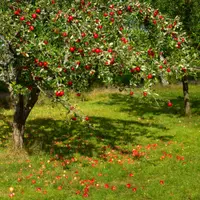
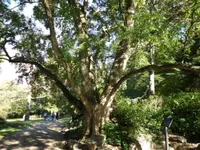
Black plum, Vitex doniana, is a fruiting tree from tropical Africa, valued for its edible dark fruits and multipurpose uses. It typically grows with a rounded crown, sturdy branches, and simple green leaves that create light shade.

In its native range it occurs in woodland, savanna, and farmland edges, showing good tolerance to heat and seasonal dry periods. The species is generally considered hardy and adaptable, but it establishes best in warm climates with full sun, moderate moisture, and well-drained soil.

For home growers, understanding local climate and soil conditions is important to know how to care for Black Plum successfully over the long term.

Main Plant Requirements

Care Difficulty

Moderate Care

Light Preference

Full Sun

Water Requirements

Moderate Water

Temperature Preference

Tropical / Frost Sensitive

Hardiness Zone

11–12

Soil Texture

Sandy, Loamy, Organic-rich

Soil pH

Acidic (5.5–6.5), Slightly acidic (6.5–7.0)

Soil Drainage

Moist but well-drained

Fertilization

Minimal (feed rarely)

Get Personalized Care Plan

Scan your plant to receive care tips personalized for your specific plant

Available on iOS and Android

How to Care for the Black Plum

This tropical fruit tree needs strong light to form dense foliage and good flowering.

  • Provide 6–8 hours of direct sun daily; full sun is ideal in open ground, especially morning sun with some light afternoon shade in very hot areas.
  • Young Black Plum trees benefit from partial shade during their first 1–2 years to reduce leaf scorch and transplant stress.
  • Leggy growth, sparse flowering, and small leaves indicate insufficient light, while bleached, crispy leaf edges suggest excessive intense afternoon sun.

This species prefers consistently moist but not waterlogged soil once established in the ground.

  • Irrigate deeply when the top 3–5 cm of soil feel dry, allowing water to soak 20–30 cm deep, then let excess drain away fully.
  • During the first 1–2 years, increase watering frequency in hot, dry periods and reduce it in cool or rainy seasons to avoid standing water around the roots.
  • Yellowing, soft leaves and sour-smelling soil suggest overwatering, while drooping, dry, brittle leaves and soil pulling from the ground surface indicate underwatering in Vitex doniana.

This warm-climate tree grows best where temperatures stay mild to hot year-round.

  • Aim for 70–90°F (21–32°C) during active growth, as these conditions support strong vegetative growth and fruiting.
  • The tree is very sensitive to frost; growth slows below 60°F (16°C), and damage can occur if exposed to temperatures near or below 32°F (0°C).
  • Short heat waves up to about 100°F (38°C) are tolerated if soil moisture is maintained, but prolonged extreme heat with dry soil can cause leaf scorch and tip dieback.

This species prefers moderately humid air but adapts to a wide range of outdoor conditions when caring for Black Plum.

  • Target 40–60% humidity, which is typical of many warm outdoor climates where this tree is grown.
  • Leaves that curl at the edges, feel dry, or show brown tips can indicate extended exposure to very dry air.
  • In hot, arid sites, group plants near other vegetation or a water source to raise local humidity slightly.

Vitex doniana grows best in well-structured mineral soils that drain freely yet hold some moisture.

  • Use a loamy or sandy-loam soil with moderate organic matter to balance drainage and moisture retention.
  • Aim for slightly acidic to neutral pH around 6.0–7.5, avoiding strongly acidic or saline soils that restrict root function.
  • In heavier soils, mix in coarse sand and well-rotted compost to improve aeration and reduce waterlogging risk.
  • Avoid compacted or poorly drained ground where water stands after rain, as this encourages root rot and weak growth.

This tree can be grown in containers when young or kept dwarf, but it needs careful pot management for stability and root health.

  • Choose a deep, heavy container that resists tipping as the woody canopy becomes taller and more top-heavy.
  • Select thick-walled clay or concrete pots if extra weight and faster moisture loss are needed in wet climates.
  • Raise the container slightly off the ground so drainage holes stay clear and excess water leaves the root zone quickly.

Vitex doniana benefits from light, thoughtful feeding rather than heavy fertilization.

  • Use a balanced NPK granular or slow-release fertilizer, or well-rotted compost, on established trees at the start of the growing season.
  • Apply at low to moderate rates, following label directions and staying on the weaker end for nutrient-poor sites.
  • Feed once at the beginning of the rainy or active growth period; avoid multiple applications for mature trees.
  • Reduce or skip fertilization in the dry or cool dormant period to prevent soft, weak growth in Black Plum.

Vitex doniana responds well to structured pruning that maintains a strong framework and healthy canopy.

  • Carry out main pruning at the end of the dry season or just before active growth begins.
  • Remove dead, diseased, crossing, or inward-growing branches to improve light penetration and airflow.
  • Shorten or thin crowded shoots to manage height and spread while keeping a balanced crown shape.
  • Use clean, sharp bypass pruners or a pruning saw, making smooth cuts just outside the branch collar.

This species is usually field-grown, so care focuses on transplanting young Vitex doniana plants successfully.

  • Transplant during the rainy or early growing season when soil moisture is stable and heat is moderate.
  • Move nursery stock once roots fill the container or circle the pot base, typically every 1–2 years for young plants.
  • Water the plant well before and after transplanting, and keep as much of the original root ball intact as possible.
  • Set at the same soil depth in a wide planting hole, backfill gently, firm the soil, then mulch to reduce shock and moisture loss.

Vitex doniana is commonly propagated from seeds and semi-hardwood cuttings under warm conditions.

  • Collect ripe seeds, clean, then sow in a free-draining mix; light scarification or brief soaking can improve germination.
  • Sow or stick cuttings in late spring to early summer when temperatures are consistently warm.
  • For cuttings, use 10–15 cm semi-hardwood pieces, apply rooting hormone, and place in a moist, well-aerated medium.
  • Keep propagation trays in bright, indirect light with steady warmth and high humidity until roots or seedlings establish.

Vitex doniana is a tropical to subtropical tree that does poorly in prolonged cold or frost and needs protection in cooler climates.

  • In regions below about 40–45°F, grow in a container and shift indoors or to a heated greenhouse before first frost.
  • Use 5–8 cm of organic mulch around the root zone in marginal climates to buffer soil temperature and conserve moisture.
  • Avoid heavy pruning or high-nitrogen feeding late in the season, as tender new growth is more vulnerable to cold damage.

Care Tips

Stem training

Select 1 strong central shoot early and stake it upright so the plant forms a single sturdy trunk rather than multiple weak stems, which makes harvesting and structural management easier as it matures.

Wind management

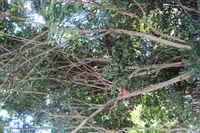
In the first 2–3 years, use windbreak netting or plant the tree on the leeward side of a building or hedge to reduce wind stress on young branches that are still flexible and prone to snapping.

Deep mulching ring

Maintain a 5–8 cm thick organic mulch ring that extends slightly beyond the drip line, keeping it 5–8 cm away from the trunk, to stabilize soil moisture, reduce compaction, and encourage a broad, deep root system.

Nutrient cycling

Prune small leafy branches at the start of the warm rainy season and compost or chip them to return as surface mulch, which recycles nutrients and supports long-term soil fertility when growing Black Plum.

Fruit load thinning

In years of heavy flowering and fruit set, remove some of the small developing fruits by hand so that the remaining fruits size up better and the branches are not overloaded and at risk of breakage.

Common Pests and Diseases

Leaf-feeding caterpillars

This pest chews irregular holes in leaves and can skeletonize young foliage on trees and shrubs like Vitex doniana. Symptoms include ragged leaf edges, frass (droppings), and visible larvae on leaves or twigs.

Solution

Hand-pick and remove caterpillars during early morning or evening, and prune heavily infested shoots if practical. For larger trees or recurring issues, apply a targeted Bacillus thuringiensis (Bt) spray to young foliage, following label directions, and encourage natural predators by avoiding broad-spectrum insecticides.

Scale insects

These insects attach to stems and leaf undersides, sucking sap and causing yellowing, reduced vigor, and sticky honeydew that can lead to sooty mold. This pest often appears as small, dome-shaped or flat bumps that do not move when touched.

Solution

Prune out and destroy heavily infested twigs, and wipe accessible stems with a cloth dipped in a mild soapy water solution to remove scales and honeydew. For larger trees, use horticultural oil sprays during the crawler stage and improve tree vigor through proper watering and mulching as part of overall Vitex doniana care.

Leaf spot

This disease causes small to medium brown or dark spots on leaves, sometimes with yellow halos and premature leaf drop in humid or rainy periods. Symptoms include thinning foliage, especially in the inner canopy where air circulation is poor.

Solution

Remove and dispose of fallen, infected leaves to reduce the source of spores, and avoid overhead watering that keeps foliage wet. Improve airflow by light pruning of dense branches, and if leaf spot recurs severely, apply a copper-based or other labeled fungicide at the start of wet seasons according to local guidelines.

Powdery mildew

This disease produces a white to gray powdery coating on young leaves, shoots, and sometimes flower clusters, often in warm, dry conditions with high humidity at night. Symptoms include distorted new growth and reduced flowering or fruiting on affected branches.

Solution

Increase air circulation by thinning crowded branches and avoid excessive nitrogen fertilization that drives very soft, susceptible growth. At early signs, treat with a sulfur-based or potassium bicarbonate fungicide labeled for ornamental trees and ensure regular monitoring of new foliage for renewed symptoms.

Interesting Facts

Edible multi-use species

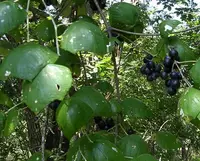
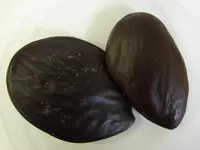
Vitex doniana produces sweet, dark purple drupes eaten fresh or processed, and its young leaves are widely used as a leafy vegetable in parts of West and Central Africa. The species is also valued for fuelwood and timber, making it an important multipurpose tree in agroforestry systems.

Wildlife food resource

The fruits of this species are a significant seasonal food source for birds, bats, and small mammals in savanna and woodland habitats. By attracting frugivores that disperse its seeds, the tree helps maintain local biodiversity and natural regeneration dynamics.

Tolerance to dry seasons

Vitex doniana is native to savanna and dry forest zones and shows good adaptation to pronounced dry seasons. It can withstand seasonal water stress better than many other fruit trees, which supports efforts in growing Black Plum in low-input farming systems.

Botan icon

Did you know?

In several African regions, traditional authorities and local communities have established protection rules or taboos around Vitex doniana trees, reflecting the species’ high cultural and subsistence value and helping conserve wild populations even in heavily used landscapes.

FAQs about Black Plum

Lack of flowering often comes from insufficient maturity, heavy shade, or nutrient imbalance, especially excess nitrogen. Ensure full sun, avoid overfertilizing with high-n products, and allow several years for young trees to reach fruiting age.

Grow Healthy Plants with Botan Care

Keep your plants happy and healthy with plant identification, disease detection, and easy care guidance.

Botan plant care app — identify plants on mobile

Explore More Plants