Tray water management
Use a shallow tray with 0.5–1 in of rain, RO, or distilled water and let it almost dry out before refilling to avoid stagnation and root suffocation in this semi-aquatic carnivore.

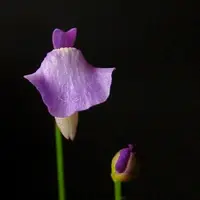
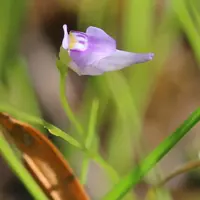
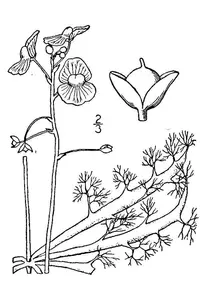
Tiny bladderwort, Utricularia lateriflora, is a small carnivorous plant that naturally grows in wet, nutrient-poor habitats such as sandy bogs and seeps. It forms fine, grassy foliage and sends up delicate stalks with small violet to pale purple flowers that appear light and airy. Below the surface, tiny bladder-like traps capture microscopic aquatic or soil-dwelling organisms, supplying nutrients where the soil is poor. This species stays compact and is often grown in pots, trays, or terrariums. It prefers consistently moist conditions, low-mineral substrates, and gentle light, which makes it sensitive to drying out or hard water. Once its needs are understood, it is relatively straightforward to care for Tiny Bladderwort.

Care Difficulty
Hard Care

Light Preference
Partial Shade

Water Requirements
Aquatic

Temperature Preference
Warm Climate

Hardiness Zone
10–11

Soil Texture
Peaty, Organic-rich

Soil pH
Strongly acidic (4.5–5.5)

Soil Drainage
Waterlogged tolerant

Fertilization
Minimal (feed rarely)
Scan your plant to receive care tips personalized for your specific plant
Available on iOS and Android
This small carnivorous species prefers bright, gentle light rather than intense direct sun.
This species needs consistently wet conditions that mimic shallow, nutrient-poor bog water.
This plant prefers mild, frost-free conditions with only moderate temperature swings.
This species prefers consistently moist air and benefits from moderate to high humidity.
This carnivorous species requires a very low-nutrient, airy, and constantly moist substrate rather than typical potting soil.
This species is very suitable for container growing, especially in shallow trays or small pots.
This small carnivorous species gains most nutrients from prey, so added fertilizer for Tiny Bladderwort should be minimal and carefully controlled.
Pruning Utricularia lateriflora is light and mainly hygienic, aimed at keeping foliage fresh and flowering strong.
This species prefers stable conditions, so repotting should be infrequent and done with minimal disturbance to the delicate root and stolon system.
Multiplying this species is usually done by division or separating stolon pieces rather than by seed for home growers.
This warm-temperate to subtropical species dislikes freezing conditions and benefits from sheltered winter care, especially in containers.

Plant Health Check
Not sure what's wrong with your plant? Check your plant's health inside the app.
This species is a very small terrestrial bladderwort native to southeastern Australia and Tasmania, where it grows in seasonally wet, nutrient-poor sandy or peaty soils rather than in open water like many other Utricularia species.
Its name lateriflora refers to its flowers arising on short stalks from the sides of the main flowering stem, rather than all at the tip, giving the inflorescence a distinctly zigzag or side-branching appearance.
The plant’s carnivorous bladders are tiny, lens-shaped structures buried in the soil or substrate, where they capture minute soil microfauna using rapid vacuum-powered suction triggered by sensitive hairs at the trap entrance.

In parts of its native range, this species often forms delicate, low, flowering carpets in open, winter-wet heathland or sedgeland communities, becoming conspicuous only during its mass flowering season while remaining almost invisible as a fine green mat for the rest of the year.
Poor flowering often comes from insufficient light, water that is too mineral-rich, or a nutrient-rich substrate. This carnivorous species prefers soft, low-mineral water and lean media. Stable, bright conditions typically restore regular blooming.
Keep your plants happy and healthy with plant identification, disease detection, and easy care guidance.