Frequent Tip Replanting
Trim and replant healthy stem tips in the substrate every 1–2 weeks to maintain a dense foreground mat and prevent the stand from becoming leggy and sparse.

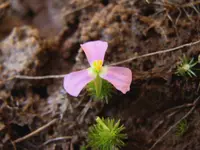
Stream bogmoss (Mayaca fluviatilis) is a fine-textured aquatic plant often used in freshwater aquariums and paludariums. It forms soft, bright green, grass-like stems that create dense underwater thickets.
In nature it occurs in slow-moving streams, wetlands, and shallow waters across parts of the Americas, where it grows submerged in clean, soft, slightly acidic water. Its delicate stems and fast growth make it attractive but somewhat demanding, as it responds quickly to poor water quality or unstable conditions.
Light to moderate water flow, consistent lighting, and nutrient availability strongly influence how to care for Stream bogmoss and keep it compact and healthy.

Care Difficulty
Moderate Care

Light Preference
Partial Sun

Water Requirements
Aquatic

Temperature Preference
Tropical / Frost Sensitive

Hardiness Zone
10–11

Soil Texture
Sandy, Loamy, Organic-rich

Soil pH
Acidic (5.5–6.5)

Soil Drainage
Waterlogged tolerant

Fertilization
Light (every 4–6 weeks)
Scan your plant to receive care tips personalized for your specific plant
Available on iOS and Android
Mayaca fluviatilis needs soft, stable light to maintain dense, healthy foliage.
This species is an aquatic plant that depends on constantly wet conditions rather than periodic watering.
This plant requires mild, stable warmth for best growth and reacts poorly to sudden temperature swings.
This aquatic species needs very high, stable humidity around its foliage to prevent desiccation.
Mayaca fluviatilis is usually grown submerged and anchors best in soft, fine, nutrient-poor substrates.
This species adapts well to container culture in aquariums or tubs when stability and root space are considered.
Mayaca fluviatilis benefits from light, consistent nutrition rather than heavy feeding.
Pruning helps Mayaca fluviatilis stay dense, healthy, and well-shaped in aquatic setups.
This aquatic species is usually transplanted rather than traditionally repotted, focusing on managing clumps and substrate.
Mayaca fluviatilis is commonly propagated by stem cuttings in aquarium conditions.
This tropical aquatic plant is not frost hardy and needs stable warm conditions in winter.

Plant Health Check
Not sure what's wrong with your plant? Check your plant's health inside the app.
This species can live fully submerged in water or as a semi-emergent plant in very wet, boggy margins, adjusting its form and density depending on water depth and flow.
Its leaves are extremely slender and arranged densely around the stem, creating a soft, bottlebrush-like appearance that maximizes surface area for gas exchange in low-oxygen, slow-moving waters.
In the wild, this plant is often associated with soft, slightly acidic waters, and its presence can indicate relatively low mineral content and minimal pollution in streams and wetlands.

In its native habitats from the southeastern United States through parts of Central and South America, this plant can form extensive underwater meadows that act as nursery areas for small fish and aquatic invertebrates, increasing local biodiversity in otherwise monotonous sandy or muddy streambeds.
Growth is relatively fast under stable, nutrient-rich, well-lit aquatic conditions, often producing several centimeters of new stem per month. Rate slows sharply if light, carbon dioxide, or dissolved nutrients are limited, or if water quality fluctuates.
Keep your plants happy and healthy with plant identification, disease detection, and easy care guidance.