BotaN logo

Calla lily Care (Zantedeschia aethiopica)

Also known as: calla lily, Pig Lily, Common Arum Lily, Zantedeschia aethiopica 'green goddess', Green Goddess, Green Cala Lily, Common Arum, Calla, Egyption Lily, Florist's Calla, Garden Calla, Jack-In-The-Pulpit, Lily Of The Nile, Lily-Of-The-Nile, White Arum, White Arum Lily, White Calla

About Calla lily

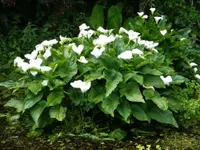
Calla lily, Zantedeschia aethiopica, is a rhizomatous perennial often grown as a flowering pot plant or in outdoor beds and borders. It produces upright, glossy green leaves and elegant funnel-shaped spathes around a central yellow spadix. In the wild, it naturally occurs in moist habitats of southern Africa, often near streams or wetlands. The plant is generally considered moderately easy to grow when its need for consistent moisture and rich, well-drained soil is met. It tolerates cooler conditions better than many tropical ornamentals but dislikes drought and waterlogged roots. Understanding how to care for Calla lily starts with providing bright, indirect light and avoiding extreme temperature fluctuations.

Main Plant Requirements

Care Difficulty

Moderate Care

Light Preference

Partial Sun

Water Requirements

Aquatic

Temperature Preference

Warm Climate

Hardiness Zone

8–10

Soil Texture

Loamy, Silty, Organic-rich

Soil pH

Acidic (5.5–6.5), Slightly acidic (6.5–7.0)

Soil Drainage

Waterlogged tolerant

Fertilization

Moderate (every 2–4 weeks)

Get Personalized Care Plan

Scan your plant to receive care tips personalized for your specific plant

Available on iOS and Android

How to Care for the Calla lily

This species prefers bright conditions that balance strong light with protection from intense midday sun.

  • Outdoors, provide 4–6 hours of morning sun with afternoon shade; in hotter regions, use dappled or filtered light under trees or shade cloth.
  • In cooler, coastal, or mild climates, Zantedeschia aethiopica tolerates near full sun if soil stays consistently moist and roots do not dry out.
  • Insufficient light causes weak, floppy stems and fewer blooms, while harsh afternoon sun can scorch leaves, so adjust exposure seasonally as the sun angle changes.

This moisture-loving plant needs consistently damp soil without staying waterlogged.

  • Keep soil evenly moist so the top 2–3 cm never dries completely; in active growth, water when the surface just begins to dull rather than fully drying.
  • Use rich, well-drained but moisture-retentive soil; avoid standing water that causes root rot, yet do not allow deep cracks or shrinking away from the edges.
  • In hot summer, increase watering and monitor for drooping or crisp leaf edges, while yellowing, soft stems and a sour smell indicate excessive moisture.

This species grows best in mild, frost-free climates with steady, moderate temperatures.

  • Optimal growth occurs around 60–75°F (16–24°C), with consistent moisture supporting stronger foliage and reliable flowering.
  • Plants tolerate brief dips to about 40°F (4°C), but repeated exposure near this level can damage leaves and slow growth, especially in wet soil.
  • Avoid extremes above 86°F (30°C) or any frost; prolonged heat can cause leaf scorch, while freezing conditions may kill crowns unless protected or mulched.

This species prefers moderately moist air but usually adapts to typical indoor humidity.

  • Aim for 40–60% humidity to reduce leaf browning and keep spathes longer-lasting on Calla lily.
  • Tolerates short periods of drier air, but tips may scorch and edges may curl if humidity stays below 30%.
  • Increase humidity by grouping plants, placing pots on pebble trays with water below the pot base, or using a small room humidifier nearby.

Zantedeschia aethiopica grows best in moist, well-aerated, organic-rich soil that does not stay waterlogged.

  • Use a loamy mix with roughly 2 parts peat or coco coir, 1 part compost, and 1 part perlite or coarse sand for structure and aeration.
  • Keep drainage moderate to fast; soil should feel evenly moist but never soupy, especially around the rhizomes to prevent rot.
  • Aim for slightly acidic to neutral pH (6.0–7.0), avoiding highly alkaline mixes that can limit nutrient uptake and weaken growth.
  • Improve drainage in heavy garden soil by incorporating coarse sand and fine bark chips before planting, avoiding compacted or clay-heavy sites.

This species suits container growing when the pot supports its moisture needs and vigorous root system.

  • Choose a deep, heavy container to give thick rhizomes room to expand and to prevent tall flower stalks from tipping the pot.
  • Select a pot material that matches watering habits, using terracotta for faster drying or glazed plastic/ceramic to retain more moisture.
  • Ensure large, unobstructed drainage holes and place the pot on risers so excess water can escape freely instead of pooling under the base.

Nutrient-rich soil supports strong growth and flowering in this Calla lily, especially in containers.

  • Use a balanced, water-soluble fertilizer (around 10-10-10 or 20-20-20) diluted to 1/2 strength for container plants.
  • Feed every 2–3 weeks during active growth and flowering in spring and summer.
  • In beds, mix in well-rotted compost or a slow-release balanced fertilizer at planting time.
  • Reduce or stop feeding in late fall and winter when growth slows or plants go dormant.

Light pruning keeps Zantedeschia aethiopica tidy and supports healthy new growth.

  • In the growing season, cut off spent flower stalks at the base to encourage further blooming and prevent seed set.
  • Remove yellowing, diseased, or damaged leaves with clean, sharp scissors or hand pruners.
  • Thin out congested clumps by cutting older leaves at the base to improve airflow and reduce rot risk.
  • In late fall, trim back dead foliage, leaving the crown intact to resprout next season.

Clumps benefit from occasional lifting and division when growth slows or containers become crowded.

  • Look for roots circling the pot, water draining very fast, or reduced flowering as signals to repot or divide.
  • Transplant or repot every 2–3 years in late winter to early spring, just before strong new growth starts.
  • Gently lift and separate rhizomes, keeping several buds on each piece, and discard any soft or rotted sections.
  • Replant at the same depth in fresh, well-drained mix, water thoroughly, then keep evenly moist to limit transplant shock.

New plants are most reliably produced by division of established clumps.

  • Divide rhizomes in late winter or early spring when plants are just emerging and soil is workable.
  • Lift the clump, then cut rhizomes into sections, each with at least 1–2 healthy buds and some roots.
  • Replant divisions in moist, free-draining soil, spacing them so each has room to expand.
  • Seeds can be sown fresh in warm, bright conditions, but flowering may take several years.

Cold tolerance varies, so winter care depends on local climate and whether plants grow in ground or containers.

  • In mild climates (to about 20–25°F), leave clumps in ground and apply a 5–7 cm mulch over the root zone.
  • In colder areas, dig rhizomes after foliage dies back, dry briefly, then store cool and barely moist indoors.
  • Move containers to a frost-free, bright, cool spot and water sparingly to keep the soil just slightly damp.

Care Tips

Manage Winter Dormancy

In colder regions, lift rhizomes after foliage dies back in fall, dry them for a few days, then store in barely moist peat or vermiculite at 45–55°F to protect them from freezing and rot.

Renew Crowded Clumps

Every 3–4 years, divide dense clumps in late winter by cutting rhizomes into sections with at least 1–2 healthy buds each, then replant at the same depth to maintain strong flowering and prevent decline.

Waterline Positioning

When planting near ponds or boggy areas, position rhizomes just above the usual waterline so roots reach consistently moist soil while the crown stays slightly raised to reduce rot risk.

Targeted Slug Control

In damp sites, place iron phosphate slug pellets or beer-free slug traps around emerging shoots in early spring to protect the tender growth that will later support the flowers.

Flower Stalk Management

Cut spent flower stalks cleanly at the base as soon as they fade so the plant redirects energy into rhizome growth and new shoots, which is particularly useful when growing Calla lily for repeated flowering year after year.

Common Pests and Diseases

Bacterial soft rot

This disease causes water-soaked, soft, foul-smelling decay starting at the base, stems, or rhizomes, often following injury or very wet conditions. Symptoms include collapse of leaves and mushy tissues that turn brown to black.

Solution

Remove and discard all affected plant parts and any badly rotted rhizomes, then improve drainage and avoid water sitting around the crown. Keep tools and pots clean, avoid wounding rhizomes, space plants for airflow, and for Calla lily indoor care let the top of the soil dry slightly between waterings to reduce bacterial spread.

Erwinia rhizome rot

This disease specifically attacks rhizomes, causing internal brown, wet decay that may not show externally at first, often accompanied by a strong odor. Symptoms include stunted growth, yellowing leaves, and eventual plant collapse as the rhizome breaks down.

Solution

Lift and inspect rhizomes, discarding any with internal brown, wet tissue and replanting only firm, healthy pieces in clean, well-draining mix. Reduce irrigation, avoid overhead watering, keep temperatures moderate (65–75°F), and use sterile tools and fresh potting medium to prevent reinfection.

Botrytis blight

This disease causes tan to brown spots on leaves and flowers that can develop fuzzy gray mold in humid, cool conditions. Symptoms include blighted flower stalks, collapsed blooms, and spotting on bracts and foliage.

Solution

Remove and discard affected flowers and leaves promptly and improve air circulation around the plant, especially in greenhouse or indoor setups. Water at the base in the morning, keep foliage as dry as possible, thin dense growth if needed, and use a labeled fungicide only if cultural measures do not stop spread.

Leaf spot complex

This disease group produces small brown, purple, or tan spots on leaves that may enlarge, merge, and cause yellow halos or partial leaf death. Symptoms include cosmetic damage that can reduce vigor if many leaves are affected.

Solution

Cut off and discard leaves with heavy spotting and avoid wetting the foliage when watering. Ensure good spacing and airflow, remove plant debris around the base, and if leaf spots persist, apply a copper- or chlorothalonil-based fungicide labeled for ornamental bulbs according to directions.

Aphids

These insects cluster on young shoots, undersides of leaves, and flower stalks, sucking sap and excreting sticky honeydew that can attract sooty mold. Symptoms include distorted new growth, curling leaves, and reduced flowering.

Solution

Spray plants with a firm stream of water to dislodge colonies, then treat remaining insects with insecticidal soap or horticultural oil, covering leaf undersides thoroughly. Encourage or conserve natural predators outdoors, remove heavily infested flower stalks, and monitor new growth regularly during the active season.

Interesting Facts

Natural wetland specialist

This species is naturally adapted to marshes, stream margins, and seasonally flooded ground in southern Africa, forming dense stands that stabilize wet soils and provide cover for aquatic wildlife.

Unusual flower structure

The showy white “petal” is actually a modified leaf called a spathe that surrounds a central spike of tiny true flowers, the spadix, which holds both male and female flowers in distinct zones.

Cool-season growth rhythm

In its native climate it grows most vigorously in the cool, moist winter and spring months, then can partially or fully die back in dry or hot periods, resprouting from its rhizomes when moisture returns.

Botan icon

Did you know?

In parts of its native range, this plant is one of the few large, conspicuous flowers that remains available to certain beetle and fly pollinators during cooler seasons, so its mass flowering can strongly influence local pollinator activity patterns.

FAQs about Calla lily

Lack of blooms often comes from insufficient light, nutrient-poor or very rich soil, overcrowded rhizomes, or skipped dormancy. Allow a rest period after flowering, then resume balanced feeding and division as needed to restore flowering.

Grow Healthy Plants with Botan Care

Keep your plants happy and healthy with plant identification, disease detection, and easy care guidance.

Botan plant care app — identify plants on mobile

Explore More Plants