Blue sky vine Care (Thunbergia grandiflora)

Also known as: Bengal trumpet, blue trumpet vine, blue sky vine, clockvine

About Blue sky vine

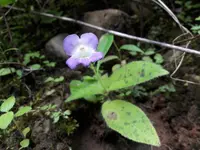
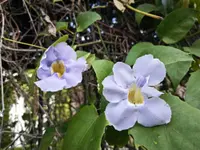
Blue sky vine, Thunbergia grandiflora, is a fast-growing tropical climber valued for its cascading habit and large, soft blue to lavender, trumpet-shaped flowers. It forms long, woody stems that quickly cover trellises, fences, or pergolas, creating a dense screen of foliage and blooms.

This species is native to India and Southeast Asia, where it thrives in warm, humid climates with a long growing season. It is considered relatively easy to grow in frost-free regions, as long as it has sturdy support, regular moisture, and well-drained soil.

Gardeners who want to care for Blue sky vine should note that it prefers bright light, mild temperatures, and protection from hard freezes to maintain vigorous growth and flowering.

Main Plant Requirements

Care Difficulty

Moderate Care

Light Preference

Full Sun

Water Requirements

Regular Water

Temperature Preference

Tropical / Frost Sensitive

Hardiness Zone

9–11

Soil Texture

Sandy, Loamy, Organic-rich

Soil pH

Acidic (5.5–6.5), Slightly acidic (6.5–7.0)

Soil Drainage

Moist but well-drained

Fertilization

Moderate (every 2–4 weeks)

Get Personalized Care Plan

Scan your plant to receive care tips personalized for your specific plant

Available on iOS and Android

How to Care for the Blue sky vine

This vigorous climber prefers bright outdoor light with some protection from harsh afternoon sun.

  • Provide 4–6 hours of direct morning sun plus bright, filtered light later in the day for strong flowering in Blue sky vine.
  • Allow light partial shade in hot climates; too much shade causes weak, stretching stems and fewer blooms.
  • In summer, shield from intense afternoon sun to prevent leaf scorch; in cooler seasons, give more direct sun to compensate for shorter days.

This vine likes evenly moist but not waterlogged soil, especially during active growth.

  • Water when the top 3–5 cm of soil feels dry, soaking the root zone thoroughly, then let excess drain away.
  • In spring and summer, expect to water more often; in cooler months, reduce frequency as growth and evaporation slow.
  • Watch for wilting and dull, dry leaves as signs of underwatering, and yellowing, soft leaves or a sour soil smell as signs of overwatering in Thunbergia grandiflora.

This tropical vine grows best in consistently warm, frost-free conditions.

  • Aim for 65–85°F (18–29°C) for strong growth and flowering; growth slows noticeably below 60°F (16°C).
  • Protect from frost; damage often occurs below 40°F (4°C), and the plant can be killed by a hard freeze near 32°F (0°C).
  • In hot spells above 90°F (32°C), provide extra shade and soil moisture, and avoid planting where reflected heat from walls or paving builds up.

This vigorous vine prefers moderate humidity but usually adapts to typical indoor levels.

  • Aim for 40–60% humidity to support steady growth and flowering of Blue sky vine.
  • It tolerates short periods of drier air, but prolonged humidity below 30% can cause crispy leaf edges and slower growth.
  • Increase humidity with a nearby humidifier or grouped plants rather than misting, which offers only brief surface moisture.

This species grows best in loose, loamy, well‑drained soil that stays evenly moist but not saturated.

  • Use a mix of roughly 50% peat- or coco-based potting mix, 25% compost, and 25% perlite or coarse sand for structure and drainage.
  • Aim for slightly acidic to neutral pH around 6.0–7.0, which supports nutrient availability for Thunbergia grandiflora.
  • Ensure water drains freely; heavy clay or compacted mixes increase root rot risk and should be amended with coarse material.
  • For in-ground planting, mound or raise the bed slightly to improve aeration and prevent water from pooling around the root zone.

This climbing vine is suitable for container culture when given adequate support and root space.

  • Choose a wide, heavy container to counterbalance the vine and trellis so wind or vigorous growth does not tip it over.
  • Select a pot deep enough to allow a substantial root system, typically at least 30–40 cm tall for mature outdoor specimens.
  • Use a container material that matches your climate, such as terracotta for slightly drier conditions or plastic to retain more moisture in hot, windy sites.

This vigorous vine responds well to moderate feeding during the warm growing season.

  • Use a balanced, water-soluble fertilizer (around 10-10-10 or 20-20-20) at 1/2 strength every 4–6 weeks in spring and summer.
  • Alternatively, apply a slow-release balanced fertilizer or a thin layer of finished compost at the start of the growing season.
  • Reduce or stop feeding Blue sky vine in fall and winter when growth slows, to avoid soft, weak shoots and salt buildup.
  • Water before and after feeding to minimize root burn and help nutrients move evenly through the root zone.

Thoughtful pruning keeps Thunbergia grandiflora manageable, flowering well, and safely supported.

  • Carry out main pruning in late winter or very early spring before vigorous new growth starts.
  • Remove dead, damaged, or tangled stems first, then thin overly crowded vines to improve light and airflow.
  • Shorten excessively long shoots to maintain size and encourage branching, which increases flowering sites.
  • Use clean, sharp bypass pruners, cutting just above a healthy bud or leaf node at a slight angle.

This fast-growing climber often benefits from periodic transplanting or upsizing of its support area.

  • Look for roots circling the pot, pushing out drainage holes, or slowed top growth as signs it needs a larger container or space.
  • Plan repotting or garden transplanting for spring, once frost risk has passed and active growth is starting.
  • Move plants every 2–3 years into a pot 5–8 cm wider, using well-drained, fertile soil and a sturdy trellis or support.
  • Water thoroughly before and after moving, keep the root ball as intact as possible, and shade for several days to reduce transplant shock.

New plants are most often produced from softwood or semi-ripe cuttings of this vine.

  • Take 8–12 cm tip cuttings in late spring or early summer, removing the lower leaves and any flower buds.
  • Dip the cut end in rooting hormone, then insert into a moist, free-draining mix of perlite and peat or similar medium.
  • Maintain bright, indirect light, high humidity, and a temperature around 70–80°F until roots develop.
  • Seeds can also be sown in warm conditions, kept evenly moist, and given strong light to encourage sturdy seedlings.

This species is frost-tender and needs protection in regions with cold winters.

  • In USDA zones below 9, grow in containers and move indoors to a bright, cool room before temperatures drop near 40°F.
  • In mild climates, mulch the root zone with 5–8 cm of organic material to moderate soil temperature.
  • Expect dieback after light frost; in spring, remove dead stems and allow new shoots to emerge from the base.

Care Tips

Sturdy Trellis Setup

Install a strong, weather-resistant trellis or wire system before planting and fan out the young stems horizontally to create a dense, well-supported wall of growth that can handle mature vine weight.

Regular Tendril Training

Check the vine every 7–10 days during active growth and gently tie or loop new shoots onto the support with soft ties, preventing tangling, breakage, and shading of lower foliage.

Root Zone Containment

In mild climates where it can spread aggressively, install a deep root barrier or grow it in a large container set on a solid surface to keep the root system from invading nearby beds or structures.

Seasonal Hard Cutback

In frost-free or light-frost areas, perform a hard cutback once a year at the end of winter, removing older, woody stems to 30–60 cm from the base to stimulate vigorous, flowering new growth.

Preventing Stem Pests

Inspect stems and leaf undersides every few weeks for early signs of aphids or spider mites, and if pests appear, wash them off with a firm water spray before using any targeted, label-approved treatment for Thunbergia grandiflora care.

Common Pests and Diseases

Spider mites

This pest often appears on stressed vines grown in hot, dry conditions, causing fine stippling on leaves and delicate webbing along stems and tendrils.

Solution

Rinse foliage thoroughly with a strong but gentle stream of water, focusing on the undersides of leaves, then increase humidity and reduce heat stress; for persistent infestations, apply insecticidal soap or a horticultural oil every 7–10 days, ensuring full coverage of new growth.

Aphids

These insects cluster on soft new shoots, buds, and the back of leaves, sucking sap and leading to distorted growth and sticky honeydew on blue sky vine.

Solution

Prune off heavily infested shoot tips, then wash remaining colonies off with water; if needed, treat with insecticidal soap or neem oil in the evening, repeating at 5–7 day intervals until new growth appears clean and natural predators such as lady beetles return.

Leaf spot

This disease causes small water-soaked or brown spots on foliage that may enlarge, merge, and lead to premature leaf drop, especially in warm, humid conditions with poor air movement.

Solution

Remove and discard affected leaves, avoid overhead watering, and improve spacing and airflow around the vine; during extended wet periods, a copper-based fungicide labeled for ornamental vines can be used according to the label until new foliage develops without spotting, which supports better Thunbergia grandiflora care.

Powdery mildew

This disease produces a white, powdery coating on the upper leaf surface and young stems, often reducing flowering and weakening dense, shaded vines.

Solution

Thin congested stems to increase light and air circulation, avoid wetting leaves in the evening, and treat early infections with sulfur, neem oil, or a labeled potassium bicarbonate spray applied evenly to both sides of leaves at 7–10 day intervals until the white coating no longer appears on new growth.

Root-knot nematodes

This pest lives in the soil and causes galls or swellings on roots, leading to stunted growth, leaf yellowing, and reduced flowering, especially in sandy or previously infested garden soils.

Solution

Remove and destroy severely affected plants and as many roots as possible, then avoid replanting susceptible vines in the same spot; in problem areas, improve soil organic matter, solarize soil in warm climates before replanting, and consider growing Thunbergia in large containers with fresh, sterile potting mix to prevent reinfestation.

Interesting Facts

Liana with air roots

This species is a true woody liana that can climb 6–8 m or more by twining stems and forming short aerial roots that help anchor it to supports such as trees, fences, and walls.

Specialized pollination visitors

In its native range in India and Southeast Asia, the large tubular flowers are mainly visited by large bees such as carpenter bees, which can reach the nectar at the base of the long corolla and transfer pollen efficiently.

Invasive in warm climates

Outside its native range, especially in frost-free regions such as parts of Florida, Hawaii, and eastern Australia, this vine can escape cultivation, smother native vegetation, and is listed as an invasive environmental weed in several areas.

Botan icon

Did you know?

Genetic and morphological studies indicate that this vine belongs to a small species complex within Thunbergia, and plants sold worldwide under this name often include closely related forms and hybrids, which helps explain the wide variation in flower color intensity and leaf shape seen in cultivation.

FAQs about Blue sky vine

Poor flowering usually comes from insufficient light, lack of pruning, or low nutrients. Ensure strong support, full outdoor conditions in the warm season, and regular feeding. Light post‑bloom pruning encourages new flowering wood and more buds.

Grow Healthy Plants with Botan Care

Keep your plants happy and healthy with plant identification, disease detection, and easy care guidance.

Botan plant care app — identify plants on mobile

Explore More Plants