Rotate for symmetry
Turn the pot 90° every 1–2 weeks so the rosette receives light from all sides, which keeps it compact and prevents a lopsided, stretched form.

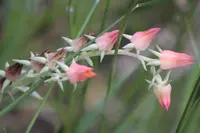
Echeveria erubescens is a compact, rosette-forming succulent known for its blue-green leaves that often flush pink or red along the edges in strong light. It usually stays low and slowly forms clusters, making it suitable for small pots, dish gardens, and mixed succulent arrangements.
This species is native to Mexico, where it grows in bright, dry habitats with well-drained, rocky soils. Its drought tolerance, modest growth rate, and resistance to short-term neglect make it approachable for beginners who want to care for Echeveria erubescens.
It prefers strong light, low to moderate moisture, and airy, fast-draining soil, which helps prevent root and leaf rot in typical home conditions.

Care Difficulty
Easy Care

Light Preference
Full Sun

Water Requirements
Low Water

Temperature Preference
Tropical / Frost Sensitive

Hardiness Zone
10–11

Soil Texture
Sandy, Loamy, Rocky

Soil pH
Slightly acidic (6.5–7.0), Neutral (7.0)

Soil Drainage
Well-drained

Fertilization
Minimal (feed rarely)
Scan your plant to receive care tips personalized for your specific plant
Available on iOS and Android
This succulent prefers bright, direct light with some protection during the hottest hours.
Watering should be infrequent and based on soil dryness rather than a fixed schedule.
Stable warmth supports compact growth and healthy leaf color.
This species prefers dry indoor air and does not need extra humidity.
Echeveria erubescens needs a very fast-draining, mineral-rich substrate that dries quickly between waterings.
This species is well suited to container growing due to its compact, shallow root system.
Light feeding supports compact growth and clean leaf color in Echeveria erubescens.
Light pruning keeps rosettes tidy and reduces rot risk in Echeveria erubescens.
Occasional repotting maintains healthy roots and drainage for Echeveria erubescens in containers.
New plants of Echeveria erubescens are commonly produced from offsets and leaf cuttings.
Cool-season care focuses on keeping Echeveria erubescens dry, bright, and frost-free.

Plant Health Check
Not sure what's wrong with your plant? Check your plant's health inside the app.
The red to pink blush on its leaf margins is caused by increased production of anthocyanin pigments under high light, which helps protect the photosynthetic tissues from excess solar radiation and UV stress.
This species is native to higher-elevation regions of Mexico, where strong light, cooler nights, and well-drained rocky soils shape its compact rosette form and thick, water-storing leaves.
Unlike many related species that color uniformly, this plant often shows concentrated red tones along the outer leaf edge and tip, creating a natural gradient that intensifies when the plant is mildly water- or temperature-stressed.

Echeveria erubescens is one of a relatively small group of Echeveria species that consistently maintain pronounced red edging even under moderate light, which has made it a reference plant in horticulture for selecting and breeding red-margined succulent cultivars.
Brown leaves usually result from sun scorch, prolonged underwatering, or old age of lower leaves. Check for mushy tissue, which indicates rot instead. Remove damaged leaves, improve watering consistency, and gradually adjust light exposure if recently moved.
Keep your plants happy and healthy with plant identification, disease detection, and easy care guidance.