lesser yellowspike orchid Care (Polystachya foliosa)

lesser yellowspike orchid

About lesser yellowspike orchid

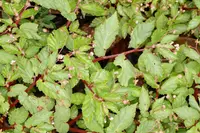
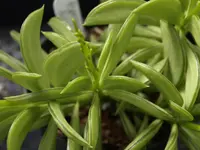
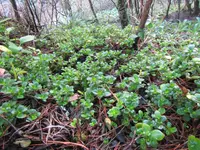
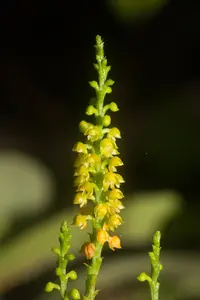
The lesser yellowspike orchid, Polystachya foliosa, is a small epiphytic orchid that typically grows on tree trunks and branches. It forms compact clumps with slim, upright canes and narrow leaves. Its flower spikes carry many small yellow to yellow-green blooms, giving a fine, textured look rather than large showy flowers. It is native to parts of tropical Africa, where it experiences warm temperatures, bright filtered light, and regular moisture. In cultivation, it suits growers who already have some orchid experience, mainly because it prefers stable humidity and good air movement. Understanding how to care for lesser yellowspike orchid starts with providing airy, fast-draining media and avoiding extremes in drying or waterlogging.

Main Plant Requirements

Care Difficulty

Moderate Care

Light Preference

Partial Shade

Water Requirements

Regular Water

Temperature Preference

Tropical / Frost Sensitive

Hardiness Zone

11–13

Soil Texture

Sandy, Organic-rich

Soil pH

Acidic (5.5–6.5)

Soil Drainage

Moist but well-drained

Fertilization

Light (every 4–6 weeks)

Get Personalized Care Plan

Scan your plant to receive care tips personalized for your specific plant

Available on iOS and Android

How to Care for the lesser yellowspike orchid

This orchid prefers bright, filtered light that mimics a lightly shaded forest canopy.

  • Provide 6–8 hours of bright, indirect light daily, such as dappled sun under taller plants or 1–2 hours of gentle morning sun with shade the rest of the day.
  • Protect Polystachya foliosa leaves from intense midday or afternoon sun, which can cause yellowing, scorched patches, and dry, papery tips.
  • Tolerates partial shade but flowering of lesser yellowspike orchid declines if light is too low; move gradually to a slightly brighter spot in spring and summer.

Watering should keep roots moist but never stagnant or waterlogged.

  • Allow the top 2–3 cm of the mix or mounting surface to dry slightly before watering again, using thorough soakings rather than light splashes.
  • Increase watering frequency in active growth and warm weather, then reduce slightly in cooler months while avoiding complete drying of roots.
  • Watch for wrinkled pseudobulbs or limp leaves as signs of underwatering, and for blackened roots, sour smell, or constantly wet medium as signs of overwatering in Polystachya foliosa.

This species prefers intermediate temperatures with mild seasonal shifts.

  • Aim for 65–80°F (18–27°C) during the day and 58–65°F (14–18°C) at night to support steady growth and flowering.
  • Avoid temperatures below 50°F (10°C), as prolonged exposure can damage foliage and roots; protect from drafts and sudden cold snaps.
  • Tolerates brief heat up to about 86°F (30°C) if humidity and air movement are high, but extended extreme heat or any frost exposure can severely stress or kill the plant.

This epiphytic orchid prefers humid air to stay vigorous and flower reliably.

  • Aim for 60–80% humidity; it tolerates brief dips to 40% but not prolonged dry air from heating or air conditioning.
  • Crisping root tips, wrinkled pseudobulbs, and dull, folding leaves indicate humidity stress in lesser yellowspike orchid.
  • Increase humidity with a pebble tray under the pot, grouping plants, or a small room humidifier while keeping air movement gentle.

Use a very airy, fast-draining epiphytic mix rather than standard potting soil for Polystachya foliosa.

  • Combine medium orchid bark with fine bark, perlite, and a little sphagnum moss to create a loose, organic-rich structure.
  • Ensure water drains through in seconds; the mix should stay slightly moist but never waterlogged or compacted around the roots.
  • Keep pH mildly acidic to neutral, roughly 5.5–7.0, by avoiding heavy lime additions and using orchid-safe fertilizers.
  • Avoid dense peat-only mixes, regular garden soil, or any blend that stays wet and excludes air from the root zone.

This orchid adapts well to container growing when moisture and aeration are balanced carefully.

  • Choose a slatted basket or orchid pot with side openings so roots can breathe and dry quickly after watering.
  • Select a container only slightly wider than the root mass to prevent the open mix from staying wet too long.
  • Use a heavier or weighted pot if mounted or basket-grown plants become top-heavy, so the container does not tip when watered.

This orchid benefits from light, consistent feeding during active growth but is sensitive to excess nutrients.

  • Use a balanced orchid fertilizer (around 20-20-20) diluted to 1/4–1/2 strength for caring for lesser yellowspike orchid.
  • Feed every 2–3 weeks in spring and summer when new roots and leaves develop.
  • In autumn and winter, reduce feeding to once every 4–6 weeks or stop if growth pauses.
  • Avoid compost or heavy slow-release pellets; flush the medium with plain water monthly to clear salts.

Polystachya foliosa needs only light pruning to maintain health and flowering performance.

  • Best time is after flowering, once spent spikes begin to dry.
  • Remove dead, damaged, or clearly dried flower spikes with clean, sharp scissors or snips.
  • Leave green pseudobulbs and leaves to support energy storage and future blooms.
  • Trim only desiccated leaf tips if needed, cutting into healthy tissue as little as possible.

This epiphytic orchid prefers infrequent repotting and reacts poorly to frequent disturbance.

  • Repot every 2–3 years, or when roots circle tightly, medium breaks down, or growth slows.
  • Choose late spring, just as new roots start, to help quick re-establishment.
  • Use a small, well-drained pot or mount with fine to medium orchid bark and some sphagnum for moisture.
  • Handle roots gently, remove rotted material, then keep shaded and slightly more humid for 1–2 weeks to limit stress.

Polystachya foliosa is usually propagated by division rather than from seed in home collections.

  • Divide mature clumps in late spring when new roots emerge.
  • Each division should carry at least 3–4 healthy pseudobulbs and an active growth point.
  • Plant divisions in fresh fine to medium orchid bark, keeping humidity high and light bright but indirect.
  • Orchid seed requires sterile laboratory conditions, so it is rarely a practical method for home growers.

This orchid is not frost hardy and needs thoughtful winter care in temperate climates.

  • Keep plants above 50–55°F; short dips near this range are tolerated but freezing is damaging.
  • Move container plants indoors or into a heated greenhouse before night temperatures drop below 55°F.
  • Provide bright, indirect light and slightly drier conditions than in summer, without allowing complete desiccation.
  • Avoid cold drafts and sudden temperature swings that stress foliage and roots.

Care Tips

Mounting strategy

Use a small, rough-barked branch or tree-fern slab and secure the roots loosely with biodegradable string so the plant can attach naturally as roots expand over 6–12 months.

Airflow management

Position a quiet fan to create a gentle, constant air movement around the plant, which helps dry roots predictably after watering and prevents fungal spotting on leaves and pseudobulbs.

Fine-tune moisture

Adjust misting frequency based on pseudobulb appearance, aiming for firm, slightly plump bulbs; slightly wrinkled bulbs indicate the plant needs higher local humidity or a bit more frequent watering.

Nutrient monitoring

Watch for pale, slow-growing foliage and weak flowering and respond with a small, regular feed rather than a one-time heavy dose, which is safer for Polystachya foliosa care on mounts and in small pots.

Seasonal rest shift

In late fall, gradually extend the interval between waterings and reduce fertilizer, then slowly increase both again in early spring to match the plant’s natural growth and rest rhythm when growing lesser yellowspike orchid.

Common Pests and Diseases

Scale insects

This pest attaches to pseudobulbs, leaves, and flower spikes, sucking sap and causing yellowing, stunting, and sticky honeydew deposits that can lead to sooty mold.

Solution

Isolate the plant, then wipe affected areas with cotton pads dipped in 70% isopropyl alcohol and repeat weekly until no new insects appear; for heavy infestations, use a labeled systemic insecticide suitable for orchids and improve air movement and light to support recovery.

Spider mites

These insects thrive on Polystachya in warm, dry conditions, causing fine stippling, dull foliage, and delicate webbing on the undersides of leaves.

Solution

Rinse foliage thoroughly with lukewarm water, focusing on leaf undersides, then increase humidity to 50–70% and improve airflow; if mites persist, apply a miticide or horticultural oil labeled for orchids in repeated treatments to break their life cycle.

Soft rot (Erwinia)

This disease causes rapidly spreading, water-soaked, foul-smelling lesions on pseudobulbs and leaf bases, often starting where water sits trapped in tight growths or around mounting material.

Solution

Immediately cut away all affected tissue with a sterile blade well into healthy tissue, dust cut surfaces with cinnamon or a copper-based fungicide, reduce watering, keep the plant drier and well ventilated, and avoid letting water stand in leaf bases or crown areas.

Leaf spot fungi

Symptoms include small dark or translucent spots on leaves that can enlarge and merge under persistently wet, stagnant conditions in shaded orchid houses or terrariums.

Solution

Remove affected leaves or sections with sterilized scissors, improve spacing and airflow, keep leaves dry between waterings, and apply a preventive fungicide labeled for orchids if spotting continues despite environmental corrections.

Interesting Facts

Epiphytic cloud-forest orchid

This species is a small epiphyte that naturally grows on tree trunks and branches in moist montane forests of eastern and southern Africa, relying on humid air and tree bark rather than soil for support.

Crowded yellow spikes

The flowers are produced in dense, many-flowered spikes with yellow to yellow-green blooms, which is reflected in its common name lesser yellowspike orchid and helps distinguish it from many other Polystachya species with looser inflorescences.

Wide African distribution

Native populations extend from Kenya and Tanzania southwards into Malawi, Zimbabwe, Mozambique, and parts of South Africa, showing this orchid’s ability to occupy a range of cool to warm, high-humidity forest habitats.

Botan icon

Did you know?

Some regional orchid floras note that this species can grow both as a typical tree-dwelling epiphyte and occasionally on mossy rocks (lithophyte), demonstrating flexible anchoring strategies while still depending on high ambient humidity.

FAQs about lesser yellowspike orchid

Lack of blooms usually comes from insufficient light, too little fertilizer, or no slight temperature drop between day and night. Adjusting these conditions often restores flowering and is a key part of Polystachya foliosa care.

Grow Healthy Plants with Botan Care

Keep your plants happy and healthy with plant identification, disease detection, and easy care guidance.

Botan plant care app — identify plants on mobile

Explore More Plants