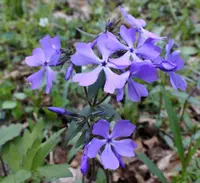
wild blue phlox Care (Phlox divaricata)

Also known as: blue phlox
wild blue phlox

About wild blue phlox

Wild blue phlox (Phlox divaricata) is a low, spreading woodland perennial valued for its soft, fragrant blue to lavender spring flowers. It typically forms loose clumps and slowly carpets the ground with semi-evergreen foliage, creating a natural, informal look.

In nature it grows in open woods and along shady edges across eastern and central North America. This background makes it adaptable but best suited to partial shade, consistent moisture, and humus-rich, well-drained soil.

Once established, it is relatively easy to maintain, especially in sites that do not dry out completely. Understanding how to care for wild blue phlox mainly involves matching its woodland light and soil conditions.

Main Plant Requirements

Care Difficulty

Moderate Care

Light Preference

Partial Shade

Water Requirements

Regular Water

Temperature Preference

Cold Hardy

Hardiness Zone

3–8

Soil Texture

Loamy, Sandy, Organic-rich

Soil pH

Acidic (5.5–6.5), Slightly acidic (6.5–7.0)

Soil Drainage

Moist but well-drained

Fertilization

Minimal (feed rarely)

Get Personalized Care Plan

Scan your plant to receive care tips personalized for your specific plant

Available on iOS and Android

How to Care for the wild blue phlox

Phlox divaricata prefers woodland-style light that mimics bright, open shade under trees.

  • Aim for dappled or filtered light with 2–4 hours of gentle morning sun and shade in the hot afternoon to prevent leaf scorch.
  • Plant in locations receiving bright shade or high, thin canopy cover; full, exposed sun in summer reduces flowering and can stress foliage.
  • In warmer climates, shift plants to more shade or provide light screening by late spring, while in cooler climates wild blue phlox tolerates a bit more direct morning sun.

This woodland perennial prefers consistently moist, but not saturated, soil.

  • Water when the top 2–4 cm of soil feel dry, allowing moisture deeper in the root zone while avoiding soggy conditions.
  • Use loose, well-drained soil rich in organic matter so excess water runs off easily and roots receive both air and moisture.
  • In spring and early summer, increase watering during dry spells; in cool or wet weather, reduce watering and watch for yellowing, limp leaves as a sign of overwatering.

This species performs best in cool to mild conditions and dislikes extreme heat.

  • Optimal growth occurs around 55–75°F (13–24°C), which matches typical spring woodland temperatures when it naturally flowers.
  • Established plants tolerate winter lows near 0°F (-18°C) under mulch or leaf litter, but young plants benefit from protection in their first year.
  • During hot spells above 85°F (29°C), provide extra shade and soil moisture, since prolonged heat can shorten the bloom period and stress the plant.

This species grows best in moderately humid air similar to a woodland edge.

  • Aim for 40–60% humidity; typical indoor levels are acceptable if not extremely dry.
  • Dry air can cause leaf edges to brown and flowers to abort, especially for wild blue phlox kept in heated rooms.
  • Increase humidity by grouping plants, placing trays with water and pebbles nearby, or growing outdoors in sheltered, wind-protected spots.

Phlox divaricata prefers loose, humus-rich soil that stays evenly moist but drains freely.

  • Use a loamy mix with plenty of organic matter, such as garden loam blended with leaf mold or compost.
  • Ensure drainage by avoiding heavy clay; lighten dense soil with sharp sand and fine bark to improve pore space.
  • Target slightly acidic to neutral pH around 6.0–7.0, which supports nutrient availability and root health.
  • Avoid compacted, waterlogged, or very sandy soils that swing quickly between drought and saturation.

This species can be grown in containers if the pot and medium are chosen to mimic moist, airy woodland soil.

  • Choose a wide, shallow to medium-depth pot to accommodate its fibrous, spreading root system rather than a very deep vessel.
  • Use a compost-rich, peat-free mix cut with bark fines and perlite so the medium holds moisture yet drains excess water quickly.
  • Select a heavier clay or ceramic container in windy sites so the spreading foliage does not tip the pot as it matures.

Phlox divaricata benefits from light, targeted feeding rather than heavy fertilization.

  • Apply a balanced, slow-release fertilizer (around 10-10-10) at half strength once in early spring as new growth begins.
  • In rich garden soil, use a thin layer of compost instead of synthetic fertilizer to support steady growth.
  • Avoid midsummer and late-fall feeding, which can push soft growth and reduce overall hardiness.
  • Stop feeding in late summer so plants can harden off naturally before winter dormancy; wild blue phlox needs no winter fertilizer.

Phlox divaricata responds well to light pruning that maintains shape and flowering performance.

  • In late spring, shear back spent flower stems by one-third to encourage a neater mound and occasional rebloom.
  • Remove dead, damaged, or diseased stems at the base with clean, sharp hand pruners whenever noticed.
  • Thin crowded shoots lightly after flowering to improve airflow and reduce mildew risk.
  • In late fall or very early spring, cut back old, browned stems near soil level to refresh growth.

This woodland perennial is more often transplanted in garden beds than grown long term in containers.

  • Plan major transplanting for early spring or early fall, when temperatures are mild and soil moisture is reliable.
  • Move clumps that show weak flowering, bare centers, or crowding every 3–4 years to fresh, humus-rich soil.
  • If container-grown, shift plants when roots circle the pot or growth slows, stepping up only 1 pot size.
  • Water thoroughly before and after moving, keep roots shaded, and maintain even moisture for 2–3 weeks to reduce transplant shock.

Phlox divaricata is commonly propagated by division, stem cuttings, and seeds under suitable conditions.

  • Divide established clumps in early spring or early fall, replanting small sections with several healthy shoots and roots.
  • Take 7–10 cm softwood cuttings in late spring, use a sterile, moist, well-draining mix, and maintain high humidity until rooted.
  • Sow fresh seed in fall outdoors or use cold stratification (4–6 weeks at 35–40°F) before spring sowing.
  • Keep propagation media lightly moist, not waterlogged, with bright, indirect light to support healthy root formation.

This species is generally cold hardy in much of the US and needs only modest winter care in the ground.

  • Tolerates typical winter frost in USDA zones 3–8 once well established in draining soil.
  • After hard frost, allow stems to die back, then cut to near ground level or leave them to remove in late winter.
  • Apply 3–5 cm of leaf mold or bark mulch around the root zone to moderate freeze–thaw cycles.
  • For container plants in cold regions, move pots into an unheated garage or sheltered area to avoid root freeze.

Care Tips

Divide aging clumps

Every 3–4 years, lift and divide crowded clumps in early spring just as new growth emerges, replanting outer vigorous sections to maintain flowering performance and prevent die-out in the center.

Use light leaf mulch

Apply a thin, airy layer of shredded leaves or pine needles around plants in autumn to protect shallow roots, suppress early weeds, and keep the soil evenly cool without smothering stems.

Edge to contain spread

Install a shallow physical edge, such as a dug spade-cut line or flexible strip set 5–8 cm deep, to keep slow-running stems from encroaching into paths or more delicate groundcovers.

Interplant for mildew control

Position plants where they receive good cross-ventilation and interplant with slightly taller, open-structured perennials so airflow reduces powdery mildew risk without exposing the plants to excess heat or sun.

Mark dormant areas

Place discreet markers where clumps grow before foliage dies back in late summer in warmer regions, so later cultivation or replanting does not disturb dormant crowns when caring for wild blue phlox.

Common Pests and Diseases

Powdery mildew

This disease causes a white, powdery coating on leaves and stems, especially in crowded or shaded plantings. Symptoms include distorted new growth and gradual weakening of the plant.

Solution

Improve air circulation by thinning stems and avoiding overcrowding, and water at soil level so foliage dries quickly. Remove and discard heavily infected leaves, then apply a sulfur or potassium bicarbonate fungicide labeled for ornamental perennials if conditions stay humid and the disease continues to spread.

Spider mites

These pests are tiny sap-feeding arachnids that thrive in hot, dry conditions. Symptoms include fine speckling on leaves, bronzing, and delicate webbing on the undersides of foliage.

Solution

Rinse plants thoroughly with a strong but gentle stream of water, focusing on leaf undersides, and repeat several times per week to disrupt the mites. If populations remain high, use insecticidal soap or a horticultural oil labeled for mites, applied in the early morning or evening to avoid leaf burn.

Leaf spots

This disease group causes small tan, brown, or purple spots that may merge into larger blotches and lead to premature leaf drop. Symptoms include worst damage where foliage stays wet for long periods.

Solution

Remove and discard affected leaves, including those on the ground, to reduce fungal spores. Water early in the day at the base of the plant, increase spacing for better airflow, and use a copper- or chlorothalonil-based fungicide if leaf spotting recurs each season despite cultural changes.

Stem canker

This disease causes sunken, dark lesions on stems, which can lead to wilting and dieback of individual shoots. Symptoms include sudden collapse of otherwise healthy-looking stems above the cankered area.

Solution

Cut out affected stems several inches below visible damage and discard them, disinfecting pruning tools between cuts with 70% alcohol or a 10% bleach solution. Improve drainage and airflow around the plants, avoid injuring stems, and consider rotating wild blue phlox to a new spot if canker problems return yearly as part of broader Phlox divaricata plant care.

Phlox plant bug

These insects are specialized sap-feeding bugs that target phlox, causing pale stippling, brown patches, and distorted or blighted leaves and flower buds. Symptoms include sudden cosmetic damage in late spring and early summer while other plants nearby remain unaffected.

Solution

Inspect plants regularly and hand-remove adults and nymphs where numbers are low, dropping them into soapy water. For heavier infestations, use insecticidal soap or a pyrethrin-based product labeled for ornamental use, applied thoroughly to new growth and repeated as directed while also removing the most damaged foliage to encourage healthy regrowth.

Interesting Facts

Twilight woodland bloomer

This species naturally grows on rich, moist woodland slopes and often flowers in the dappled light of early spring, before the tree canopy fully leafs out, helping it capture light when forest competition is lowest.

Specialist butterfly partner

The plant is a key larval host for the woodland phlox moth (Heliothis phloxiphaga) and an important nectar source for early-season swallowtail butterflies, which are able to reach its relatively deep, narrow corolla tubes.

Fragrant chemical signal

Its evening scent is produced by volatile organic compounds released more strongly in lower light and cooler temperatures, which helps attract night-active moth pollinators that complement daytime insect visitors.

Botan icon

Did you know?

Wild populations naturally form loose, slowly spreading clonal patches through short rhizomes, so what looks like a drift of many plants in spring bloom is often a network of genetically identical stems arising from a single, older individual.

FAQs about wild blue phlox

This species spreads slowly by short rhizomes and self-seeding, forming loose patches rather than dense mats. It is not usually considered aggressive, but in ideal woodland conditions it can gradually colonize open soil over several years.

Grow Healthy Plants with Botan Care

Keep your plants happy and healthy with plant identification, disease detection, and easy care guidance.

Botan plant care app — identify plants on mobile

Explore More Plants