Clump Renewal
Every 3–4 years, lift and divide crowded clumps in early spring or fall to maintain vigor, reduce disease pressure, and control spread.

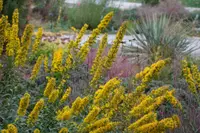
Showy goldenrod, Solidago speciosa, is a hardy, long-lived perennial wildflower native to prairies, open woods, and roadsides in eastern and central North America. It forms upright clumps with strong stems topped by dense, plume-like clusters of small golden-yellow flowers in late summer to fall.
The plant typically reaches a medium height and has narrow, lance-shaped leaves that give it a tidy, vertical look in mixed plantings. Its abundant nectar and pollen support bees, butterflies, and other pollinators.
This species adapts well to full sun, moderate moisture, and well-drained soils, and it tolerates poor or dry ground once established. Understanding how to care for showy goldenrod helps keep plants sturdy, floriferous, and resistant to common garden stresses.

Care Difficulty
Easy Care

Light Preference
Full Sun

Water Requirements
Low Water

Temperature Preference
Cold Hardy

Hardiness Zone
3–9

Soil Texture
Sandy, Loamy, Clay

Soil pH
Acidic (5.5–6.5), Slightly acidic (6.5–7.0)

Soil Drainage
Well-drained

Fertilization
Minimal (feed rarely)
Scan your plant to receive care tips personalized for your specific plant
Available on iOS and Android
This sun-loving perennial performs best in open, bright conditions for sturdy stems and abundant blooms.
This species prefers evenly moist but not saturated soil, especially during establishment.
This hardy perennial tolerates a wide temperature range, with strong cold tolerance once established.
This species is adapted to outdoor conditions and does not have special humidity requirements.
Solidago speciosa prefers lean, well-drained soils and tolerates relatively poor sites if drainage is reliable.
This species can be grown in containers if the pot is chosen and managed to suit its tall, clumping habit.
This native perennial usually needs minimal feeding in average garden soil, but responds to modest nutrition in poor sites.
Pruning helps Solidago speciosa stay upright, tidy, and more floriferous.
This species is mostly grown in the ground and is best managed by dividing and transplanting clumps.
Solidago speciosa is commonly propagated by division, stem cuttings, or seeds, depending on the goal.
This hardy perennial tolerates typical winters in most temperate regions and needs minimal special care outdoors.

Plant Health Check
Not sure what's wrong with your plant? Check your plant's health inside the app.
This species flowers later than many North American prairie perennials, often from late summer into fall, providing a critical nectar and pollen source for migrating monarchs, native bees, and beneficial wasps when other floral resources are declining.
Unlike many other goldenrods that favor moist habitats, this species is especially associated with dry prairies, sandy glacial outwash, and open oak woodlands, which makes it valuable for stabilizing nutrient-poor, well-drained soils.
It is distinguished from many related goldenrods by its relatively unbranched, wand-like stems topped with dense, upright clusters of bright yellow flower heads rather than arching or highly branched sprays.

Solidago speciosa includes several recognized varieties that differ subtly in traits such as hairiness and leaf shape, and these geographic variants were important in mapping post-glacial plant migration patterns in eastern and central North America.
This species spreads by both seed and short rhizomes, but is usually clump-forming rather than aggressively running. It can self‑seed freely in open soil, so deadhead spent flower stems if you want tighter, contained plantings.
Keep your plants happy and healthy with plant identification, disease detection, and easy care guidance.