Tahitian bridal veil Care (Gibasis pellucida)

Also known as: dotted bridalveil
Tahitian bridal veil

About Tahitian bridal veil

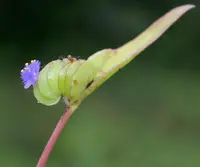
Tahitian bridal veil (Gibasis pellucida) is a trailing tropical plant grown mainly for its fine, cascading foliage and delicate white flowers. It is commonly used in hanging baskets, containers, or as a soft edging plant. Slender stems carry many small, dark green to purple-tinged leaves, creating a light, airy curtain effect when mature.

This species is native to Mexico and Central America, where it grows in warm, bright, but partially sheltered conditions. It is generally considered easy to manage for indoor and patio use if its basic needs are met. Light shade, evenly moist but not waterlogged soil, and protection from cold help care for Tahitian bridal veil over the long term.

Main Plant Requirements

Care Difficulty

Moderate Care

Light Preference

Bright Indirect Light

Water Requirements

Keep Soil Moist

Temperature Preference

Tropical / Frost Sensitive

Hardiness Zone

10–12

Soil Texture

Loamy, Organic-rich

Soil pH

Acidic (5.5–6.5), Slightly acidic (6.5–7.0)

Soil Drainage

Moist but well-drained

Fertilization

Light (every 4–6 weeks)

Get Personalized Care Plan

Scan your plant to receive care tips personalized for your specific plant

Available on iOS and Android

How to Care for the Tahitian bridal veil

This trailing plant prefers bright, indirect light with some gentle direct sun.

  • Provide 4–6 hours of bright, filtered light daily, such as near an east window or under light shade outdoors; brief morning sun is ideal for Tahitian bridal veil.
  • Protect from harsh midday and afternoon sun, which can scorch leaves and fade color; use sheer curtains or plant under dappled tree canopy.
  • In winter, move closer to brighter exposures or supplement with grow lights if stems stretch and spacing between leaves increases, a sign of low light.

This species prefers lightly moist, fast-draining soil without long wet or dry extremes.

  • Water when the top 2–3 cm of soil feel dry; in warm growing seasons this may be every few days, while in cooler months intervals increase.
  • Use a well-draining mix and allow excess water to drain away; consistently soggy soil causes limp, yellowing leaves and stem rot in Gibasis pellucida.
  • Increase watering slightly during active growth and heat, but if foliage feels soft, shrivels, or tips brown and curl, it is likely staying dry too long.

This plant grows best in warm, frost-free conditions with minimal temperature swings.

  • Aim for 65–80°F (18–27°C) for steady growth; short spikes up to 85°F (29°C) are tolerated if humidity and watering are adequate.
  • Protect from cold; growth slows below 60°F (16°C), and damage occurs near 40°F (4°C), with tissue death likely at or just below 32°F (0°C).
  • In regions with cool winters, treat it as a warm-season plant outdoors, providing shelter from cold drafts and sudden night drops in spring and fall.

This species prefers moderate to high humidity for dense, healthy foliage.

  • Aim for 50–70% humidity to keep foliage lush and reduce leaf-tip browning.
  • It tolerates short dry-air periods but prolonged humidity below 40% leads to crisp tips and dull, sparse growth in Tahitian bridal veil.
  • Increase humidity with a nearby humidifier, grouped plants, or a wide pebble tray that allows evaporation without the pot sitting in water.

Use a light, airy mix that drains quickly but holds some moisture around the roots.

  • Choose a loose, peat- or coco-based mix enriched with fine bark or compost to mimic a humus-rich forest floor.
  • Ensure rapid drainage by adding 30–40% perlite or pumice so water flows through in seconds rather than pooling.
  • Keep pH slightly acidic to neutral, around 6.0–7.0, which supports nutrient availability for Gibasis pellucida.
  • Avoid heavy, compacted, or waterlogged soils, which promote root rot and weak, leggy growth.

This trailing species is very suitable for container and hanging basket cultivation.

  • Select a wide, shallow container to match its spreading root system and encourage full, cascading growth.
  • Use a stable, heavier pot or hanging basket hardware so the trailing foliage does not tip the container as it lengthens.
  • Prefer plastic or glazed pots if faster drying is a problem, since they retain moisture slightly longer than unglazed clay.

This trailing plant responds well to light, consistent feeding during active growth.

  • Use a balanced liquid fertilizer (around 10-10-10 or 20-20-20) at 1/4–1/2 strength for caring for Tahitian bridal veil in containers.
  • Feed every 3–4 weeks in spring and summer when growth is strong.
  • Skip or reduce feeding to once in 6–8 weeks in fall and winter, especially in low light.
  • Flush the pot with plain water every 6–8 weeks to prevent salt buildup from fertilizers.

Pruning Gibasis pellucida helps maintain a compact, cascading form and encourages fresh growth.

  • Trim soft shoot tips in spring and summer to thicken the plant and enhance trailing shape.
  • Remove dead, yellowing, or damaged stems whenever noticed to reduce disease risk.
  • Cut back overly long, sparse vines to just above a leaf node to stimulate branching.
  • Use small, clean scissors or snips and make sharp cuts to avoid crushing delicate stems.

This species prefers slightly snug containers but benefits from periodic repotting to refresh the root zone.

  • Plan to repot every 2–3 years in spring when roots circle the pot base, emerge from drainage holes, or growth slows.
  • Choose a container 2–3 cm wider with good drainage and a light, peat-free, well-aerated mix.
  • Water the plant a day before repotting, then gently loosen the root ball and trim only dead, mushy roots.
  • After repotting, water thoroughly once, keep in bright indirect light, and avoid heavy feeding for 2–3 weeks to limit stress.

New plants are most often produced from stem cuttings, which root quickly in warm, bright conditions.

  • Take 8–10 cm non-flowering tip cuttings from healthy Gibasis pellucida stems in spring or early summer.
  • Remove lower leaves and place nodes in water or a moist, airy mix, keeping humidity high and temperatures near 70–75°F.
  • Provide bright, indirect light and keep the medium just moist; roots typically form within a few weeks.
  • Once rooted, pot into small containers, spacing cuttings closely for a full, cascading effect.

This tropical plant is frost-sensitive and needs mild, protected conditions in winter.

  • Keep temperatures above 55°F; prolonged exposure to colder air can damage foliage and stems.
  • Move outdoor containers indoors before the first frost, placing them in bright, indirect light.
  • Water less often in winter, allowing the top layer of soil to dry slightly between waterings.
  • Avoid cold drafts and keep foliage away from freezing window glass or unheated porches.

Care Tips

Refresh Leggy Growth

Every 12–18 months, cut back older, woody runners by 1/3 to encourage dense new side shoots and prevent the plant from becoming thin and bare at the crown.


Rotate Hanging Baskets

Turn a hanging pot by 90° every 1–2 weeks so stems receive light from all sides, which keeps the plant evenly full instead of lopsided and stretched toward one direction.

Use Wide, Shallow Pots

Choose a low, wide container rather than a deep one to match the plant’s shallow, spreading root system and reduce the risk of soggy lower soil layers.

Strategic Stem Pinning

Gently pin or tuck young stems against the soil surface using clean, U-shaped plant pins so nodes can root along the stem and create a thicker, more stable mat of foliage.

Pest Check During Watering

During routine watering, briefly inspect the undersides of leaves and stem joints for early signs of spider mites or mealybugs, since early detection is one of the most effective tools when caring for Tahitian bridal veil.

Common Pests and Diseases

Spider mites

This pest often appears on hanging or densely trailing stems, causing fine webbing, stippled leaves, and a dull, dusty look, especially in dry indoor air. Symptoms include slowed growth and leaves that yellow and drop prematurely.

Solution

Rinse foliage thoroughly with lukewarm water, including the undersides of leaves, then increase humidity and isolate the plant. For persistent infestations, use insecticidal soap or a neem oil spray every 7–10 days, making sure to coat the undersides of leaves and the inner parts of the hanging mass.

Mealybugs

These insects hide in stem joints and dense trailing growth, forming white cottony clusters and excreting sticky honeydew that can attract sooty mold. Symptoms include distorted new growth, sticky leaves, and weak, sparse stems.

Solution

Remove visible clusters with a cotton swab dipped in 70% isopropyl alcohol, then wash the plant with lukewarm water. Follow up with insecticidal soap or neem oil sprays at 7–10 day intervals, and prune heavily infested stems to keep Gibasis pellucida plant care manageable.

Aphids

These insects gather on tender shoot tips and flower stalks, sucking sap and causing curling leaves, sticky honeydew, and reduced flowering. Symptoms include distorted new growth and small green, black, or brown soft-bodied insects on the growing tips.

Solution

Shower the plant under a gentle stream of water to dislodge aphids, then treat remaining colonies with insecticidal soap, ensuring full coverage of young stems and leaf undersides. Repeat treatment weekly until no new aphids appear, and discard or rinse any heavily infested flower stems.

Botrytis blight

This disease affects dense, poorly ventilated foliage, leading to soft, water-soaked patches on leaves and stems that develop gray fuzzy mold, often starting on old or damaged tissue. Symptoms include rapid collapse of affected sections and a musty odor in severe cases.

Solution

Remove and discard all affected stems and leaves, then thin the plant slightly to improve air movement and avoid overhead watering. Allow the surface of the potting mix to dry slightly between waterings and, if needed, apply a labeled fungicide spray while keeping the foliage dry and the plant in bright, airy conditions.

Leaf spot

This disease produces small brown, tan, or black spots on leaves, sometimes with yellow halos, which can merge and cause sections of foliage to die back. Symptoms include patchy yellowing and premature leaf drop in crowded or frequently wet plants.

Solution

Prune and discard affected leaves, avoid water sitting on foliage, and space the plant so air can move through the trailing stems. Water at the base, keep humidity moderate rather than misting, and if spotting continues, use a broad-spectrum houseplant fungicide according to label directions.

Interesting Facts

Epiphytic forest origins

This species is native to warm, humid forests of Mexico and Central America, where it often grows as an epiphyte or lithophyte, anchored on trees or rocks rather than in deep soil.

Night-scented flowers

The small white flowers open in succession and tend to release more scent during the evening and night, which is thought to support pollination by nocturnal insects.

Pendant mat-forming habit

Stems branch freely and root at the nodes when they touch a suitable surface, forming dense, hanging mats that can cover host branches or rocky ledges in its native habitat.

Botan icon

Did you know?

In some subtropical botanical collections, this species is used as a living understory groundcover beneath taller greenhouse plants because its spreading, light-filter-tolerant growth helps suppress moss and algae on soil surfaces without becoming aggressively invasive.

FAQs about Tahitian bridal veil

Sparse or absent flowering usually results from insufficient light, old or depleted potting mix, or lack of light pruning. Provide bright, indirect light, refresh the soil occasionally, and lightly trim after flushes of bloom to encourage new flowering shoots.

Grow Healthy Plants with Botan Care

Keep your plants happy and healthy with plant identification, disease detection, and easy care guidance.

Botan plant care app — identify plants on mobile

Explore More Plants