


Rotate For Symmetry
Turn the pot 90° every 1–2 weeks so the rosette receives even light and develops a compact, balanced shape instead of leaning or stretching to one side.

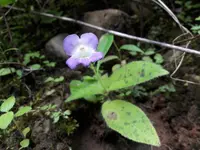
Henckelia pumila is a small, herbaceous perennial from the African violet family, valued for its compact rosettes and softly textured, ornamental foliage. It typically forms low, mounded clumps that suit shelves, windowsills, and terrariums.
In the wild, it grows on shaded, humid rock faces and forested slopes in parts of South and Southeast Asia. This background explains its preference for gentle light, consistent moisture, and airy, well-drained substrate.
The plant is generally moderate in difficulty, as it dislikes extremes in dryness, sogginess, and direct sun. With a stable indoor environment and careful watering, it is straightforward to care for Henckelia pumila.

Care Difficulty
Moderate Care

Light Preference
Bright Indirect Light

Water Requirements
Keep Soil Moist

Temperature Preference
Tropical / Frost Sensitive

Hardiness Zone
10–11

Soil Texture
Loamy, Peaty, Organic-rich

Soil pH
Acidic (5.5–6.5), Slightly acidic (6.5–7.0)

Soil Drainage
Moist but well-drained

Fertilization
Light (every 4–6 weeks)
Scan your plant to receive care tips personalized for your specific plant
Available on iOS and Android
This species prefers bright, indirect light with protection from intense midday sun.
This plant prefers consistently lightly moist, but not saturated, soil.
Stable, mild temperatures support compact growth and regular flowering.
This species benefits from moderately moist air and reacts quickly to very dry rooms.
This plant prefers a loose, airy, organic-rich mix that drains freely but does not dry out too fast.
This species is well suited to container culture, especially shallow, wide pots that match its spreading root system.
Light, balanced feeding supports compact growth and flowering in Henckelia pumila.
Pruning is modest but useful to keep Henckelia pumila compact and blooming well.
Repotting keeps this small Gesneriad healthy by refreshing soil and preventing root congestion.
Propagation of Henckelia pumila is usually done vegetatively to maintain desired traits.
This species is sensitive to cold and benefits from careful winter handling, especially in containers.

Plant Health Check
Not sure what's wrong with your plant? Check your plant's health inside the app.
This species naturally occurs on moist, shaded rock faces and along streams in parts of the Himalayas and adjoining regions, often rooting in thin layers of moss and leaf litter rather than deep soil.
The plant forms a low, compact rosette of softly textured leaves and can spread slowly via short stolons, helping it colonize small crevices in its native habitat.
Henckelia pumila belongs to the Gesneriaceae family, the same group as African violets and Streptocarpus, sharing features like tubular flowers adapted for pollination by insects such as bees.
Lack of flowering usually comes from insufficient maturity, low light intensity, or nutrient imbalance with too much nitrogen. Provide bright, indirect light, a balanced fertilizer with some phosphorus, and avoid frequent repotting so buds can form.
Keep your plants happy and healthy with plant identification, disease detection, and easy care guidance.


Annual Sword fern
Nephrolepis undulata var. aureoglandulosa
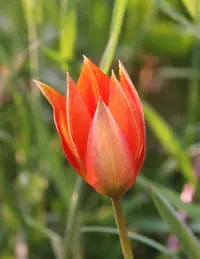
orange wild tulip
Tulipa orphanidea
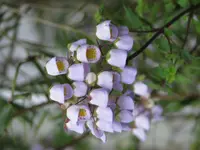
violet teacup flower
Jovellana violacea
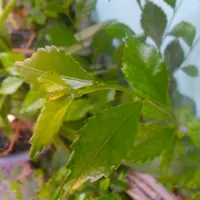
Acalypha siamensis
Acalypha siamensis
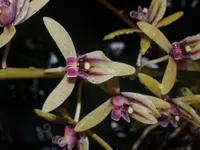
Aloe-leafed cymbidium
Cymbidium aloifolium
 POPULAR
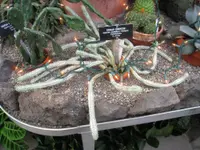
Corncob cactus
Euphorbia mammillaris
 POPULAR
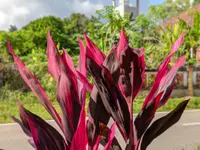
Ti Plant
Cordyline fruticosa
Codonacanthus pauciflorus
Codonacanthus pauciflorus