Monkeytail Shadowpalm Care (Geonoma interrupta)

Monkeytail Shadowpalm

About Monkeytail Shadowpalm

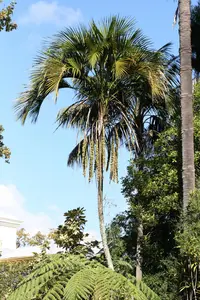
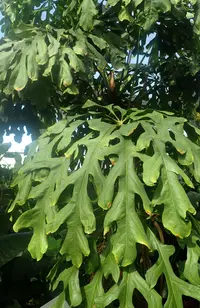
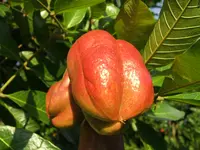
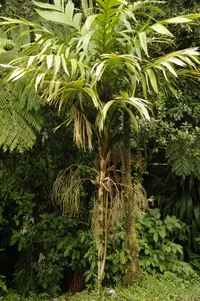
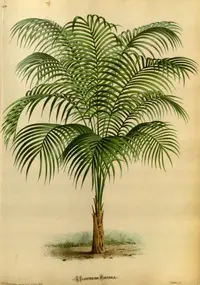
Monkeytail shadowpalm, Geonoma interrupta, is a small understory palm from humid tropical forests of Central and South America. It naturally grows in shaded, sheltered sites beneath taller trees. The plant typically forms a slender, cane-like trunk with narrow, arching leaves that give it a delicate, fine-textured look. Its slow growth and compact size make it more suitable for patient growers and smaller spaces. Geonoma interrupta prefers stable warmth, consistent moisture, and a humus-rich, well-drained substrate, so it dislikes drying out completely or strong direct sun. Understanding these forest conditions helps clarify how to care for Monkeytail Shadowpalm in cultivation.

Main Plant Requirements

Care Difficulty

Hard Care

Light Preference

Partial Shade

Water Requirements

Keep Soil Moist

Temperature Preference

Tropical / Frost Sensitive

Hardiness Zone

11–12

Soil Texture

Loamy, Silty, Organic-rich

Soil pH

Acidic (5.5–6.5)

Soil Drainage

Moist but well-drained

Fertilization

Light (every 4–6 weeks)

Get Personalized Care Plan

Scan your plant to receive care tips personalized for your specific plant

Available on iOS and Android

How to Care for the Monkeytail Shadowpalm

Geonoma interrupta prefers soft, filtered light that mimics an understory rainforest habitat.

  • Provide bright, indirect light or light dappled shade, such as under taller trees or 30–50% shade cloth, with 2–3 hours of gentle morning sun at most.
  • Avoid harsh midday and afternoon sun, which can scorch Monkeytail Shadowpalm fronds, causing pale, dry patches and crispy tips.
  • In summer, increase shade or move slightly deeper under canopy; in winter, allow more morning light so the plant still receives 4–6 hours of bright, filtered light.

This palm prefers evenly moist, not soggy, soil throughout the growing season.

  • Water when the top 2–3 cm of soil feel slightly dry, using enough water to moisten the root zone but allowing excess to drain away freely.
  • Use rich, well-drained soil; persistent puddling, sour smell, yellowing fronds, or soft stems indicate overwatering and possible root rot.
  • In cooler months, let the top 3–5 cm dry before watering; brown, brittle leaflet tips and slow unfurling leaves on Geonoma interrupta suggest underwatering.

This species thrives in warm, stable conditions typical of lowland tropical forest.

  • Aim for 70–85°F (21–29°C) for active growth, avoiding sudden swings greater than about 10°F (6°C) within a day.
  • Protect from cold; growth slows below 60°F (16°C) and plants can suffer damage below 50°F (10°C), with true frost causing rapid leaf collapse.
  • In hot spells above 90°F (32°C), increase humidity, shade, and soil moisture while maintaining drainage to prevent heat stress and leaf scorch.

This species prefers consistently high humidity to grow well indoors.

  • Aim for 60–80% humidity; levels below 50% often cause leaf-edge browning and tip scorch.
  • Monkeytail Shadowpalm tolerates brief drier spells but prolonged dry air leads to curling fronds and stalled growth.
  • Increase humidity with a nearby humidifier, pebble tray under the pot, and grouping plants while ensuring air still moves gently around foliage.

This palm prefers moist, airy, organic-rich soil that never becomes waterlogged.

  • Use a loose mix of 50–60% peat or coco coir with compost, plus perlite and fine bark to increase drainage and aeration.
  • Target slightly acidic pH, around 5.5–6.5, which supports nutrient uptake and reduces micronutrient deficiencies.
  • Avoid compacted, heavy clay or pure sand, since both restrict healthy root development in Geonoma interrupta and destabilize moisture levels.
  • If the mix stays wet for more than 3–4 days, increase coarse perlite or bark to create larger air pockets around roots.

This species adapts well to container growing when the pot supports stable, moist, aerated roots.

  • Choose a tall, narrow pot shape that allows deeper root exploration while limiting excess surface area that dries rapidly.
  • Select a heavier material such as ceramic or clay to counter the palm’s vertical growth and reduce tipping risk.
  • Raise the container slightly on pot feet so drainage holes clear the saucer, allowing faster escape of excess water after watering.

This palm responds moderately well to feeding, especially in containers, but overfertilization can damage roots.

  • Use a balanced, dilute liquid fertilizer (around 10-10-10) or slow-release palm formula at 1/2 strength during active growth.
  • Feed every 6–8 weeks in spring and summer for Monkeytail Shadowpalm grown indoors or in pots.
  • In autumn and winter, reduce feeding to 1 light application or stop entirely if growth slows.
  • Avoid manure-heavy compost near the stem; water before and after fertilizing to limit salt buildup.

Pruning needs for Geonoma interrupta are minimal and focus on cleanliness rather than reshaping the palm.

  • Best time for pruning is late winter to early spring or whenever fronds are clearly dead or diseased.
  • Remove only brown, dry, or damaged fronds, cutting close to the trunk without nicking healthy tissue.
  • Thin crowded, crossing leaf bases cautiously to improve airflow while keeping the natural form.
  • Use sharp, disinfected hand pruners; clean tools between cuts if disease is suspected.

Container-grown plants appreciate occasional repotting, while landscape plants dislike frequent disturbance.

  • Look for roots circling the pot, pushing from drainage holes, or noticeably slowed growth as signs to repot.
  • Plan repotting or transplanting for late spring, when temperatures are stable and new root growth is strong.
  • Move up only 1 pot size, using a well-drained, rich mix; keep the root ball as intact as possible.
  • Water thoroughly after moving, shade from strong sun for 1–2 weeks, and maintain even moisture to reduce root stress.

This palm is usually propagated from seed and is slow, so propagation tends to be limited to specialist growers.

  • Use fresh, fully ripe seeds; clean the pulp and sow in spring in a sterile, free-draining mix.
  • Maintain warm conditions (75–85°F), high humidity, and gentle bottom heat for more reliable germination.
  • Keep the substrate just moist, never waterlogged, since excess water encourages rot in slow-sprouting seeds.
  • Seedlings should stay in small containers until roots fill the pot, then be shifted carefully to reduce shock.

This tropical palm is frost-tender and needs specific winter care in most temperate climates.

  • Avoid exposure to frost or temperatures below about 45°F, as foliage and growing points are easily damaged.
  • Mulch the root zone with 5–8 cm of organic material in mild climates to buffer soil temperature.
  • For container plants, move indoors to a bright, draft-free spot before the first cold nights.
  • Reduce watering in winter, keeping soil slightly moist but never saturated in cooler conditions.

Care Tips

Stabilize Palm Clump

Use a low, heavy container or place a decorative stone layer on the soil surface to stabilize the rootball and prevent this slender-stemmed palm from leaning or rocking when moved or during repotting.

Rotate For Even Fronds

Rotate the pot 90° every 2–3 weeks so new fronds distribute light exposure evenly, which helps maintain a symmetrical crown and reduces the risk of weak, one-sided growth indoors.

Maintain Clean Leaflets

Wipe leaflets gently with a barely damp microfiber cloth every 4–6 weeks to remove dust, which improves light capture and reduces habitat for spider mites in indoor conditions.

Use Pebble Humidity Tray

Set the pot on a wide tray filled with pebbles and water kept below the pot base to create a stable humidity microzone around the foliage without saturating the root system, which is particularly helpful for Monkeytail Shadowpalm indoor care.

Inspect Hidden Crown

Check the crown where new fronds emerge every month for soft tissue, blackening, or scale insects, and remove any dead sheath material so pests and rot do not establish in these tight, shaded areas.

Common Pests and Diseases

Palm aphids

These insects feed on the undersides of pinnae and young leaf stalks, sucking sap and causing leaf yellowing, distortion, and sticky honeydew that can lead to sooty mold. This pest is most common on shade-grown understory palms with soft foliage such as Geonoma interrupta.

Solution

Rinse foliage thoroughly with a firm stream of water, focusing on the undersides of leaflets, then repeat every few days until populations drop. For persistent colonies, use an insecticidal soap or horticultural oil labeled for palms, applied in the evening, and improve air circulation to make the plant less favorable to aphids.

Palm scale

This pest appears as small, fixed bumps on stems, petioles, and midribs, weakening the palm by sucking sap and sometimes causing yellow spotting and patchy decline. This species is susceptible in shaded, humid conditions where scale insects are not checked by predators or air movement.

Solution

Prune and dispose of heavily infested fronds, then wipe remaining scale with a cloth or soft brush dipped in a mild insecticidal soap solution. Follow with 2–3 applications of horticultural oil at 7–10 day intervals, ensuring thorough coverage of stems and leaf midribs, and keep the plant slightly drier at the foliage level to slow reinfestation.

Pink rot

This disease, caused by fungal pathogens in wet, low-light settings, affects leaf bases and young emerging spears, leading to brown, water-soaked lesions that may collapse and sometimes show pinkish spore masses. Symptoms include stunted new growth and dieback of the central growing point if infection is severe.

Solution

Remove and discard all affected fronds and spear tissue, cutting back to firm, healthy material and sterilizing tools between cuts. Improve drainage and airflow, avoid overhead watering, and keep the crown area dry; in high-risk collections or repeated cases, use a systemic fungicide labeled for palm pink rot according to label directions.

Leaf spot

This disease causes small brown or gray spots on the thin, shade-adapted leaflets, sometimes with darker margins or a yellow halo, which can merge into larger blighted areas under constant humidity. These fungi spread easily on wet foliage in dense understory or greenhouse conditions.

Solution

Remove and discard the most affected fronds to reduce spore load, then water at soil level and keep leaves as dry as possible, especially at night. Increase spacing and airflow and, if spotting continues to spread, apply a broad-spectrum fungicide labeled for palm leaf spot, following all label intervals and coverage instructions.

Interesting Facts

Understory rainforest specialist

This species occurs naturally on shaded, humid forest floors in lowland to premontane rainforests from Central to parts of northern South America, where it forms small colonies rather than large stands.

Distinctive leaf interruption

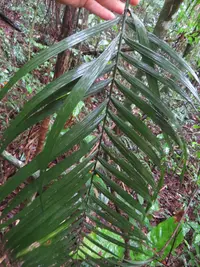
The specific epithet interrupta refers to the characteristic leaf blade pattern, where the leaflet tissue appears interrupted by narrow gaps or divisions along the pinnae, giving the fronds a segmented, feathery look.

Narrow elevational niche

Wild populations are typically found in a relatively restricted elevational band, often between roughly mid-lowland and lower montane zones, reflecting adaptation to stable, warm, and moist microclimates rather than highly variable highland or open habitats.

FAQs about Monkeytail Shadowpalm

This species is slow-growing, typically adding only a few new leaves each year. Height increase is modest, often just a few cm annually, even in ideal conditions, so long-term planning is important when positioning it.

Grow Healthy Plants with Botan Care

Keep your plants happy and healthy with plant identification, disease detection, and easy care guidance.

Botan plant care app — identify plants on mobile

Explore More Plants