Training central leader
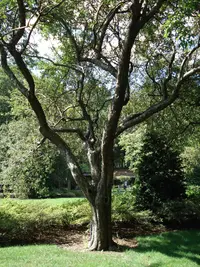
Select one strong upright shoot as the main leader in the first 2–3 years and remove or shorten competing vertical shoots to build a stable tree structure that carries heavy fruit without splitting.

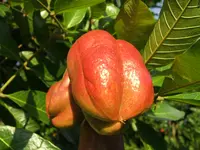
Akee, Blighia sapida, is an evergreen fruit tree from West Africa, now widely grown in tropical regions such as the Caribbean and parts of Central America. It is best known for its bright red pods that split open to reveal pale arils and glossy black seeds.
The tree forms a dense, rounded crown with leathery green leaves and can become quite large in warm climates. It prefers warm temperatures, good light, and well-drained soil, so care for akee is easier in consistently frost-free areas.
Because it is a true tropical tree, it is challenging to maintain long term in cooler climates or small indoor spaces.

Care Difficulty
Moderate Care

Light Preference
Full Sun

Water Requirements
Regular Water

Temperature Preference
Tropical / Frost Sensitive

Hardiness Zone
10–12

Soil Texture
Sandy, Loamy, Organic-rich

Soil pH
Acidic (5.5–6.5), Slightly acidic (6.5–7.0)

Soil Drainage
Moist but well-drained

Fertilization
Minimal (feed rarely)
Scan your plant to receive care tips personalized for your specific plant
Available on iOS and Android
Blighia sapida needs strong, warm-climate light but benefits from some protection during the harshest sun.
This species prefers evenly moist, well-drained soil rather than constant saturation.
This tropical tree performs best in consistently warm, frost-free conditions.
This tropical species prefers moderate humidity but adapts if air is not extremely dry.
Blighia sapida needs deep, well-structured, free-draining soil to support its extensive root system.
This species can be grown in containers for the first years if the pot is large and very stable.
Blighia sapida responds well to light, balanced feeding in warm months but does not need heavy fertilization.
Pruning Blighia sapida helps manage size, light penetration, and fruiting wood quality.
This species is usually grown in the ground, so focus on careful transplanting of young trees.
Blighia sapida is usually propagated from seeds, with some use of semi-hardwood cuttings in suitable climates.
This tropical tree is frost sensitive and needs careful winter management in cooler regions.

Plant Health Check
Not sure what's wrong with your plant? Check your plant's health inside the app.
The arils, the creamy flesh around the shiny black seeds, are the only edible part of the akee fruit and must be fully naturally opened on the tree before harvest to be considered safe for consumption.
Unripe akee arils contain high levels of hypoglycin A, a naturally occurring toxin that can trigger sudden low blood sugar and the potentially fatal condition known as Jamaican vomiting sickness when improperly prepared.
Although native to West Africa, akee became so culturally important in Jamaica after its introduction in the 18th century that it is now the country’s national fruit and a central ingredient in the national dish, ackee and saltfish.

Akee fruits do not continue to ripen safely after harvest; they must split open naturally on the tree to allow the toxic hypoglycin levels in the edible arils to decline to acceptable levels, which is why traditional harvesting relies on waiting for the pods to open by themselves.
Only the fully ripe, naturally opened arils are edible; all other parts, including unripe fruit and seeds, contain toxins that can cause severe illness. Always discard pink membranes and seeds and cook arils thoroughly before eating.
Keep your plants happy and healthy with plant identification, disease detection, and easy care guidance.