Hand Pollination Assist
Indoors or in low-insect environments, lightly tap or brush between open flowers with a small, clean paintbrush every 1–2 days during bloom to improve fruit set.

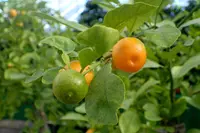
Calamondin, Citrus × microcarpa, is a compact citrus tree grown mainly as an ornamental and for its small, sour, edible fruits. It is often kept in containers, with a naturally bushy habit, glossy evergreen leaves, and fragrant white blossoms.
This species likely originates from Southeast Asia and adapts well to warm, bright conditions in homes, greenhouses, and patios. It is considered relatively manageable for indoor growers because it tolerates pruning and container culture.
To care for calamondin successfully, provide strong light, a well-drained potting mix, and steady moisture without waterlogging the roots.

Care Difficulty
Moderate Care

Light Preference
Full Sun

Water Requirements
Moderate Water

Temperature Preference
Tropical / Frost Sensitive

Hardiness Zone
9–11

Soil Texture
Sandy, Loamy, Organic-rich

Soil pH
Acidic (5.5–6.5), Slightly acidic (6.5–7.0)

Soil Drainage
Well-drained

Fertilization
Moderate (every 2–4 weeks)
Scan your plant to receive care tips personalized for your specific plant
Available on iOS and Android
Citrus × microcarpa needs abundant light to flower and fruit reliably.
This citrus prefers evenly moist but not saturated soil for healthy roots and fruiting.
Stable warm conditions support strong growth and reliable fruiting for this citrus.
This citrus prefers moderate humidity but usually adapts well to typical indoor air.
This species needs a fast-draining, airy substrate that still holds moderate moisture and nutrients.
This citrus is well suited to container growing when the pot is chosen and managed carefully.
Citrus × microcarpa benefits from consistent, moderate feeding to support foliage, flowering, and fruiting.
Pruning Citrus × microcarpa helps maintain a compact, productive canopy and good light penetration.
Container-grown Citrus × microcarpa benefits from periodic repotting to refresh soil and manage root growth.
Citrus × microcarpa is commonly propagated from semi-hardwood cuttings to maintain desired fruiting traits.
Cool-season care is important, as Citrus × microcarpa is sensitive to freezing conditions and prolonged cold.

Plant Health Check
Not sure what's wrong with your plant? Check your plant's health inside the app.
Citrus × microcarpa is a long-established hybrid citrus, probably between kumquat and mandarin-type parents, but its exact wild progenitors and place of origin remain uncertain despite extensive study.
In many Southeast Asian cuisines, the thin, aromatic rind is used for flavoring while the very sour pulp is often squeezed for juice and then discarded, which is the opposite of how most citrus fruits are used.
Although domesticated, this species has escaped cultivation and naturalized in many lowland tropical areas, where it can form dense, thorny thickets that provide shelter and food for local wildlife through year-round fruiting.

In the Philippines, calamondin (locally called calamansi) is such a staple souring ingredient and flavoring that it functions culturally much like lemons and limes do in Western cuisines, appearing in everyday drinks, marinades, dipping sauces, and even commercial soft drinks.
Yellowing leaves usually result from overwatering, poor drainage, or nutrient deficiency, especially lack of nitrogen or iron. Check for soggy soil, improve drainage, and use a balanced citrus fertilizer according to label directions.
Keep your plants happy and healthy with plant identification, disease detection, and easy care guidance.