Carnauba palm Care (Copernicia prunifera)

Also known as: carnauba wax palm
Carnauba palm

About Carnauba palm

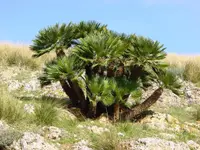
Carnauba palm, Copernicia prunifera, is a slow-growing, fan-leaved palm tree native to the semi-arid regions of northeastern Brazil. It forms a single, upright trunk with a dense, rounded crown of stiff, waxy blue-green leaves.

In nature it tolerates strong sun, seasonal drought, and poor, sandy soils, which makes it tough but also sensitive to overwatering and poor drainage in cultivation. Its rigid leaves, waxy coating, and drought tolerance are the main traits that influence how easy it is to grow.

Gardeners who want to learn how to care for Carnauba palm should know it prefers bright light, warmth, and a well-drained, mineral-rich substrate to stay healthy and compact.


Main Plant Requirements

Care Difficulty

Moderate Care

Light Preference

Full Sun

Water Requirements

Moderate Water

Temperature Preference

Tropical / Frost Sensitive

Hardiness Zone

10–12

Soil Texture

Sandy, Loamy

Soil pH

Slightly acidic (6.5–7.0), Neutral (7.0)

Soil Drainage

Well-drained

Fertilization

Minimal (feed rarely)

Get Personalized Care Plan

Scan your plant to receive care tips personalized for your specific plant

Available on iOS and Android

How to Care for the Carnauba palm

This sun-loving palm needs strong light to form a dense, symmetrical crown.

  • Provide 6–8 hours of full sun daily; young plants benefit from morning sun with light afternoon shade in very hot, dry regions.
  • Carnauba palm tolerates light partial shade, but prolonged shade leads to thin trunks, sparse fronds, and slower growth.
  • In summer, avoid sudden moves from shade to full sun to prevent leaf scorch; in winter, prioritize maximum direct sun and avoid shading from buildings or taller plants.

This drought-tolerant palm prefers deep, infrequent watering over constant moisture.

  • In the ground, water thoroughly when the top 5–8 cm of soil feels dry, allowing water to soak the root zone, then drain fully.
  • Use fast-draining, sandy or loamy soil; puddling for more than 30–60 minutes or a sour smell indicates poor drainage and overwatering risk for Copernicia prunifera.
  • In hot, dry months, signs of underwatering include folded, browning leaflet tips, while overwatering causes yellowing fronds starting from the lowest leaves.

This palm thrives in warm, frost-free climates with stable temperatures.

  • Ideal growth occurs around 70–90°F (21–32°C), with consistent warmth supporting strong trunk development and leaf production.
  • Short dips to about 30–32°F (-1–0°C) may be survived by established plants, but tissue damage is likely and repeated frosts can kill the crown.
  • It tolerates hot conditions up to about 100–105°F (38–41°C) if soil moisture is adequate; during heatwaves, reduce reflected heat and avoid planting against sun-baked walls.

This species tolerates a wide humidity range but grows best with moderately dry air.

  • Aim for 30–50% humidity; avoid persistently above 70% to reduce leaf disease risk.
  • Low humidity rarely harms Carnauba palm, but sudden shifts can cause mild leaf tip browning.
  • Increase humidity slightly only if air is extremely dry by grouping plants or placing a shallow pebble tray nearby.

Copernicia prunifera needs fast-draining, mineral-rich soil that mimics dry, sandy habitats.

  • Use a sandy or gritty mix, such as 50–60% coarse sand or grit blended with 40–50% loam-based potting mix.
  • Ensure very sharp drainage; water must pass through rapidly and never leave the mix soggy.
  • Slightly acidic to neutral pH around 6.0–7.0 supports nutrient uptake without causing toxicity.
  • Avoid heavy clay, peat-heavy, or compacted mixes; add coarse sand or fine gravel to improve aeration and structure.

This palm can be grown in containers when provided with a stable, deep, and very free-draining setup.

  • Choose a tall, heavy pot to counteract the palm’s eventual height and wind catch, especially outdoors on patios or balconies.
  • Select a pot material with some weight, such as thick terracotta or concrete, to prevent the root ball from rocking in strong gusts.
  • Position the container where runoff can drain freely away from the base so water never collects around the pot bottom.

Copernicia prunifera benefits from modest, targeted feeding during the warm growing season, especially in containers.

  • Use a balanced slow-release palm fertilizer or balanced NPK (e.g., 10-10-10) formulated for palms.
  • Feed every 8–12 weeks in spring and summer; skip or greatly reduce feeding in fall and winter.
  • Apply at 1/2–3/4 the label rate for container plants to avoid salt buildup and root burn.
  • Supplement with a light top-dressing of compost once a year to support soil structure and micronutrients.

Pruning for Copernicia prunifera is mainly cosmetic and for safety rather than growth stimulation.

  • Carry out pruning in late winter or early spring, before strong new growth begins.
  • Remove only dead, brown, damaged, or severely tattered fronds; leave green fronds to maintain energy reserves.
  • Use clean, sharp loppers or a pruning saw, cutting close to the trunk without damaging the trunk surface.
  • Avoid over-thinning the canopy, as this can stress the palm and alter its natural architectural form.

Transplanting Carnauba palm requires planning, as this species dislikes root disturbance once established.

  • Look for roots circling the container, bulging sides, or slowed growth as signals to move up 1 pot size.
  • Schedule transplanting or planting out in late spring to early summer, when soil is warm and growth is active.
  • Expect repotting only every 3–5 years for container specimens; handle the root ball gently to limit damage.
  • Water thoroughly before and after moving, keep the palm shaded for 5–7 days, and maintain even moisture until recovery.

Propagation of Copernicia prunifera is done almost exclusively from seeds and is slow and specialized.

  • Collect fully ripe seeds, clean off fruit flesh, and sow as fresh as possible for higher viability.
  • Sow in a well-drained, sandy mix and maintain warm conditions around 77–86°F with high humidity.
  • Expect long, uneven germination, often taking several months; keep the medium just slightly moist, never waterlogged.
  • Provide bright, indirect light for seedlings and pot up carefully once roots have filled the starter container.

This palm is only mildly cold tolerant and needs thoughtful winter care in regions with frost or freezing.

  • Avoid exposure below about 28–30°F; in colder climates, grow Copernicia prunifera in large containers.
  • Move container plants indoors or into a bright, frost-free greenhouse before the first freeze.
  • Mulch the root zone with 5–8 cm of coarse organic material in the ground to moderate soil temperature.
  • Reduce watering in winter, keeping soil lightly moist but never saturated to limit cold-related root damage.

Care Tips

Wind firming seedlings

If starting young plants in containers, expose them to steady air movement or gently flex the stems by hand a few times per week so the trunk tissues thicken and better tolerate the strong winds typical in this species’ mature habitats.

Root space planning

When planting in the ground, leave at least 3–4 m of clear radius around the trunk for future root and crown expansion, so hardscape, irrigation lines, and nearby plants are not damaged as the palm matures.

Mulch for buttress

Maintain a 5–8 cm layer of coarse, woody mulch in a wide ring around the base, stopping 10–15 cm short of the trunk, to conserve soil moisture and encourage a stable, spreading root plate without rotting the stem base.

Frond handling safety

When removing old fronds or working near the crown, wear eye protection and sturdy gloves, and cut from the underside of the frond away from the trunk to avoid tearing living tissue and to reduce risk of injury from stiff leaf segments.

Seasonal salt management

In coastal or roadside plantings where spray or de-icing salt may accumulate, periodically hose down the leaves and upper soil surface to wash off salts, which helps maintain healthy leaf color when growing Carnauba palm in exposed sites.

Common Pests and Diseases

Palm leaf skeletonizer

This pest is the larval stage of a moth that tunnels between leaf surfaces and eats the internal tissue, leaving translucent patches and brown, shredded sections along the fronds. Symptoms include thin, papery areas on the leaf blades and irregular feeding tracks that give fronds a scorched or skeletonized look.

Solution

Prune and destroy heavily infested fronds to remove most larvae, then inspect new growth regularly and remove early-damaged leaf segments before larvae spread. For persistent infestations, use a targeted biological control such as Bacillus thuringiensis (Bt) applied to the undersides of young fronds, and avoid broad-spectrum insecticides that can kill beneficial predators.

Scale insects

These insects attach to leaf stalks and trunks as small bumps or crusty patches and suck plant sap, often causing yellowing, reduced vigor, and sticky honeydew on nearby surfaces. This pest can encourage sooty mold growth on leaves when honeydew accumulates.

Solution

Physically remove scales on small plants by gently scraping or wiping with a cloth dipped in diluted alcohol, and prune heavily infested leaf bases when possible. For larger or landscape specimens, use a horticultural oil spray directed at the trunk and leaf bases during mild weather, repeating as needed to target newly hatched crawlers while monitoring for ants that may protect the scales.

Ganoderma butt rot

This disease is a serious trunk and root decay caused by Ganoderma fungus, leading to gradual decline, reduced canopy density, and sudden collapse in advanced cases. Symptoms include a conk (shelf-like mushroom) forming at the lower trunk and internal wood decay that cannot be reversed once established.

Solution

Remove and dispose of any palm showing conks or severe decline, including the stump, to reduce fungal inoculum in the soil, and avoid replanting another palm in the exact same spot. Preventive steps include avoiding trunk wounds, ensuring good drainage, and not piling mulch or soil against the base of the trunk to limit infection opportunities when growing Carnauba palm.

Pink bud rot

This disease affects the spear leaf and central growing point under humid, warm conditions, causing soft, water-soaked tissue, a foul odor, and collapse of the emerging fronds. Symptoms include browning and easy pull-out of the spear leaf while older leaves may initially appear unchanged.

Solution

Remove and destroy all affected spear and surrounding soft tissue, then improve drainage and airflow around the palm to lower humidity at the crown. In high-value specimens, a fungicide labeled for Phytophthora or related crown rots can be carefully drenched into the crown area at the first sign of spear discoloration, combined with strict avoidance of overhead irrigation.

Red palm mite

These insects are tiny red mites that feed on the underside of fronds, causing fine yellow stippling, bronzing, and eventual premature leaf death in hot, dry climates. This pest can spread quickly between palms, especially where plants are close together and air movement is low.

Solution

Rinse fronds thoroughly with a strong stream of water aimed at the undersides to dislodge mites and dust, and repeat regularly during warm seasons. If populations remain high, use a miticide or horticultural oil specifically labeled for mites on palms, applying carefully to leaf undersides and integrating with improved spacing and reduced overhead stress to support Copernicia prunifera plant care.

Interesting Facts

Source of carnauba wax

This Brazilian palm is the primary natural source of commercial carnauba wax, which is extracted from a powdery coating on its leaf surfaces and used in products such as food glazes, pharmaceuticals, and polishes.

Adapted to seasonal drought

Native to the semi-arid Caatinga region of northeastern Brazil, it tolerates long dry seasons by developing a deep root system and tough, wax-coated leaves that reduce water loss.

Ecological keystone in Caatinga

In its native habitat, this palm provides nesting sites, shade, and food resources for birds, insects, and livestock, and its presence helps stabilize soils in seasonally flooded and then intensely dry landscapes.

Botan icon

Did you know?

The remarkable durability and high melting point of its leaf wax led to its nickname the "queen of waxes," and it has been historically important to the economy of northeastern Brazil due to large-scale harvesting and export for more than a century.

FAQs about Carnauba palm

This species grows slowly, usually adding 15–30 cm in height per year under warm, frost-free conditions. Growth is faster in deep, well-drained soil with consistent moisture and regular fertilizer, and slower in windy, exposed, or nutrient-poor sites.

Grow Healthy Plants with Botan Care

Keep your plants happy and healthy with plant identification, disease detection, and easy care guidance.

Botan plant care app — identify plants on mobile

Explore More Plants