


Manage Salt Exposure
In coastal or high-salinity areas, periodically deep-flush the root zone with fresh water to leach out accumulated salts that can burn leaf tips and slow growth.

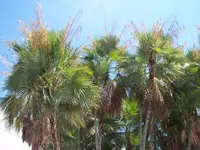
The Everglades palm, Acoelorraphe wrightii, is a clumping fan palm that often forms dense thickets rather than a single tall trunk. Its stiff, rounded fan leaves, narrow trunks, and suckering habit give it a shrubby, architectural look suited to naturalistic or tropical-style plantings.
This species is native to wetlands and coastal areas of Florida, the Caribbean, and parts of Central America, where it grows in seasonally flooded or brackish sites. It is generally hardy and wind tolerant but needs consistent moisture and dislikes very dry air or prolonged drought.
Gardeners who want to care for Everglades palm should provide sun to light shade, evenly moist soil, and enough space for it to spread over time.

Care Difficulty
Moderate Care

Light Preference
Full Sun

Water Requirements
Aquatic

Temperature Preference
Warm Climate

Hardiness Zone
9–11

Soil Texture
Sandy, Loamy, Organic-rich

Soil pH
Slightly acidic (6.5–7.0), Neutral (7.0)

Soil Drainage
Waterlogged tolerant

Fertilization
Minimal (feed rarely)
Scan your plant to receive care tips personalized for your specific plant
Available on iOS and Android
This palm favors bright, warm conditions similar to its native wetlands.
This species evolved in wetlands and prefers consistently moist conditions without long dry periods.
This palm thrives in warm, frost-free climates but shows notable cold tolerance for a tropical species.
This species prefers moderately humid air but adapts to many household conditions.
This palm prefers moist, airy soil that stays evenly damp yet never stagnant.
This palm can be grown in containers, especially when young or in cooler climates.
This palm benefits from light, balanced feeding but tolerates lean soils well.
Pruning Acoelorraphe wrightii is mainly cosmetic and health-focused rather than shaping-intensive.
This clumping palm is usually grown in the ground, with transplanting done infrequently and carefully.
Propagation of this palm is most reliable from seed, with clump division used less often.
This palm is relatively cold tolerant but benefits from simple winter precautions in cooler climates.

Plant Health Check
Not sure what's wrong with your plant? Check your plant's health inside the app.
This palm forms dense clumps with many stems that help trap sediment and stabilize soils in freshwater and brackish wetlands across the Everglades and Caribbean coastal zones.
Unlike many palms, it tolerates occasional brackish or mildly salty water, which allows it to grow in coastal marshes, mangrove ecotones, and tidally influenced habitats.
Its small, pale fruits are eaten by birds and other wildlife, and the stiff, fan-shaped leaves provide shelter and nesting structure in low, open wetland landscapes.

In its native Everglades and Caribbean range, this species often forms nearly pure, impenetrable thickets called palm brakes, creating distinct habitat islands that can alter local water flow and serve as refuge for many wetland animals.
Growth is moderate. In favorable outdoor conditions, expect about 15–30 cm of height increase per year. Clumps expand slowly by new stems from the base, so full landscape size may take many years to develop.
Keep your plants happy and healthy with plant identification, disease detection, and easy care guidance.

Aiphanes horrida
Aiphanes horrida

Elephant's Ear
Alocasia sarawakensis 'Yucatan Princess'
sago palm
Metroxylon sagu
Upright Elephant Ear
Alocasia macrorrhizos 'Black Stem'
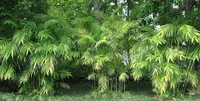
Bamboo Palm
Chamaedorea seifrizii
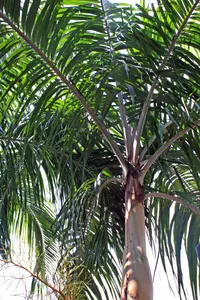
Carpentaria
Carpentaria acuminata
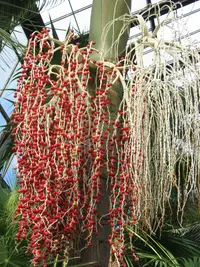
dwarf yatay palm
Butia paraguayensis
 POPULAR
Parlor Palm
Chamaedorea elegans