Stake Young Trunks
Install a sturdy stake on the windward side when the palm is young, tying the trunk loosely with soft, wide ties, and remove the support once the stem has clearly thickened and can stand upright in seasonal winds.

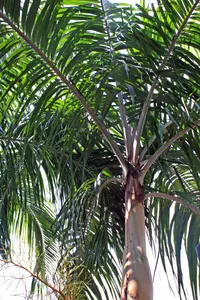
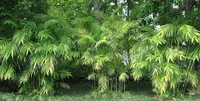
Carpentaria acuminata, commonly called the Carpentaria palm, is a fast-growing, single-trunk palm native to tropical northern Australia. It is typically tall and slender with a smooth gray trunk, ringed leaf scars, and a compact crown of graceful, feathery fronds.
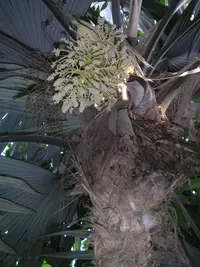
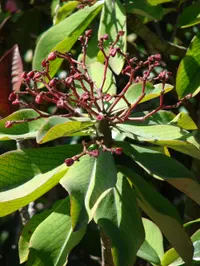
In landscapes it forms a vertical accent and can produce dense clusters of small flowers and bright red fruits. It is usually grown in warm, frost-free climates and is best suited to outdoor planting rather than small indoor spaces.
This species prefers bright light, consistent moisture, and well-drained soil. Its rapid growth and need for warmth mean it is not difficult but does require attentive care for Carpentaria in cooler or drier regions.

Care Difficulty
Moderate Care

Light Preference
Full Sun

Water Requirements
Regular Water

Temperature Preference
Tropical / Frost Sensitive

Hardiness Zone
10–12

Soil Texture
Sandy, Loamy, Organic-rich

Soil pH
Acidic (5.5–6.5), Slightly acidic (6.5–7.0)

Soil Drainage
Moist but well-drained

Fertilization
Minimal (feed rarely)
Scan your plant to receive care tips personalized for your specific plant
Available on iOS and Android
This sun-loving palm needs strong light but protection from harsh extremes to grow well.
This palm prefers steadily moist but not waterlogged soil, especially in warm weather.
This tropical palm needs warm, frost-free conditions to maintain healthy growth.
This palm prefers consistently warm, humid air and reacts poorly to very dry conditions indoors.
This species needs freely draining, airy soil that stays slightly moist but never waterlogged.
This palm can be grown in containers when provided with ample root space and careful moisture management.
Young Carpentaria acuminata respond well to light, balanced feeding in containers or poor soils, while established landscape trees often need little extra fertilizer.
Pruning Carpentaria acuminata is usually light and focused on safety and clean structure rather than size control.
Carpentaria acuminata is most often transplanted from containers into the ground when still young and manageable.
Propagation of Carpentaria acuminata is typically done from fresh seed rather than vegetative cuttings.
This tropical palm is frost-sensitive and needs careful winter management outside frost-free climates.

Plant Health Check
Not sure what's wrong with your plant? Check your plant's health inside the app.
This palm is naturally restricted to the monsoon forests of northern Australia, especially the Northern Territory and far north Queensland, where it grows along seasonally wet creek lines and alluvial flats.
Mature plants form a solitary, slender trunk that sheds old leaf bases cleanly, so the stem remains relatively smooth compared with many other pinnate-leaved palms.
The palm produces abundant clusters of small red to orange fruits that are an important seasonal food source for birds and other wildlife in its native range.

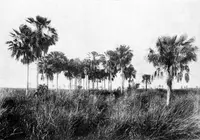
In some parts of northern Australia, dense natural stands of this species can form almost pure palm groves in lowland rainforest, creating a distinct vertical structure and strongly influencing light levels and understorey plant composition.
This palm is considered fast-growing, often adding 30–90 cm per year in warm climates. In suitable outdoor conditions it commonly reaches 6–10 m, sometimes taller, so allow ample vertical and root space.
Keep your plants happy and healthy with plant identification, disease detection, and easy care guidance.