Mounting strategy
Attach plants to narrow, well-ventilated branches, cork, or wire mesh rather than dense wood blocks so air reaches the root zone and the tiny clumps can dry quickly after misting.

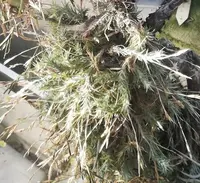
Tillandsia tricholepis is a miniature air plant from the bromeliad family that naturally grows on trees and rocks in parts of South America. It forms tiny clumps of threadlike leaves and often develops into dense cushions over time.
This species absorbs water and nutrients through its leaves, not roots, which makes it well suited to mounting on wood or stone rather than growing in soil. Good air movement and bright, filtered light are important for its health.
Because of its small size and modest water needs, many growers find it relatively easy once they understand how to care for Tillandsia tricholepis.

Care Difficulty
Moderate Care

Light Preference
Partial Shade

Water Requirements
Moderate Water

Temperature Preference
Tropical / Frost Sensitive

Hardiness Zone
10–12

Soil Texture
Rocky, Sandy

Soil pH
Acidic (5.5–6.5)

Soil Drainage
Well-drained

Fertilization
Light (every 4–6 weeks)
Scan your plant to receive care tips personalized for your specific plant
Available on iOS and Android
This small air plant thrives with bright, gentle light that mimics open woodland or bright balcony conditions.
This species absorbs moisture through its leaves and depends on frequent wet–dry cycles rather than constant wetness.
This air plant prefers mild, frost-free conditions with good air movement around the foliage.
This small air plant prefers moderate to high humidity but adapts to many home environments.
Tillandsia tricholepis is epiphytic and should not be planted in conventional potting soil.
This species is suitable for container display when kept above, not in, any substrate.
This small air plant benefits from light, targeted feeding during active growth.
Pruning needs for Tillandsia tricholepis are minimal and mainly cosmetic.
This air plant is usually mounted rather than potted, so transplanting focuses on repositioning the clump.
Propagation of Tillandsia tricholepis is most practical through division of offsets rather than seed.
This species is not frost hardy and needs protection in cold climates.

Plant Health Check
Not sure what's wrong with your plant? Check your plant's health inside the app.
This species naturally forms tiny clumps on very thin branches and twigs, often on shrubs or small trees, rather than on large trunks like many other air plants. Its extremely compact size lets it occupy narrow, wind‑exposed perches that larger bromeliads cannot use.
In its native range from Bolivia to northern Argentina, it often grows in open, airy habitats where constant air movement dries it quickly after rain or mist. The small seeds carry feathery appendages that allow them to drift on the wind and colonize new twigs high above the ground.
The leaves are densely covered with tiny, overlapping trichomes, which are specialized scale‑like hairs that absorb water and nutrients from rain, fog, and dust. These trichomes also reflect excess sunlight and reduce water loss, an important adaptation for growing Tillandsia tricholepis on exposed branches.
This species is slow-growing, often taking several years to form a small clump. Growth rate depends on light intensity, air movement, temperature, and regular hydration. Consistent conditions and patience are key when trying to grow Tillandsia tricholepis successfully.
Keep your plants happy and healthy with plant identification, disease detection, and easy care guidance.