Upright Elephant Ear Care (Alocasia macrorrhizos 'Black Stem')

Also known as: Giant Taro, Wild Taro, Elephant's Ear
Upright Elephant Ear

About Upright Elephant Ear

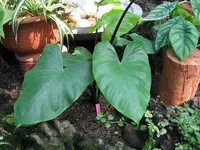
Alocasia macrorrhizos 'Black Stem', often called upright elephant ear, is a tropical aroid grown for its bold, architectural foliage. It forms tall, upright stems with large, arrow-shaped leaves held above the pot or soil line, giving a dramatic, vertical look.

This cultivar is native in origin to warm, humid regions of Asia and the Pacific, but is widely grown as an ornamental in gardens and indoor containers. Dark, almost black petioles contrast with its green leaf blades, making it a strong focal plant rather than a filler.

Growth can be vigorous but it can be sensitive to cold, low humidity, and overwatering, so understanding how to care for Upright Elephant Ear is important. It prefers bright, filtered light, evenly moist soil, and good drainage.

Main Plant Requirements

Care Difficulty

Moderate Care

Light Preference

Bright Indirect Light

Water Requirements

Keep Soil Moist

Temperature Preference

Tropical / Frost Sensitive

Hardiness Zone

9–11

Soil Texture

Loamy, Peaty, Organic-rich

Soil pH

Acidic (5.5–6.5), Slightly acidic (6.5–7.0)

Soil Drainage

Moist but well-drained

Fertilization

Moderate (every 2–4 weeks)

Get Personalized Care Plan

Scan your plant to receive care tips personalized for your specific plant

Available on iOS and Android

How to Care for the Upright Elephant Ear

Alocasia macrorrhizos 'Black Stem' grows best with bright, indirect light that mimics light under tall trees.

  • Provide 4–6 hours of bright, filtered light daily, such as light through sheer curtains or dappled shade under taller plants.
  • Allow gentle morning sun in cooler months, but protect from strong midday and afternoon sun, which can scorch leaves and fade color.
  • Tolerates partial shade outdoors, yet very low light causes leggy growth and small leaves; in winter, move Upright Elephant Ear to the brightest frost-free spot.

Alocasia macrorrhizos 'Black Stem' prefers evenly moist, not soggy, soil around its roots.

  • Water when the top 3–5 cm of soil feels dry, applying enough water to moisten the root zone, then let excess drain away completely.
  • Use rich, well-draining soil; avoid standing water, which promotes root rot, yellowing leaves, and a sour soil smell as signs of overwatering.
  • In warm active growth, you may need more frequent watering, while in cooler seasons reduce watering when growth slows and leaves droop slightly between waterings.

This plant thrives in consistently warm, frost-free conditions similar to a tropical understory.

  • Aim for 70–85°F (21–29°C) for strong growth, with slower but acceptable growth at 65–70°F (18–21°C).
  • Protect from temperatures below 55°F (13°C); prolonged exposure near 40°F (4°C) can cause leaf damage, and frost can kill above-ground parts.
  • Tolerates short heat spikes up to about 90–95°F (32–35°C) if soil moisture and humidity are maintained, but avoid hot, dry wind and reflective heat from walls or pavement.

This plant prefers consistently high humidity to maintain large, healthy foliage.

  • Aim for 60–80% humidity; lower levels are tolerated but increase leaf edge browning risk.
  • Watch for crispy margins, curling, or slowed growth as signs the Upright Elephant Ear is stressed by dry air.
  • Increase humidity with a nearby humidifier, grouped plants, or a pebble tray, avoiding misting that keeps leaves wet for long periods.

Alocasia macrorrhizos 'Black Stem' grows best in a loose, airy, moisture-retentive yet fast-draining mix.

  • Use a base of peat or coco coir with plenty of perlite and fine bark to create a chunky, organic-rich structure.
  • Aim for slightly acidic to neutral pH, roughly 6.0–7.0, to support nutrient availability and stable growth.
  • Ensure excess water drains freely; the mix should feel moist after watering but never stay heavy or waterlogged.
  • Avoid dense, clay-heavy or pure garden soil that compacts, suffocates roots, and encourages rot in containers.

This species is well suited to container growing due to its upright, clumping habit.

  • Choose a wide, heavy container to counterbalance the tall, top-heavy stems and prevent tipping in wind or on balconies.
  • Select pot materials like thick ceramic or clay if extra weight and slightly faster moisture loss are helpful in humid climates.
  • Ensure drainage holes stay clear and consider elevating the pot on feet so runoff leaves the container tray quickly.

Alocasia macrorrhizos 'Black Stem' responds well to consistent feeding during its active growing season.

  • Use a balanced liquid fertilizer (around 10-10-10 or 20-20-20) at 1/2–1/4 strength every 2–4 weeks in spring and summer.
  • Apply to moist soil, never completely dry, to reduce the risk of root burn and leaf tip browning.
  • Pause or reduce feeding to once every 6–8 weeks at very weak strength during fall and winter dormancy.
  • For Upright Elephant Ear indoor care, a slow-release granular fertilizer in spring can provide a gentle nutrient baseline.

Alocasia macrorrhizos 'Black Stem' needs only light, maintenance pruning to stay healthy and tidy.

  • Carry out pruning mainly in spring or early summer when growth is active and recovery is fastest.
  • Remove yellowing, dead, or torn leaves at the base with clean, sharp scissors or pruners to limit disease entry.
  • Cut out soft, rotting, or pest-damaged stems promptly to maintain airflow and reduce pathogen spread.
  • Thin crowded interior leaves slightly if needed to open the canopy and keep an upright, architectural shape.

This Alocasia prefers slightly snug pots but benefits from occasional repotting to support strong growth.

  • Check for roots circling the pot, pushing through drainage holes, or slowed growth as signs it needs a larger container.
  • Plan to repot every 1–2 years in spring, moving up only 2–5 cm in pot diameter to avoid soggy soil around roots.
  • Use a chunky, well-draining mix with organic matter, handle the corm and roots gently, and trim only clearly dead roots.
  • Water thoroughly after repotting, then keep lightly moist and shaded for 3–7 days to limit transplant shock.

Alocasia macrorrhizos 'Black Stem' is most reliably propagated by division of its corms or clumping offsets.

  • Divide in late spring or early summer when the plant is actively growing and temperatures are consistently warm.
  • Lift the plant, gently separate offsets or corm sections, ensuring each division has at least 1 healthy shoot and some roots.
  • Plant divisions in a small pot with airy, moist substrate, keeping humidity high and light bright but indirect.
  • Maintain soil just moist and temperatures around 70–80°F to encourage rooting and new leaf production.

This Alocasia is frost-sensitive and needs protective winter care in most temperate climates.

  • Keep outdoor plants above 50°F; in USDA zones colder than 9, grow in containers for easy seasonal movement.
  • Before first frost, move potted plants indoors to a bright, draft-free spot with stable, warm temperatures.
  • For in-ground plants in mild climates, mulch the root zone with 5–10 cm of organic material to insulate corms.
  • Water less in winter, keeping soil slightly moist but never waterlogged, as cool, wet conditions increase rot risk.

Care Tips

Rotate For Symmetry

Turn the pot 90° every 1–2 weeks so the leaves receive light from different angles, which helps maintain an upright, balanced canopy and prevents the plant from leaning heavily to one side.

Provide Sturdy Support

Place the container in a heavy, wide-based pot or add decorative stones on top of the soil to counterbalance the tall petioles and reduce the risk of the plant tipping over as it matures.

Leaf Cleaning Routine

Wipe both sides of the large leaves monthly with a soft, damp cloth to remove dust, which supports efficient photosynthesis and makes it easier to monitor for early signs of spider mites or scale.

Strategic Pot Sizing

Step up only 1 pot size at a time (about 2–3 in wider) so the root ball fills the container within a season, which keeps excess soil from staying wet and reduces the risk of root issues in Upright Elephant Ear indoor care.

Seasonal Dormancy Check

If growth slows or several leaves yellow in cooler months, reduce disturbance, hold off on repotting, and keep the soil just barely moist to allow a light dormancy phase rather than forcing active growth.

Common Pests and Diseases

Spider mites

This pest thrives on Alocasia foliage in warm, dry indoor air, causing stippling, dull leaves, and fine webbing on the undersides. Symptoms include slowed growth and leaves that yellow or brown from the edges inward.

Solution

Rinse leaves thoroughly with lukewarm water, focusing on undersides, then wipe with a soft cloth to remove mites and webbing. Increase humidity, improve air movement, and use a neem oil or insecticidal soap spray every 5–7 days for several cycles, isolating the plant from others during treatment.

Aphids

These insects cluster on tender stems and new leaves, sucking sap and causing curling, distortion, and sticky honeydew that can lead to sooty mold. Infestations are especially common on actively growing Upright Elephant Ear kept in warm, sheltered positions.

Solution

Physically remove colonies by rinsing with a strong but controlled stream of water or wiping with a damp cloth. Follow with targeted applications of insecticidal soap or neem oil on new growth and leaf axils, repeating weekly until no new aphids appear and monitoring outdoor plants after storms or nearby garden disturbances.

Leaf spot (bacterial or fungal)

This disease produces water-soaked, yellow, or dark lesions on leaves that may enlarge, merge, and cause sections of the leaf to die. Symptoms include irregular spots often starting on older leaves, especially when foliage stays wet and air circulation is poor.

Solution

Remove and discard affected leaves, cleaning cutting tools with alcohol between cuts to avoid spreading pathogens. Keep foliage dry by watering at soil level, increase airflow, avoid overcrowding, and if spread continues, apply a copper-based or other labeled fungicide/bactericide according to manufacturer directions.

Xanthomonas bacterial blight

This disease causes angular, yellow to dark brown leaf lesions often bordered by yellow halos, sometimes exuding a sticky bacterial ooze in very humid conditions. Symptoms include rapid spread from one leaf to another when water splashes across the plant.

Solution

Immediately remove and dispose of heavily marked leaves and any fallen debris, and avoid overhead watering or misting that wets the foliage. Isolate the plant, improve ventilation, keep leaves dry, and in severe or recurring cases consider discarding the plant and disinfecting pots and tools to protect nearby aroids.

Pythium root rot

This disease attacks waterlogged roots, causing them to turn brown, mushy, and unable to support the large leaf mass, which then wilts, yellows, and collapses. Symptoms include a foul smell from the pot and failure to recover even after watering.

Solution

Unpot the plant, trim off all affected roots with sterilized scissors, and repot into fresh, well-draining aroid mix in a pot with drainage holes. Reduce watering, allow the top 3–5 cm of soil to dry between waterings, maintain warm temperatures (70–80°F), and avoid letting the pot sit in standing water to support recovery and reduce recurrence.

Interesting Facts

Naturally dark petioles

The cultivar name Black Stem refers to its unusually dark, almost black petioles, which result from high concentrations of anthocyanin pigments that help protect the tissues from intense light and UV radiation.

Striking size potential

In warm, frost-free climates, this cultivar can develop very large, upright leaves on tall, dark stalks, forming a bold architectural clump that is more visually contrasting than the typical green-stemmed Alocasia macrorrhizos.

Cultivar, not wild form

Black Stem is a selected ornamental cultivar derived from the widespread species Alocasia macrorrhizos and is not known as a naturally occurring wild population, which means it has been maintained through horticultural propagation for its distinctive coloration.

Botan icon

Did you know?

In tropical landscape design, this cultivar is often used to create high-contrast compositions, with its blackish stems and large green leaf blades intentionally paired against light-colored walls or pale-foliage plants to emphasize its sculptural form.

FAQs about Upright Elephant Ear

Brown leaf edges or tips usually result from low humidity, inconsistent watering, or fertilizer buildup. Entire brown patches can indicate sun scorch or cold damage. Trim affected areas, flush the soil, and correct the environmental cause.

Grow Healthy Plants with Botan Care

Keep your plants happy and healthy with plant identification, disease detection, and easy care guidance.

Botan plant care app — identify plants on mobile

Explore More Plants