red sealing wax palm Care (Cyrtostachys renda)

Also known as: lipstick palm
red sealing wax palm

About red sealing wax palm

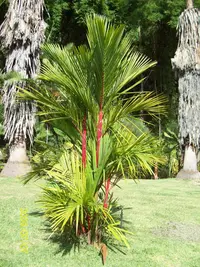
The red sealing wax palm, Cyrtostachys renda, is a clustering tropical palm known for its bright red crown shafts and leaf stalks. It forms tight clumps of slender, upright trunks that create a dense, architectural look.

This species is native to swampy lowland forests of Southeast Asia, where it grows in warm, humid, and consistently moist conditions. It is slow growing and sensitive to cold, drought, and low humidity, which makes it challenging outside true tropical climates.

Because of these strict climate and moisture needs, how to care for red sealing wax palm often focuses on stable warmth, high humidity, and evenly moist, rich, well-drained soil.

Main Plant Requirements

Care Difficulty

Hard Care

Light Preference

Partial Sun

Water Requirements

Keep Soil Moist

Temperature Preference

Tropical / Frost Sensitive

Hardiness Zone

11–12

Soil Texture

Sandy, Loamy, Organic-rich

Soil pH

Acidic (5.5–6.5), Slightly acidic (6.5–7.0)

Soil Drainage

Moist but well-drained

Fertilization

Moderate (every 2–4 weeks)

Get Personalized Care Plan

Scan your plant to receive care tips personalized for your specific plant

Available on iOS and Android

How to Care for the red sealing wax palm

This palm requires bright, warm, tropical light conditions to maintain healthy fronds and vivid crownshaft color.

  • Provide 4–6 hours of bright, filtered light daily, such as light under high tree canopies or next to an east- or north-facing wall that softens direct sun.
  • Tolerates brief early-morning sun, but protect red sealing wax palm from harsh midday or afternoon sun, which can scorch fronds and fade the red coloration.
  • In humid, warm climates, slight partial shade (about 50–70% shade cloth) is suitable; increase light slightly in winter to compensate for shorter days.

This species prefers evenly moist conditions similar to a humid, low-lying tropical habitat.

  • Keep soil consistently moist but not stagnant; the top 2–3 cm should feel damp to slightly dry, never fully dry or waterlogged.
  • Increase watering during hot, active growth periods when leaf tips begin to soften or curl, and reduce slightly in cooler months while still preventing complete drying.
  • Ensure deep, organic, well-drained soil; symptoms of excess water include yellowing lower fronds and sour smell, while crisp tips and slow spear growth suggest underwatering for Cyrtostachys renda.

This palm thrives in warm, stable tropical temperatures and reacts poorly to cold stress.

  • Aim for 75–88°F (24–31°C) for fastest growth, with steady warmth and high humidity supporting strong trunk and leaf development.
  • Avoid temperatures below 55°F (13°C); brief dips to 45–50°F (7–10°C) can cause leaf spotting or dieback, and any frost can kill young plants.
  • In hot spells above 95°F (35°C), provide extra shade and moisture to prevent heat stress, especially for newly established specimens with smaller root systems.

This palm demands consistently high humidity to grow well and avoids dry indoor air.

  • Aim for 70–90% humidity; use a humidifier or greenhouse cabinet in dry climates.
  • It tolerates brief dips to 50–60% but sustained lower levels cause leaf-tip browning and frond edge crisping.
  • Increase humidity with grouped plants, pebble trays under pots, and reducing direct airflow from vents around red sealing wax palm.

Cyrtostachys renda prefers evenly moist, organic-rich, yet free-draining soil.

  • Use a loamy mix with 50–60% peat or coco coir, 20–30% compost, and 20–30% coarse sand or fine bark for structure.
  • Ensure rapid drainage while retaining moisture; excess water should exit the pot within seconds, not pool on the surface.
  • Keep pH slightly acidic, around 5.5–6.5, avoiding strongly alkaline mixes that limit nutrient uptake and weaken growth.
  • Improve aeration by blending in perlite or pumice and avoid heavy clay-based garden soil that compacts and suffocates roots.

This species can be grown in containers when moisture and stability are carefully managed.

  • Select a deep, heavy pot to counter the tall, clustered stems and reduce tipping in wind or on balconies.
  • Choose thick-walled terracotta only where evaporation will not cause rapid drying; in arid areas, prefer glazed or plastic to retain moisture.
  • Support the multi-stem clump with a slightly wider-than-rootball container to prevent crowding that can cause uneven water distribution.

Cyrtostachys renda responds well to consistent but moderate nutrition in warm, active growth conditions.

  • Use a balanced, slow-release palm fertilizer (for example 3-1-3 or similar NPK ratio) or a dilute liquid balanced feed.
  • Apply every 6–8 weeks during the growing season, skipping feedings if the soil is staying cold or soggy.
  • Dilute liquid fertilizers to 1/2–1/4 strength to limit salt buildup and leaf-tip burn.
  • In winter or cool periods, reduce feeding sharply or stop entirely, resuming only when growth restarts.

Pruning focuses on hygiene and safety for Cyrtostachys renda rather than shaping.

  • Carry out light pruning in warm, dry weather so cut surfaces dry quickly.
  • Remove only dead, yellow, or storm-damaged fronds, cutting close to the trunk without injuring the crown.
  • Avoid green, healthy fronds, since they support trunk thickening and overall vigor.
  • Use clean, sharp loppers or a pruning saw and disinfect blades between plants to reduce disease spread.

Transplanting or repotting this palm should be infrequent and carefully planned because the root system is sensitive.

  • Look for roots circling the pot, pushing through drainage holes, or a pot-bound root ball with stalled growth as signs to move it.
  • Plan any repotting or outdoor transplanting in late spring to early summer, once temperatures are reliably warm.
  • Expect container-grown plants to need a larger pot only every 2–3 years, stepping up 1–2 in sizes each time.
  • Minimize root stress by keeping the root ball intact, watering thoroughly before and after, and shading the plant for 1–2 weeks while it re-establishes.

Propagation of Cyrtostachys renda is specialized and slow, so it is usually left to professional growers.

  • Seed is the standard method; use very fresh seed, as viability drops quickly in storage.
  • Sow in a sterile, very well-drained medium at 80–86°F with high humidity and bottom warmth to encourage germination.
  • Expect germination to be irregular and slow, often taking several months before seedlings emerge.
  • Division of clumps is risky, as root disturbance can cause decline, so remove and pot offsets only if they separate with minimal tearing.

This palm is strictly tropical and demands careful winter management in climates cooler than its native range.

  • Red sealing wax palm is not frost tolerant; leaf damage can occur near 40°F and plants may die near freezing.
  • In marginal climates, grow in large containers so plants can be moved indoors or into a heated greenhouse for winter.
  • Indoors, maintain 65–80°F, bright filtered light, and avoid cold drafts from windows or doors.

Care Tips

Protect fragile roots

Use a wide, heavy container and avoid frequent repotting, since the palm has fine, sensitive roots that respond better to surface top-dressing with fresh mix than to full root disturbance.

Encourage clumping stems

Select and keep the strongest 3–5 culms and remove only weak or badly placed new suckers at the base so the clump stays open enough for air movement while still forming a dense, ornamental cluster.

Boost light safely

For indoor plants, use a full-spectrum grow light positioned to the side rather than directly overhead and extend day length to 10–12 hours during winter to maintain tight, upright growth and good red color.

Monitor salt buildup

Periodically flush the pot thoroughly with low-mineral water until it drains freely to remove accumulated fertilizer salts, which can otherwise scorch leaflet tips on this salt-sensitive species.

Plan for height

When growing red sealing wax palm in containers, choose a location with at least 2–3 ft of vertical clearance above the current leaf tips and rotate the pot quarterly so all sides develop evenly and the clump does not lean.

Common Pests and Diseases

Red palm mite

This pest feeds on the undersides of fronds, causing yellow stippling, bronzing, and premature leaf drop, especially in hot, dry or sheltered sites. Infestations can spread quickly along palm plantings and are a documented issue on ornamental palms in warm climates.

Solution

Rinse fronds thoroughly with a strong stream of water, focusing on the undersides, and repeat weekly until numbers drop. For persistent issues, use horticultural oil or insecticidal soap labeled for mites, applied in the early morning or evening, and increase humidity and air movement to make conditions less favorable for mites.

Ganoderma butt rot

This disease attacks the lower trunk and root collar, leading to a gradual decline, reduced vigor, and eventual palm death. Symptoms include thinning canopy, small and chlorotic new fronds, and characteristic bracket-like conks at the trunk base in advanced stages.

Solution

Remove and destroy affected palms promptly, including as much of the stump and major roots as possible, and avoid replanting palms in the same spot. Improve drainage, prevent trunk wounding, and maintain balanced nutrition to reduce stress, which lowers susceptibility, but do not rely on fungicides, as they are ineffective against this disease in landscape conditions.

Lethal yellowing

This disease is caused by a phytoplasma that disrupts the palm’s vascular system, leading to premature fruit drop, yellowing and collapse of fronds, and eventual crown death. Symptoms include rapid canopy decline, with older leaves yellowing first and a dead spear leaf in later stages.

Solution

Remove infected palms as soon as lethal yellowing is confirmed to reduce spread, and dispose of all plant material away from healthy palms. In areas where this disease is known, select resistant palm species for new plantings and consult local extension guidance on preventive antibiotic trunk injections, which are sometimes used in high-value specimens.

Scales

These insects attach to fronds and stems, sucking sap and causing yellow spotting, leaf weakening, and sticky honeydew that can encourage sooty mold. Infestations often start along midribs and protected leaflet bases, making them easy to overlook until damage is visible.

Solution

Prune and discard heavily infested fronds and wipe or gently scrub remaining scales from stems and leaf bases with a soft brush and soapy water. Follow up with targeted applications of horticultural oil, ensuring thorough coverage of hidden crevices, and monitor regularly for crawlers to catch new infestations early as part of systematic Cyrtostachys renda plant care.

Interesting Facts

Naturally clustering habit

This palm forms tight clumps of multiple slender stems from a single root system, creating a dense thicket rather than a solitary trunk, which helps it resist storm damage in swampy habitats.

Peat swamp specialist

It is native to lowland peat and freshwater swamps in Southeast Asia, where it grows in acidic, waterlogged soils with high humidity and frequent flooding.

Iconic red crownshaft

The intense red color of its crownshaft and upper leaf stalks is caused by pigments called carotenoids and anthocyanins, which can fade to duller tones in lower light or nutrient-poor conditions.

Botan icon

Did you know?

In parts of Indonesia and Malaysia, the striking red stems of this palm are traditionally used as a decorative element in ceremonial and house-building contexts, which has contributed to localized overharvesting and a decline of wild populations near villages.

FAQs about red sealing wax palm

Brown tips usually result from low humidity, salt buildup from fertilizer, or inconsistent watering. Flush the soil occasionally, avoid letting the mix fully dry, increase humidity, and keep this plant away from hot or cold drafts.

Grow Healthy Plants with Botan Care

Keep your plants happy and healthy with plant identification, disease detection, and easy care guidance.

Botan plant care app — identify plants on mobile

Explore More Plants