Wind hardening
Expose young plants gradually to stronger wind over several weeks to build a sturdy trunk and reduce the risk of wind snap later in life.

-200x150.webp)
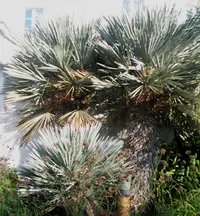
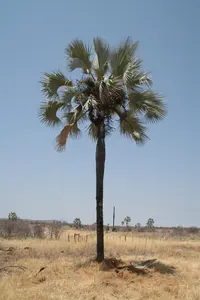
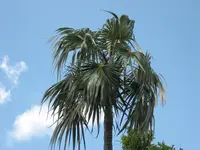
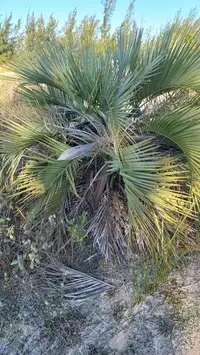
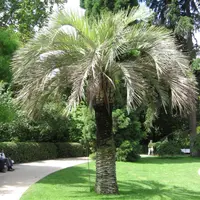
Trithrinax schizophylla is a slow-growing, clustering fan palm known for its stiff, bluish-green leaves and dense armor of spines along the trunk and leaf bases. It forms multiple stems over time and develops into a compact, architectural clump rather than a tall, solitary palm.
This species is native to dry, open regions of South America, where it tolerates strong sun, wind, and periodic drought. Its natural toughness makes it fairly resilient in cultivation, but the sharp spines require careful placement and handling.
Gardeners who want to care for Trithrinax schizophylla should provide a bright, well-drained site and avoid prolonged waterlogging, which can lead to root problems.

Care Difficulty
Moderate Care

Light Preference
Full Sun

Water Requirements
Low Water

Temperature Preference
Cold Hardy

Hardiness Zone
8–10

Soil Texture
Sandy, Loamy, Rocky

Soil pH
Slightly acidic (6.5–7.0), Neutral (7.0)

Soil Drainage
Well-drained

Fertilization
Minimal (feed rarely)
Scan your plant to receive care tips personalized for your specific plant
Available on iOS and Android
This hardy palm prefers bright, open conditions similar to sunny, dry grasslands.
This species is drought-tolerant and prefers infrequent, deep watering over frequent light doses.
This palm is notably cold-hardy compared with many other subtropical species.
This palm handles a wide humidity range and rarely needs special adjustments in most homes or dry gardens.
This species prefers very well-drained, mineral-rich soil that never stays waterlogged.
This slow-growing palm is suitable for long-term container culture, including outdoor tubs in warm climates.
This hardy palm grows slowly and usually needs only light feeding in average garden soil.
Pruning needs for this palm are minimal and mainly cosmetic.
This species is usually grown in the ground and resents frequent disturbance.
Propagation of Trithrinax schizophylla is done mainly from seed and is slow and technically demanding.
This palm is notably cold tolerant but still benefits from thoughtful winter care in harsh climates.

Plant Health Check
Not sure what's wrong with your plant? Check your plant's health inside the app.
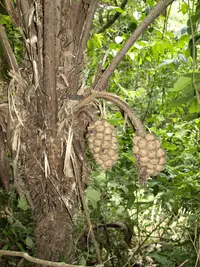
This species has stiff, blue-green costapalmate leaves that are deeply divided and surrounded by a dense crown of sharp spines on the leaf bases, an adaptation that helps reduce herbivory by large grazing animals in its native South American habitats.
Unlike many subtropical palms, it tolerates notable cold and brief light frosts, reflecting its evolution in open, often windy regions of southern South America where winter temperatures can drop lower than in typical palm environments.
It is a very slow-growing palm that often forms clumps of multiple stems over time, which creates dense, thorny thickets that provide shelter for small animals and birds in its native range.

This species is so heavily armed with strong, rigid spines on its trunk and leaf bases that in parts of its native range it has been historically used as a living barrier or natural fence to deter livestock and human passage, illustrating a practical human use directly based on its extreme mechanical defenses.
Yes, this palm can be container-grown, but growth is slow and it eventually becomes large and heavy. Use a deep, sturdy pot with excellent drainage and be prepared to up-pot gradually as the root system expands.
Keep your plants happy and healthy with plant identification, disease detection, and easy care guidance.