Macarthur Palm Care (Ptychosperma macarthurii)

Macarthur Palm

About Macarthur Palm

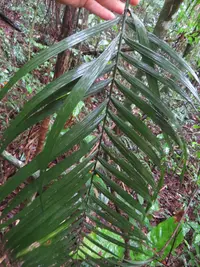
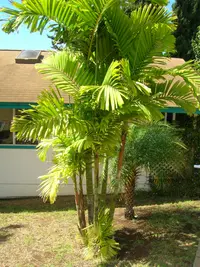
Macarthur palm, Ptychosperma macarthurii, is a clustering, feather-leaved palm valued for its slim, ringed trunks and dense, tropical canopy. It often forms multi-stemmed clumps that give a lush, architectural look in landscapes and large indoor spaces.

This species is native to northern Australia and New Guinea, where it grows in warm, humid forests. It is moderately fast-growing when kept in stable warmth and protected from cold or drying winds.

The plant prefers bright light, regular moisture, and well-drained soil, which makes how to care for Macarthur Palm fairly straightforward in suitable climates or controlled indoor conditions.

Main Plant Requirements

Care Difficulty

Moderate Care

Light Preference

Partial Shade

Water Requirements

Regular Water

Temperature Preference

Tropical / Frost Sensitive

Hardiness Zone

10–11

Soil Texture

Sandy, Loamy, Organic-rich

Soil pH

Acidic (5.5–6.5), Slightly acidic (6.5–7.0)

Soil Drainage

Moist but well-drained

Fertilization

Light (every 4–6 weeks)

Get Personalized Care Plan

Scan your plant to receive care tips personalized for your specific plant

Available on iOS and Android

How to Care for the Macarthur Palm

This tropical palm needs bright, indirect light to maintain healthy fronds and steady growth.

  • Provide 4–6 hours of bright, filtered light daily, such as dappled sun under taller trees or through sheer curtains for Macarthur Palm indoor care.
  • Allow gentle morning sun in east or northeast exposure, but protect from harsh midday and afternoon sun that can scorch leaflets and bleach color.
  • In hotter months, increase shade or use shade cloth (30–50%) outdoors; in darker seasons, move it to the brightest sheltered spot to avoid sparse, stretched growth.

This palm prefers consistently moist but not waterlogged soil, with slight surface drying between waterings.

  • Water when the top 3–5 cm of soil feels dry, aiming for evenly moist soil down to 10–15 cm, and always allow excess water to drain away fully.
  • In warm growing seasons, expect to water more often as evaporation is faster; in cooler months, extend the interval once surface drying takes longer.
  • Watch for overwatering signs such as yellowing, mushy lower leaf bases and sour-smelling soil, or underwatering signs like crispy leaflet tips, folding fronds, and dry, pulling-away soil.

This species thrives in warm, frost-free conditions typical of lowland tropical to subtropical climates.

  • Maintain daytime temperatures around 70–85°F (21–29°C) for best growth, with slightly cooler nights still above 60°F (16°C).
  • Protect from cold; growth slows below 60°F (16°C), leaf damage often appears below 50°F (10°C), and frost at 32°F (0°C) can kill young or exposed plants.
  • In hot periods above 90°F (32°C), provide extra shade, good air movement, and consistent moisture to limit heat stress and prevent frond scorching.

This species prefers consistently warm, humid air to maintain healthy fronds and steady growth.

  • Aim for 50–70% humidity, as drier indoor air often leads to browning leaflet tips and edges.
  • It tolerates short dry spells if watered well, but prolonged air below 40% humidity stresses foliage.
  • Increase humidity with a nearby humidifier or grouping plants together rather than misting, which gives only brief surface moisture.

Soil for this palm must drain freely yet retain moderate, even moisture around the root zone.

  • Use a loose, organic-rich mix such as 2 parts peat- or coco-based potting mix, 1 part fine bark, and 1 part perlite or coarse sand.
  • Aim for slightly acidic to neutral pH, around 6.0–7.0, which supports balanced nutrient uptake in Ptychosperma macarthurii.
  • Ensure high aeration so roots stay oxygenated; avoid compacted or sticky clay that stays wet after watering.
  • Avoid mixes heavy in fine peat alone, which can become waterlogged, and never let containers sit in standing water.

This palm adapts well to container culture when the pot is chosen and managed for its tall, multi-stemmed habit.

  • Select a wide, heavy container that resists tipping as stems gain height and form a clump.
  • Choose a pot material that moderates moisture, such as thick plastic or glazed clay, to keep the root zone evenly damp but not soggy.
  • Use a container with large, unobstructed drainage holes so water exits quickly and the lower root zone never remains saturated.

Macarthur Palm responds well to modest, consistent feeding during warm active growth.

  • Apply a balanced liquid fertilizer (for example 10-10-10 or 14-14-14) at 1/2 strength every 4–6 weeks in spring and summer.
  • Use slow-release palm or general fertilizer granules in early spring, following label rates and watering thoroughly afterward.
  • Supplement with a thin layer of compost over the root zone once a year to improve soil structure and micronutrient supply.
  • Reduce feeding to 1 very light application or none in fall and winter, when growth naturally slows.

Ptychosperma macarthurii benefits from light, targeted pruning to maintain a clean, healthy canopy.

  • Carry out pruning in late winter or early spring, before the strongest flush of new growth.
  • Remove only dead, yellowing, storm-damaged, or crossing fronds; cut them close to the trunk without nicking healthy tissue.
  • Avoid cutting green, healthy fronds, since this weakens the palm and may distort its natural clumping form.
  • Use clean, sharp bypass loppers or a pruning saw, disinfected before and between plants to limit disease spread.

Container-grown plants appreciate careful, infrequent repotting to avoid root shock and preserve strong growth.

  • Look for roots circling the pot, pushing through drainage holes, or noticeably slowed growth as signals it needs a larger container.
  • Plan to repot every 2–3 years in late spring or early summer, when temperatures are warm and recovery is fastest.
  • Move up only 1 pot size, using a free-draining, slightly sandy mix; keep the root ball as intact as possible.
  • Water well after repotting, keep in bright indirect light for 1–2 weeks, and avoid heavy fertilizing until new growth appears.

New Ptychosperma macarthurii plants are usually produced from seed, which is slow but effective under stable warmth.

  • Sow fresh, cleaned seeds in late spring or early summer in a sterile, free-draining mix such as 50% perlite and 50% peat or coco coir.
  • Maintain consistently warm conditions of 75–85°F and high humidity, using a heat mat and covered propagator if needed.
  • Keep the medium just moist, never waterlogged, since excess water quickly reduces oxygen and encourages rot.
  • Expect uneven, sometimes lengthy germination; leave trays undisturbed and only pot on seedlings once roots are well developed.

This tropical palm is frost sensitive and requires thoughtful winter care in climates cooler than USDA zone 10.

  • For in-ground plants in marginal climates, place a 5–8 cm layer of mulch over the root zone, keeping it slightly away from the trunk.
  • Wrap the lower stems with breathable frost cloth during predicted cold snaps to reduce freezing injury.
  • Move container plants indoors or into a heated greenhouse when night temperatures approach 40°F, giving bright indirect light.
  • Reduce watering in winter, allowing the top layer of soil to dry slightly while still preventing complete dryness of the root ball.

Care Tips

Cluster management

Thin out the weakest or most crowded stems at the base every 2–3 years to keep the clump open, improve air movement, and reduce the risk of fungal issues in humid conditions.

Wind and stem support

In exposed sites, install discreet stakes or a low perimeter support around young clumps so the slender canes harden upright and are less likely to snap or lean while they are still developing strong root systems.

Salt exposure control

In coastal areas, position plants away from direct ocean spray and occasionally flush the soil with fresh water to reduce salt buildup that can burn leaflet tips and edges.

Root zone protection

Maintain a 5–8 cm layer of organic mulch over the root zone, keeping it a few cm away from the stems, to buffer soil temperature swings and protect the palm’s shallow feeder roots from drying out or being damaged.

Container rotation routine

For Macarthur Palm indoor care, rotate container-grown plants by 90° every 2–4 weeks so the multi-stemmed clump develops evenly and does not lean toward the primary light source over time.

Common Pests and Diseases

Pink wax scale

This pest forms stationary, dome-shaped pink to brown lumps on fronds and leaf stalks, often producing sticky honeydew and encouraging sooty mold. Symptoms include yellowing leaflets, reduced vigor, and a general decline in growth.

Solution

Remove lightly infested fronds or wipe colonies with a cloth or cotton pad dipped in soapy water or alcohol, then rinse with clean water. For heavier infestations, use a systemic insecticide labeled for scale on palms or repeated applications of horticultural oil, making sure to fully coat the undersides of leaflets while keeping the plant out of direct hot sun during treatment.

Palm aphids

These insects cluster on young fronds and flower stalks, sucking sap and excreting honeydew that leads to black sooty mold. Symptoms include distorted new growth, sticky residue, and an increase in ants on and around the palm.

Solution

Spray colonies off with a firm stream of water, then follow with insecticidal soap or horticultural oil, ensuring thorough coverage of new growth and leaflet undersides. In outdoor plantings, encourage natural predators like lady beetles by avoiding broad-spectrum insecticides; indoors, repeat treatments every 7–10 days until new growth appears clean.

Spider mites

This pest thrives in hot, dry conditions, causing fine speckling on leaflets, bronzing, and premature frond drop. Symptoms include fine webbing along leaflet midribs and a dusty appearance on the undersides of leaves.

Solution

Increase humidity around the plant and regularly hose down or shower fronds, focusing on leaflet undersides to dislodge mites. Use insecticidal soap or a miticide labeled for ornamental palms in repeated applications, rotating products if needed, and isolate heavily infested plants to reduce spread to other palms, which is essential for Macarthur Palm indoor care.

Fusarium leaf blight

This disease causes tan to brown, irregular spots or streaks on leaflets that may coalesce, leading to blighted sections along the frond. Symptoms include progressive dieback of affected fronds while younger leaves may initially look healthy.

Solution

Prune and dispose of affected fronds promptly, sterilizing tools between cuts with alcohol or a bleach solution to avoid spreading spores. Improve air circulation, avoid overhead watering, and keep foliage dry; in severe or persistent cases in landscape plantings, consult a local arborist or extension service about appropriate fungicide options labeled for palm leaf blights.

Bud and spear rot

This disease affects the growing point of the palm, causing the central spear leaf to yellow, soften, and eventually pull out easily, often with a foul smell. Symptoms include collapse of the crown and failure of new leaves to emerge while older fronds may temporarily remain green.

Solution

Improve drainage and avoid water collecting in the crown, especially during cool or wet periods, and do not overfertilize with high-nitrogen products. At very early stages, some professionals apply a systemic fungicide drench targeted at the crown and root zone, but severely affected palms usually cannot be saved and should be removed to prevent secondary pest and disease problems in nearby plantings.

Interesting Facts

Clustering crownshaft palm

This species forms multiple slim, ringed trunks from a single base, each topped by a smooth green crownshaft that holds the fronds and gives the canopy a tightly clustered, fountain-like appearance.

Natural monsoon tolerance

In its native range of northern Australia and New Guinea, it grows in lowland rainforests subject to monsoonal rains, so it is adapted to heavy seasonal downpours and brief periods of standing water around the roots.

Bright red fruit display

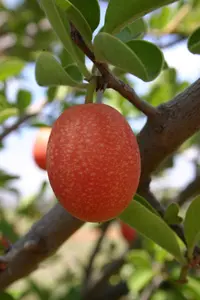
The palm produces pendant clusters of smooth, oval fruits that ripen to a vivid red, providing conspicuous visual signals to birds that disperse the seeds.

Botan icon

Did you know?

The species name macarthurii commemorates the Macarthur family of New South Wales, who were influential early Australian pastoralists and plant patrons and helped support the documentation of the Australian flora in the 19th century.

FAQs about Macarthur Palm

This species is moderately fast-growing in warm, humid conditions, often adding 30–60 cm per year outdoors. In containers or cooler climates, growth slows noticeably. Limited root space, low light, and nutrient-poor substrate all reduce vigor when you grow Ptychosperma macarthurii.

Grow Healthy Plants with Botan Care

Keep your plants happy and healthy with plant identification, disease detection, and easy care guidance.

Botan plant care app — identify plants on mobile

Explore More Plants