Rotate For Symmetry
Turn the container or adjust the plant’s orientation in the ground by 90° every 4–6 weeks so the crown develops evenly and the fronds do not lean toward a single light source.

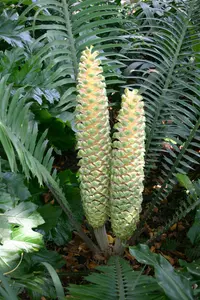
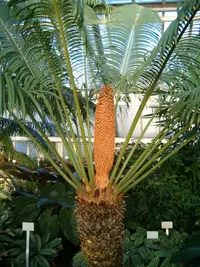
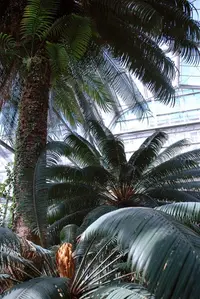
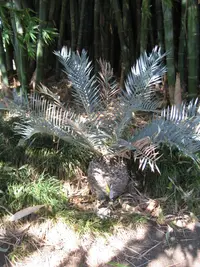
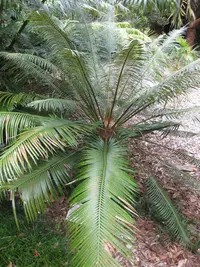
Encephalartos villosus, commonly called ground cycad, is a primitive cone-bearing plant with a low, spreading habit rather than a tall trunk. It forms dense clumps of arching, glossy, feather-like leaves that give a tropical look.
This species is native to shaded forest margins and rocky slopes in eastern South Africa, where it grows under taller vegetation. It is slow-growing but long-lived, which suits patient plant owners.
Its tough leaves and underground stem make it more resilient than many tropical ornamentals, but it dislikes waterlogged or very compacted soil. Partial shade, steady moisture with good drainage, and mild temperatures make it easier to care for Ground Cycad.

Care Difficulty
Moderate Care

Light Preference
Partial Shade

Water Requirements
Moderate Water

Temperature Preference
Warm Climate

Hardiness Zone
9–11

Soil Texture
Sandy, Loamy, Rocky

Soil pH
Acidic (5.5–6.5), Slightly acidic (6.5–7.0)

Soil Drainage
Well-drained

Fertilization
Minimal (feed rarely)
Scan your plant to receive care tips personalized for your specific plant
Available on iOS and Android
Encephalartos villosus prefers bright, filtered light that mimics light woodland or understory conditions.
Encephalartos villosus prefers evenly moist but never saturated soil, with brief drying between waterings.
This cycad grows best in mild, frost-free climates with stable, moderate temperatures.
This cycad tolerates a wide humidity range but benefits from moderately moist air.
Encephalartos villosus needs fast-draining, mineral-rich soil to prevent root and caudex rot.
This species is well suited to container growing when provided with good drainage and a stable pot.
This cycad benefits from light, steady feeding but is sensitive to excess salts and strong fertilizers.
Encephalartos villosus needs minimal structural pruning and is usually managed by selective removal of old foliage and spent cones.
This slow-growing cycad dislikes frequent disturbance, so repotting or transplanting should be infrequent and deliberate.
This species is typically propagated by seed or removal of basal offsets and is considered slow and specialist to increase.
This cycad is moderately cold tolerant but benefits from simple winter precautions in regions with frost or extended cold.

Plant Health Check
Not sure what's wrong with your plant? Check your plant's health inside the app.
This species is naturally adapted to the shaded understory of South African coastal and scarp forests, where its leaves spread almost horizontally to capture limited, filtered light rather than full sun.
It is strictly dioecious, producing separate male and female cones on different plants, with female cones reaching about 30–40 cm and housing bright red-orange seeds once pollinated.
The fleshy red seed coverings are attractive to birds, which feed on the outer layer and help disperse the hard, toxic seeds away from the parent plant in its native habitat.

This species is one of the few cycads that can naturally form large, dense colonies through basal suckers, creating clumps several meters across that may represent many decades of slow, clonal growth rather than separate seedlings.
This species has a very slow growth rate. In suitable outdoor conditions it usually produces 1–3 new leaf flushes per year and may take 10–20 years to form a substantial clump or visible trunk.
Keep your plants happy and healthy with plant identification, disease detection, and easy care guidance.