Bushman’s River cycad Care (Encephalartos trispinosus)

Bushman’s River cycad

About Bushman’s River cycad

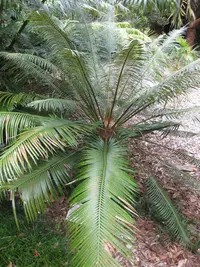
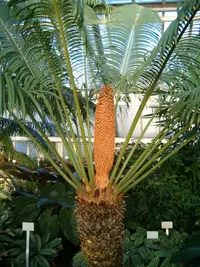
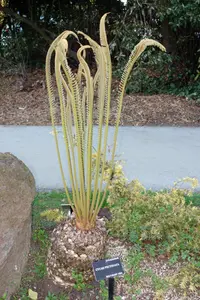
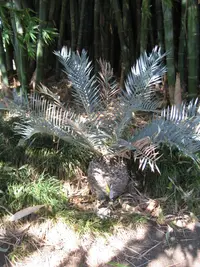
The Bushman’s River cycad, Encephalartos trispinosus, is a slow-growing, long-lived cycad with stiff, arching leaves and a strong architectural shape. Its blue-green fronds form a dense crown on a thick trunk, giving it a sculptural, almost prehistoric appearance in the landscape or large containers.

This species is native to rocky slopes in the Eastern Cape region of South Africa, where it experiences bright light, sharp drainage, and seasonal dryness. It is drought-tolerant once established but sensitive to poor drainage and prolonged cold, which affects how easy it is to grow. Those who want to learn how to care for Bushman’s River cycad should focus on strong light, free-draining soil, and protection from heavy frost.

Main Plant Requirements

Care Difficulty

Moderate Care

Light Preference

Full Sun

Water Requirements

Low Water

Temperature Preference

Warm Climate

Hardiness Zone

9–11

Soil Texture

Sandy, Loamy, Rocky

Soil pH

Slightly acidic (6.5–7.0), Neutral (7.0)

Soil Drainage

Well-drained

Fertilization

Minimal (feed rarely)

Get Personalized Care Plan

Scan your plant to receive care tips personalized for your specific plant

Available on iOS and Android

How to Care for the Bushman’s River cycad

Encephalartos trispinosus thrives in bright, open conditions with strong light and some daily direct sun.

  • Provide 6–8 hours of direct sun daily, ideally with morning sun and light afternoon shade in hotter regions to protect leaflets from scorching.
  • Plant in a position with full sun to very bright filtered light; Bushman’s River cycad tolerates light partial shade but forms denser, more compact crowns in higher light.
  • In cooler seasons, maximize sun by avoiding shade from buildings or trees, and watch for pale, stretched growth as a sign of insufficient light.

Encephalartos trispinosus prefers deep but infrequent watering and very free-draining soil.

  • Water only when the top 3–5 cm of soil are fully dry, then soak the root zone thoroughly and allow excess to drain away completely.
  • Use sharply draining, gritty soil or a raised bed; persistent wetness around the caudex or roots increases risk of rot and yellowing fronds.
  • Reduce watering during cool months and dormancy, watching for slight leaflet curl or limpness as a sign to water, and for soft, dark bases as a sign of overwatering.

This cycad is heat tolerant but needs protection from hard freezes to maintain healthy growth.

  • Aim for active growth in 70–90°F (21–32°C); stable warm conditions support stronger flushes of new fronds and root activity.
  • Short exposures down to about 28–30°F (-2 to -1°C) may be survived if soil is dry, but repeated or lower frosts can damage fronds and young cones.
  • In very hot spells above 100°F (38°C), provide some afternoon shade and ensure soil does not stay soggy, as heat plus excess moisture stresses the plant.

This species handles a wide humidity range and usually does not need special humidity management.

  • Aim for 30–60% humidity; typical indoor air in many homes is acceptable for Bushman’s River cycad.
  • Tolerates dry air if soil moisture is stable, but avoid placing it directly above heaters or hot air vents.
  • Low humidity stress appears mainly as quicker substrate drying rather than leaf damage, so adjust watering frequency instead of boosting air moisture.

Encephalartos trispinosus prefers a very free-draining, mineral-rich substrate that mimics rocky, arid habitats.

  • Use a gritty mix such as 50–70% inorganic material (pumice, coarse sand, small gravel, perlite) with 30–50% low-peat compost or pine bark fines.
  • Ensure fast drainage so water runs through within seconds; a compact, water-retentive or clay-heavy substrate promotes root and caudex rot.
  • Keep pH slightly acidic to neutral (pH 6.0–7.2), avoiding strongly alkaline mixes that can limit nutrient availability.
  • Increase aeration by incorporating chunky particles (5–10 mm) and avoiding fine, silty materials that pack tightly around the roots.

This cycad adapts well to container culture when given a stable, heavy pot and sharply draining mix.

  • Choose a wide, weighty container to counterbalance the stiff, spiny foliage and prevent tipping in wind or on balconies.
  • Select thick-walled terracotta or similarly porous material to reduce water retention and cool the root zone in hot climates.
  • Elevate the pot slightly on feet or spacers so drainage holes stay clear and runoff escapes quickly after irrigation.

Encephalartos trispinosus is slow-growing and needs modest, steady nutrition during the warm growing season.

  • Apply a balanced slow-release fertilizer (around 10-10-10 or similar) at the start of spring, following label rates for cycads.
  • Supplement with a light top-dressing of compost to improve soil structure and trace nutrients without overfeeding.
  • During active growth, use a half-strength balanced liquid feed every 4–6 weeks if foliage looks pale or growth is weak.
  • Reduce feeding to once in late summer, then stop in fall and winter, as the Bushman’s River cycad enters relative dormancy.

Pruning Encephalartos trispinosus is minimal and mainly focused on hygiene and safety around the sharp fronds.

  • Carry out pruning in late winter or early spring before new flushes of fronds emerge.
  • Remove only dead, yellowing, diseased, or storm-damaged fronds, cutting them cleanly at the base with sharp loppers or a pruning saw.
  • Avoid thinning healthy green fronds heavily, as this slows growth and weakens the crown structure.
  • Disinfect tools before and after use to reduce the risk of transmitting fungal or bacterial problems.

This cycad dislikes disturbance, so repotting or transplanting is infrequent and should be planned carefully.

  • Consider moving the plant only when roots circle the container, growth stalls, or the plant becomes unstable in its pot or planting hole.
  • Aim to transplant or repot in late spring to early summer, when soil is warm and recovery is fastest.
  • Typically shift to a slightly larger, deep container every 3–5 years, using a gritty, very free-draining mix.
  • Lift with as much rootball as possible, keep roots shaded and moist, water in thoroughly, and provide temporary shade to limit transplant stress.

Multiplying this cycad is slow and specialized, usually done by seed or carefully removing basal offsets.

  • Collect and sow ripe seeds in late spring to summer in a warm medium (75–85°F) with excellent drainage and consistent, light moisture.
  • Expect very slow germination; keep trays in bright, indirect light and avoid waterlogging to prevent rot.
  • For offsets, wait until pups are well developed, then detach with a clean saw, retaining some roots if possible.
  • Allow cut surfaces to dry and callus, then plant in a gritty mix, keep slightly dry at first, and increase watering once new roots form.

This species is somewhat cold-tolerant when mature but still benefits from basic winter protection in many climates.

  • In ground, add a 5–8 cm layer of dry mulch around the root zone in late fall, keeping it away from the trunk.
  • Shield the crown and young fronds from hard freezes with a breathable frost cloth or similar cover on very cold nights.
  • Move container plants indoors or into a bright, frost-free space when temperatures approach 32°F, keeping soil on the dry side.

Care Tips

Protect growing cone

If a cone forms, shield it from intense midday sun and heavy rain with 30–40% shade cloth or a simple rigid cover to prevent rot and sunscald while still allowing airflow.

Stabilize heavy caudex

As the trunk enlarges, backfill with a coarse mineral mulch mound around the base and, if on a slope, install a discreet stone or timber retaining edge to prevent wobbling and root damage.

Root-zone heat boost

In cooler regions, place dark gravel or rocks around the root zone to absorb heat and slightly raise soil temperature, which can noticeably improve growth in this warmth-loving cycad.

Safe offset removal

When removing pups, wait until offsets are at least 5–8 cm across, use a sterilized, sharp knife, dust the cut with sulfur or a fungicide, and allow it to dry several days before potting to reduce infection risk when growing Bushman’s River cycad.

Slug and snail defense

In damp climates, protect new flushes by using physical barriers such as copper tape on container rims or sharp mineral grit rings, combined with hand-picking at dusk to limit chewing damage on young leaflets.

Common Pests and Diseases

Cycad scale

This pest forms dense white or gray crust-like clusters on fronds and leaf bases, sucking sap and causing yellowing and decline. Heavy infestations can cover the crown and younger leaves, slowing growth.

Solution

Remove heavily infested fronds and gently scrub remaining scale with a soft brush and soapy water, then rinse well. For ongoing Encephalartos trispinosus care, use repeated treatments of a systemic insecticide labeled for scale or horticultural oil, and isolate affected plants to prevent spread to other cycads.

Mealybugs

These insects appear as white cottony clumps in leaf bases, along the rachis, and around cone scales, feeding on plant sap and excreting sticky honeydew. Symptoms include distorted new growth, sooty mold on honeydew, and general weakening of the plant.

Solution

Physically remove visible clusters with cotton swabs dipped in alcohol and wash the crown and fronds with a strong water spray. In persistent cases, apply a systemic insecticide or repeated applications of insecticidal soap, and reduce crowding around the plant to improve air circulation and monitoring access.

Crown and caudex rot

This disease affects the central growing point and underground caudex, usually after prolonged excess moisture or mechanical damage, leading to soft, dark, foul-smelling tissue. Symptoms include sudden leaf collapse, failure of new flushes, and rotting at the base of the stem.

Solution

Excavate and cut away all soft, diseased tissue with sterile tools, allowing the area to dry thoroughly in warm, airy conditions. Dust exposed surfaces with a fungicidal powder, improve drainage and watering practices, and avoid overhead watering into the crown to limit future infections.

Cycad weevils

These insects, including several specialist weevil species, bore into the caudex and bases of fronds, where larvae feed internally and weaken structural tissue. Symptoms include oozing sap, frond wilting from the base, and hidden galleries inside the stem.

Solution

Inspect the crown and caudex regularly, removing and destroying any fronds with boring damage and manually killing visible adults. Use systemic insecticides targeted to stem-boring beetles during active seasons and avoid wounding the caudex, since injuries attract egg-laying females.

Interesting Facts

Distinctive blue foliage

This cycad develops stiff, arching leaves with a gray-blue to powdery blue surface, caused by a waxy coating that helps reduce water loss and reflect intense sunlight in its arid habitat.

Three-spined leaf lobes

Each leaflet tip usually divides into three sharp lobes, a rare feature among cycads that gives the plant a strongly armed, almost trident-like appearance and provides some protection against herbivores.

Cliff and slope specialist

In the wild it often grows on rocky sandstone slopes and cliffs in South Africa’s Eastern Cape, anchoring into crevices where competition from other plants is low and drainage is extremely sharp.

Botan icon

Did you know?

This species is considered highly threatened in the wild due to over-collection and habitat loss, and many wild populations are now protected and monitored under strict conservation programs to safeguard remaining mature plants and their genetic diversity.

FAQs about Bushman’s River cycad

This species grows well in large, deep containers with excellent drainage. Use a gritty, mineral-based mix and a heavy pot to prevent tipping. Repot only when rootbound, as frequent disturbance slows growth and increases stress.

Grow Healthy Plants with Botan Care

Keep your plants happy and healthy with plant identification, disease detection, and easy care guidance.


Botan plant care app — identify plants on mobile

Explore More Plants