Safe handling setup
Install the plant where there is clear access for maintenance and use thick gloves, eye protection, and long sleeves whenever you weed, repot, or groom it, since the stiff spines can easily puncture skin.

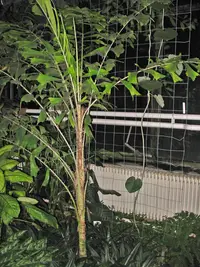
Aiphanes horrida is a spiny feather palm native to humid tropical forests of northern South America. It typically grows as a clustering or solitary palm with a slender trunk. The trunk and leaf stalks are covered in dense black spines, which give the plant a striking but very defensive appearance. Its fronds are finely divided and create a light, airy crown. This palm prefers warm temperatures, high humidity, and consistently moist, well-drained soil. It is slow to establish and needs protection from cold and drying winds, which can make how to care for Aiphanes horrida more demanding for beginners.

Care Difficulty
Hard Care

Light Preference
Partial Shade

Water Requirements
Keep Soil Moist

Temperature Preference
Tropical / Frost Sensitive

Hardiness Zone
10–12

Soil Texture
Loamy, Sandy, Organic-rich

Soil pH
Acidic (5.5–6.5), Slightly acidic (6.5–7.0)

Soil Drainage
Moist but well-drained

Fertilization
Light (every 4–6 weeks)
Scan your plant to receive care tips personalized for your specific plant
Available on iOS and Android
This spiny palm prefers bright, strong light similar to an open tropical clearing.
This species prefers consistently moist but not waterlogged soil around its deep root system.
This palm thrives in warm, frost-free conditions typical of lowland tropical climates.
This palm prefers fairly humid air and reacts poorly to prolonged dryness.
This species needs fast-draining, airy soil that still retains some moisture and organic matter.
This palm can be grown in containers for several years if given a deep, stable, well-drained setup.
This spiny palm responds well to moderate feeding during its active growing season.
This palm needs minimal pruning, focused on safety and health rather than shaping.
This species is usually grown in the ground, and transplanting must be planned carefully due to its spines and sensitive roots.
This palm is mainly propagated from seeds, which germinate slowly and need warm, stable conditions.
This tropical palm is frost sensitive and needs protection in climates with cold winters.

Plant Health Check
Not sure what's wrong with your plant? Check your plant's health inside the app.
This palm develops dense, rigid black spines on its trunk, leaf stalks, and even along the leaf midribs, forming a physical barrier against herbivores such as browsing mammals.
It naturally occurs in humid montane forests of the northern Andes, especially Colombia and nearby regions, where it grows on steep slopes in warm, wet, but well-drained habitats.
Despite the fierce armament, the palm produces small, spiny orange to reddish fruits whose pulp is consumed locally by people and wildlife, contributing to seed dispersal.

In its native range this species is often used as a living fence or barrier planting, since its extremely dense and sharp spines make it very difficult for animals and humans to pass through once a row of plants is established.
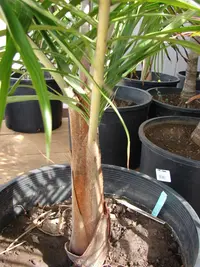
Container culture is possible while the palm is young. Use a deep, heavy pot and well-drained mix, and repot gradually. Expect slower growth and plan to move it outdoors or into the ground as it enlarges.
Keep your plants happy and healthy with plant identification, disease detection, and easy care guidance.