Trunk Fluting Support
Stake young trees loosely and from low on the trunk so they grow upright but still move slightly in the wind, which encourages strong wood and well-developed fluted bark later in life.

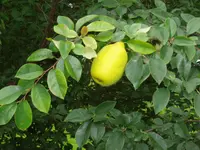
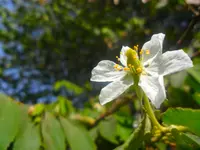
Chinese-quince, Pseudocydonia sinensis, is a small deciduous tree grown for its fragrant spring flowers, decorative bark, and hard, aromatic fruits. It develops a neat, upright crown and can be used as a feature tree in gardens or larger containers.
This species is native to China and is often cultivated in temperate regions as an ornamental and, in some areas, for its fruit. Its moderate growth rate, general toughness, and tolerance of urban conditions make it relatively straightforward to grow once established.
It prefers sun, moderately moist but well-drained soil, and benefits from a position sheltered from extreme cold winds. Understanding these basic needs helps gardeners care for Chinese-quince successfully.

Care Difficulty
Moderate Care

Light Preference
Full Sun

Water Requirements
Moderate Water

Temperature Preference
Cold Hardy

Hardiness Zone
5–8

Soil Texture
Loamy, Sandy, Clay

Soil pH
Acidic (5.5–6.5), Slightly acidic (6.5–7.0)

Soil Drainage
Moist but well-drained

Fertilization
Minimal (feed rarely)
Scan your plant to receive care tips personalized for your specific plant
Available on iOS and Android
This deciduous tree prefers full sun for strong flowering and fruiting but tolerates some light shade.
This species prefers evenly moist, well-drained soil and shows best performance with moderate, observation-based watering.
This hardy tree tolerates a wide temperature range but grows best in moderate conditions.
This species is fairly tolerant of a wide humidity range and usually does not need special humidity management outdoors.
This species performs best in deep, well-structured, free-draining soil that still holds some moisture.
This species can be grown long term in containers, especially as a patio specimen or trained as a small tree.
This small tree benefits from modest feeding to support steady growth and fruiting.
Thoughtful pruning keeps Pseudocydonia sinensis healthy, well-shaped, and flowering reliably.
This species is usually grown in the ground, so focus on careful transplanting rather than frequent repotting.
Sexual and vegetative propagation of this species is possible but slow and best suited to patient growers.
Established trees are cold hardy in much of the US and generally need minimal winter care.

Plant Health Check
Not sure what's wrong with your plant? Check your plant's health inside the app.
This tree is the only species in the genus Pseudocydonia, making it botanically distinct from both the true quinces (Cydonia) and ornamental quinces (Chaenomeles).
Its hard, knobbly fruits release a very intense fragrance as they ripen and are traditionally placed in rooms or cupboards in East Asia to perfume indoor spaces and linens.
Mature trees develop patchy, flaking bark in shades of gray, brown, and yellow, creating a distinctive mottled or tessellated trunk pattern valued in ornamental plantings.

In parts of China and Korea, the heavy, dense wood of this species has been used for crafting small decorative objects and tools, valued for its fine grain and pleasant scent when freshly worked.
The fruits are technically edible but usually too hard and astringent to eat raw. They are most often cooked into jellies, marmalades, or liqueurs, where the texture softens and the flavor becomes pleasantly aromatic.
Keep your plants happy and healthy with plant identification, disease detection, and easy care guidance.