Install sturdy support
Provide a strong trellis or wire fence and loosely tie new canes as they grow so the plant carries fruit weight without stems bending or breaking.

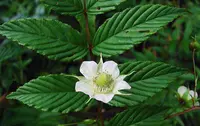
Mountain raspberry, Rubus fraxinifolius, is a shrubby, fruiting bramble from Southeast Asian highlands, often grown for its bright red, edible berries. It forms arching, thorny canes with divided leaves and small white to pink flowers that develop into raspberry-like clusters. In its native range it favors cooler, upland climates with regular moisture and well-drained, moderately fertile soil. The plant is usually vigorous and resilient, but its thorns, suckering habit, and need for consistent light and moisture can require some planning. Gardeners who learn how to care for mountain raspberry usually find it a manageable and rewarding small-fruit shrub.

Care Difficulty
Moderate Care

Light Preference
Full Sun

Water Requirements
Regular Water

Temperature Preference
Warm Climate

Hardiness Zone
10–11

Soil Texture
Loamy, Sandy, Organic-rich

Soil pH
Acidic (5.5–6.5), Slightly acidic (6.5–7.0)

Soil Drainage
Moist but well-drained

Fertilization
Minimal (feed rarely)
Scan your plant to receive care tips personalized for your specific plant
Available on iOS and Android
This shrub fruits best with consistent direct light but tolerates some shade in hot climates.
This species prefers evenly moist, well-drained soil and reacts quickly to extremes in watering.
This shrub favors mild, frost-free conditions but handles a modest temperature range in the garden.
Rubus fraxinifolius grows well in moderate outdoor humidity but benefits from slightly moist air in hot, dry climates.
Rubus fraxinifolius prefers loose, moist, well-drained soil that holds nutrients yet never stays waterlogged.
This species can be grown in containers if given enough root space and very reliable drainage.
Rubus fraxinifolius responds well to moderate feeding, especially in containers or poor soils.
Pruning Rubus fraxinifolius keeps plants productive, manageable, and healthy.
This species is usually grown in the ground, so focus on thoughtful transplanting rather than frequent repotting.
Rubus fraxinifolius is commonly propagated vegetatively to maintain desired fruiting traits.
This bramble is moderately cold tolerant but benefits from simple winter care in cooler regions.

Plant Health Check
Not sure what's wrong with your plant? Check your plant's health inside the app.
This species is native to high-elevation, humid tropical regions of Southeast Asia, especially in the Philippines, where it grows in montane forests and along open, disturbed slopes.
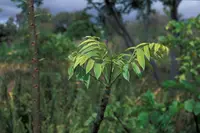
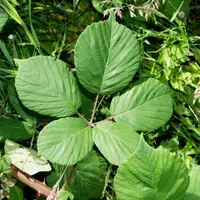
The leaves are characteristically ash-like, with sharply serrated margins and a textured surface, which is the basis for the species epithet fraxinifolius, meaning ash-leaved.
In equable tropical highland climates, plants can flower and fruit over an extended season rather than in a short, single summer flush, providing a relatively continuous food source for local wildlife.
This species spreads by canes and underground suckers, forming thickets over time. It is not usually classified as invasive in managed gardens, but regular pruning and removal of unwanted shoots are needed to keep it contained.
Keep your plants happy and healthy with plant identification, disease detection, and easy care guidance.