Bird protection strategy
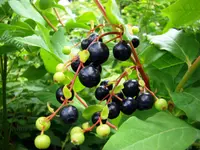
Use flexible netting over fruiting shrubs just before berries ripen to reduce bird damage while still allowing airflow and light penetration.

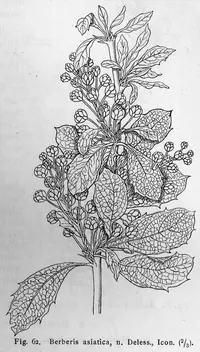
Berberis asiatica, often called Indian barberry, is a dense, spiny shrub grown for its small yellow spring flowers and bright red berries. It typically forms a rounded, bushy shape with many thorny shoots, making it useful as a barrier or hedging plant.
This species is native to the Himalayan region and nearby mountain areas, where it grows on slopes, woodland edges, and open scrub. It is generally hardy, tolerates poor soil, and copes with some drought once established.
Its resilience and low nutrient needs make it moderately easy to manage, though the thorns require careful handling. A sunny to lightly shaded site with well-drained soil supports healthy growth and simplifies how to care for Berberis.

Care Difficulty
Easy Care

Light Preference
Full Sun

Water Requirements
Moderate Water

Temperature Preference
Cold Hardy

Hardiness Zone
6–9

Soil Texture
Sandy, Loamy, Clay

Soil pH
Acidic (5.5–6.5), Slightly acidic (6.5–7.0)

Soil Drainage
Well-drained

Fertilization
Minimal (feed rarely)
Scan your plant to receive care tips personalized for your specific plant
Available on iOS and Android
This shrub prefers bright conditions and forms best color with ample sun exposure.
This species is drought tolerant once established but benefits from controlled, deep watering.
This hardy shrub tolerates a wide temperature range once established in the landscape.
This shrub tolerates typical outdoor humidity and does not need special humidity control.
Berberis asiatica prefers well-structured, free-draining soil that does not stay wet for long.
This species can be grown in containers if the pot is managed for stability and drainage.
This shrub is adaptable and needs only modest feeding to maintain healthy growth and flowering.
Pruning supports a compact, well-lit framework and consistent flowering in Berberis asiatica.
This species is usually grown in the ground, so focus on careful transplanting rather than frequent repotting.
Berberis asiatica plant care often includes propagation to create hedges or replacement plants from existing shrubs.
This shrub is generally cold hardy, so winter care is light in most temperate climates.

Plant Health Check
Not sure what's wrong with your plant? Check your plant's health inside the app.
The bright red berries of this species are unusually rich in vitamin C compared with many common fruits and have been traditionally used in Himalayan regions as a sour food ingredient and seasonal supplement.
This shrub is naturally distributed in montane regions of the Himalayas and nearby ranges, where it forms dense thickets on sunny slopes and forest edges, helping to stabilize soil on steep terrain.
Its soft, juicy berries are eaten by birds that later disperse the seeds in their droppings, giving the plant an effective way to colonize new sites along mountain slopes and disturbed habitats.
This species is one of the principal wild sources of the traditional fruit product known as kashmal in parts of northern India and Pakistan, where the berries are collected in quantity and processed into preserved foods that have been part of local diets for generations.
Poor flowering usually comes from too much shade, heavy pruning at the wrong time, or excess nitrogen fertilizer. Allow enough sun, prune just after flowering, and avoid high-nitrogen lawn fertilizers around the root zone.
Keep your plants happy and healthy with plant identification, disease detection, and easy care guidance.