big sagebrush Care (Artemisia tridentata)

Also known as: Common Sagebrush, Sagebrush
big sagebrush

About big sagebrush

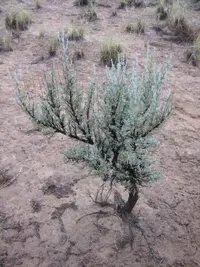
Big sagebrush, Artemisia tridentata, is a woody shrub native to dry plains, plateaus, and mountain slopes of western North America. It forms rounded, many-branched clumps with silvery gray, aromatic leaves.

The plant is highly drought tolerant and adapted to poor, rocky, well-drained soils, which makes it easy to grow in low-water landscapes but unsuitable for wet sites. It prefers full sun and open exposure.

Understanding how to care for big sagebrush starts with respecting its need for dry conditions and avoiding rich, heavily watered garden beds.

Main Plant Requirements

Care Difficulty

Easy Care

Light Preference

Full Sun

Water Requirements

Low Water

Temperature Preference

Cold Hardy

Hardiness Zone

4–9

Soil Texture

Sandy, Loamy, Rocky

Soil pH

Neutral (7.0), Slightly alkaline (7.0–7.5)

Soil Drainage

Well-drained

Fertilization

Minimal (feed rarely)

Get Personalized Care Plan

Scan your plant to receive care tips personalized for your specific plant

Available on iOS and Android

How to Care for the big sagebrush

This shrub thrives in strong, open light typical of dry western landscapes.

  • Provide full sun for 6–10 hours daily; big sagebrush forms denser foliage and stronger stems in unobstructed exposure.
  • Tolerates light partial shade, especially brief afternoon shade in very hot climates, but too much shade causes leggy, open growth and reduced aromatic oils.
  • Avoid siting near taller plants or buildings that cast long shadows in winter, as low sun angles can reduce light and weaken new growth.

This desert-adapted shrub prefers dry conditions and is highly sensitive to excess moisture.

  • In the ground, water only during establishment, letting the top 5–8 cm of soil dry completely; after the first year, irrigate only during prolonged drought.
  • Use very fast-draining, sandy or gravelly soil so water does not pool around roots; Artemisia tridentata is prone to root rot in heavy clay or compacted sites.
  • Signs of overwatering include yellowing, limp foliage and dieback from the base; crisp, brown leaf tips during extreme heat often indicate prolonged drought stress.

This species is adapted to wide temperature swings typical of arid and semi-arid regions.

  • Active growth occurs in spring and fall when temperatures are around 55–80°F (13–27°C), with moderate growth continuing in cooler summer areas.
  • Mature plants tolerate winter lows near -20°F (-29°C) once established, though young shrubs benefit from some protection from freezing winds their first year.
  • Heat tolerance is high up to about 95–100°F (35–38°C) if soil is dry and well drained; extended wet, cold conditions cause more damage than dry cold alone.

This shrub prefers very dry air and rarely suffers from low household humidity.

  • Target 20–40% relative humidity; avoid keeping it in persistently moist or steamy rooms.
  • Big sagebrush tolerates much drier air than most houseplants, so do not use humidifiers nearby.
  • If leaves soften, lose their gray tone, or mildew appears, move the plant to a drier, better-ventilated spot.

This species requires very lean, fast-draining soil that mimics arid, rocky habitats.

  • Use a mix of roughly 60–70% coarse sand or fine gravel with 30–40% gritty loam or cactus mix to keep roots dry and aerated.
  • Aim for slightly alkaline to neutral pH around 7.0–8.0; avoid acidic peat-heavy mixes for Artemisia tridentata.
  • Incorporate mineral amendments like pumice or perlite instead of compost to increase pore space and prevent waterlogging.
  • Avoid rich, dense, or clay-based soils, which hold moisture and quickly cause root decline or rot.

This species can be grown in containers outdoors if the pot stays dry and well-anchored.

  • Choose a deep, heavy container so the woody root system has room while the plant remains stable in wind.
  • Select unglazed clay or concrete pots, which allow faster evaporation and reduce prolonged root moisture.
  • Raise the pot on feet or blocks so drainage holes never sit in collected runoff, especially during winter rains.

Artemisia tridentata is adapted to nutrient-poor soils and usually needs no fertilizer once established.

Pruning Artemisia tridentata is mainly for safety, structure, and plant health, not for heavy shaping.

  • Best time is late winter to very early spring before active growth starts.
  • Remove dead, damaged, or crossing branches using clean, sharp bypass pruners or loppers.
  • Lightly thin crowded stems to maintain an open, airy structure and good air flow.
  • Avoid cutting into old, bare wood, as this shrub resprouts poorly from hard cuts.

Transplanting big sagebrush is done infrequently because the plant dislikes root disturbance and forms a deep taproot.

  • Plan moves for early spring or early fall when temperatures are mild and soil is workable.
  • Transplant only if roots are circling a container, growth stalls, or space is clearly inadequate.
  • Dig a wide, deep root ball and keep it intact to limit taproot damage and moisture loss.
  • Replant at the same depth in very well-drained soil, then water deeply once and allow soil to dry between light follow-up waterings.

Propagation of Artemisia tridentata is possible from both seed and semi-woody cuttings with the right conditions.

  • Collect ripe seed in late summer–fall and sow shallowly in fast-draining, sandy mix.
  • Provide bright light, good air flow, and cool to moderate temperatures for germination.
  • Take semi-hardwood cuttings in late spring–summer, 7–10 cm long, from non-flowering shoots.
  • Dip bases in rooting hormone, insert in gritty mix, and keep slightly moist until rooted, then reduce watering.

Artemisia tridentata is very cold hardy and usually needs minimal winter care in the ground.

  • Established plants tolerate substantial frost and snow with no covering in most temperate climates.
  • Apply a light, dry mulch around the root zone in late fall only in very exposed or windy sites.
  • For container plants in colder regions, move pots to a sheltered, unheated but frost-moderated location.

Care Tips

Encourage Deep Roots

In the first 1–2 years, leave a wide, undisturbed soil zone around the plant, and avoid frequent shallow cultivation so the taproot can penetrate deeply and anchor the shrub for long-term drought tolerance.

Control Competing Vegetation

Keep a 60–90 cm weed-free ring around the plant using mulch-free physical barriers (such as cardboard topped with gravel) to reduce competition for water without increasing soil moisture against the stem.

Use Gravel Mulch

Apply a thin 2–4 cm layer of coarse gravel or small rock around but not touching the crown to reduce rapid surface drying and erosion while still allowing excellent air flow and drainage.

Plan for Mature Size

Site plants at least 1.5–2 m from paths, foundations, and other shrubs, since early spacing that reflects the mature width reduces the need for pruning that can shorten the shrub’s lifespan when growing big sagebrush.

Avoid Unnecessary Irrigation

Once established, isolate the plant from lawn or bed irrigation lines or drip emitters and group it with other dryland species so it is not exposed to chronic overwatering from nearby thirsty plants.

Common Pests and Diseases

sagebrush defoliating moth

This pest is the larval stage of a moth that feeds heavily on leaves and young shoots, sometimes causing almost complete defoliation on stressed shrubs. Symptoms include ragged foliage, chewed leaf edges, and reduced new growth.

Solution

Hand-pick and destroy visible caterpillars on small plantings and prune out heavily infested branch tips. Encourage natural predators and parasitoid wasps by avoiding broad-spectrum insecticides, and in severe outbreaks consider a targeted Bacillus thuringiensis (Bt) product applied to foliage during early larval stages when leaves first show chewing damage.

sagebrush leaf beetle

These insects are small beetles whose adults and larvae feed on leaves and new shoots, leading to thinning foliage and a dull, bronzed appearance of the canopy. This pest is more damaging when plants are already stressed by drought outside their natural range.

Solution

Inspect foliage regularly and shake branches over a sheet or tray to dislodge and remove beetles from smaller shrubs. Support plant vigor with full sun, sharply draining soil, and no supplementary fertilizer, and if needed use a narrow-spectrum insecticide or insecticidal soap directed at actively feeding stages while avoiding treatment when beneficial insects are most active.

powdery mildew

This disease appears as white to gray powdery patches on leaves and young stems, typically in late summer or in unusually humid conditions. Symptoms include distorted new growth and premature leaf drop on more susceptible plants or in plantings outside very arid sites.

Solution

Improve air circulation around shrubs by spacing plants generously and pruning out crowded interior twigs, and avoid overhead watering or evening irrigation. Remove and discard heavily infected shoots and, where the problem recurs, apply a sulfur-based or potassium bicarbonate fungicide at the first sign of white patches according to label directions for Artemisia tridentata care.

rust fungus

This disease causes yellow to orange spotting on leaves, sometimes with raised pustules on the underside that release powdery spores. Symptoms include premature leaf yellowing and drop, especially in seasons with unusual rainfall or overhead irrigation.

Solution

Remove and dispose of affected leaves and any litter under the plant to reduce spore levels, and water only at the soil level to keep foliage dry. In persistent cases, use a labeled systemic or protectant fungicide early in the season when first spots appear, and maintain good airflow by avoiding dense mixed plantings that trap humidity.

stem canker

This disease is caused by opportunistic fungi that invade through mechanical injury or winter damage, producing sunken, discolored lesions on woody stems and progressive dieback beyond the affected area. Symptoms include dead branch tips, peeling bark, and failure of buds to leaf out in spring on affected stems.

Solution

Prune out cankered branches well below visible damage, disinfecting tools between cuts with 70% alcohol, and dispose of removed material away from the planting area. Reduce future risk by avoiding trunk wounds, planting in very well-drained soil with full sun, and refraining from unnecessary watering or fertilizing that could weaken this drought-adapted shrub.

Interesting Facts

Foundation of sagebrush steppe

Big sagebrush is the dominant shrub across much of the Intermountain West, forming the structural and ecological backbone of the sagebrush steppe ecosystem that supports many specialized plants, insects, birds, and mammals.

Chemical herb defenses

Its strong aroma comes from volatile compounds such as terpenoids, which help deter many herbivores and inhibit the growth of some competing plants in the immediate soil zone.

Multiple local subspecies

This species occurs in several recognized subspecies that differ in leaf shape, chemistry, and habitat preference, allowing it to occupy sites ranging from relatively dry lowlands to colder high-elevation basins.

Botan icon

Did you know?

Some populations of big sagebrush synchronize leaf and shoot growth with the first autumn moisture rather than spring, an adaptation that allows the plant to make rapid use of short, cool-season windows when soil water is briefly available in arid landscapes.

FAQs about big sagebrush

Yes, this species grows readily from seed if given full sun, very well-drained soil, and no excess watering. Lightly press seeds onto the soil surface, do not bury deeply, and keep just barely moist until germination.

Grow Healthy Plants with Botan Care

Keep your plants happy and healthy with plant identification, disease detection, and easy care guidance.


Botan plant care app — identify plants on mobile

Explore More Plants