Face The Fans
When planting several shrubs, orient the fan-shaped branches in the same direction along a wall or slope so the layered structure knits together faster and suppresses weeds more effectively.

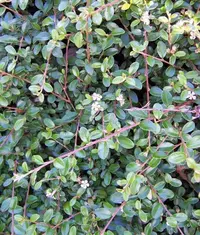
Rockspray cotoneaster (Cotoneaster horizontalis) is a low, spreading deciduous shrub often used as groundcover, for slopes, or draping over walls. It forms a distinctive herringbone pattern of stiff, flattened branches. Small, glossy leaves cover the stems densely, followed by white to pale pink spring flowers and bright red berries that often persist into winter. The plant is native to mountainous regions of western China but is now widely grown in temperate gardens. It is generally easy to grow, tolerating wind, urban conditions, and short dry spells once established. Understanding how to care for rockspray cotoneaster starts with choosing a sunny to lightly shaded site with reasonably well-drained soil.

Care Difficulty
Easy Care

Light Preference
Full Sun

Water Requirements
Low Water

Temperature Preference
Cold Hardy

Hardiness Zone
5–7

Soil Texture
Sandy, Loamy, Clay

Soil pH
Slightly acidic (6.5–7.0), Slightly alkaline (7.0–7.5)

Soil Drainage
Well-drained

Fertilization
Minimal (feed rarely)
Scan your plant to receive care tips personalized for your specific plant
Available on iOS and Android
This shrub prefers full sun but tolerates some light shade, which affects flowering and berry density.
This species prefers moderately dry conditions and dislikes waterlogged soil.
This hardy shrub tolerates a wide temperature range, with best growth in cool to mild conditions.
This shrub handles typical outdoor humidity and rarely needs special moisture adjustments.
This species prefers moderately fertile, well-drained mineral soils rather than rich, wet mixes.
This species adapts well to outdoor container growing when given a stable, free-draining setup.
Cotoneaster horizontalis benefits from modest feeding in poor or depleted soils but often grows well without heavy fertilizer in the ground.
Pruning helps maintain the low, fanned structure of Cotoneaster horizontalis and supports flowering and fruiting.
This shrub is usually grown in the ground, so care focuses more on transplanting than frequent repotting.
Cotoneaster horizontalis is commonly propagated from semi-ripe cuttings and by simple layering.
Established Cotoneaster horizontalis is cold hardy in much of the US and generally needs minimal winter care.

Plant Health Check
Not sure what's wrong with your plant? Check your plant's health inside the app.
This species develops a strongly herringbone or fishbone branching pattern, with lateral shoots arranged in a very regular, opposite fashion along nearly horizontal stems, which makes it easy to distinguish from most other cotoneasters.
Its small red pomes are a reliable winter food source for birds such as blackbirds and thrushes in towns and cities, helping support urban wildlife when other fruit is scarce.
Cotoneaster horizontalis performs especially well on alkaline, thin, or limestone-based soils, which is one reason it is widely planted on dry walls and rock gardens in many Cotoneaster horizontalis care guides.

Cotoneaster horizontalis is listed as an invasive or potentially invasive shrub in several temperate regions, including parts of the UK, Ireland, and New Zealand, where it can spread from gardens into rocky slopes and coastal habitats, outcompeting some native plant communities.
This shrub performs best outdoors in full exposure to natural light and seasonal temperature changes. It can survive short periods indoors, but long-term rockspray cotoneaster indoor care often leads to weak growth, poor flowering, and pest issues.
Keep your plants happy and healthy with plant identification, disease detection, and easy care guidance.