Wire training support
Install a sturdy wire or trellis system early and loosely tie new canes with soft ties so the long, arching growth is supported and easy to manage for harvest and pruning access.

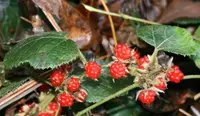
Rubus buergeri is a deciduous shrub in the rose family, related to raspberries and blackberries. It typically forms arching canes with small serrated leaves and seasonal flowers. Native to parts of East Asia, it grows in woodland edges and mountain slopes, where it benefits from good light and cool, moist conditions. In gardens it tends to be robust but can spread, so it suits larger spaces or naturalistic plantings. It is generally undemanding if planted in well-drained, fertile soil with regular moisture. Understanding how to care for Rubus buergeri mainly involves giving it enough light, room for its canes, and basic pruning to manage growth.

Care Difficulty
Moderate Care

Light Preference
Partial Sun

Water Requirements
Moderate Water

Temperature Preference
Cool Climate

Hardiness Zone
6–9

Soil Texture
Loamy, Sandy, Organic-rich

Soil pH
Acidic (5.5–6.5), Slightly acidic (6.5–7.0)

Soil Drainage
Moist but well-drained

Fertilization
Minimal (feed rarely)
Scan your plant to receive care tips personalized for your specific plant
Available on iOS and Android
This shrub prefers bright outdoor conditions with a balance of direct sun and partial shade.
This species prefers consistently moist, well-drained soil rather than extremes of drought or saturation.
This shrub is generally hardy but has clear preferences for moderate temperatures during active growth.
This shrub handles a wide humidity range but benefits from moderately moist air.
Rubus buergeri prefers loose, moisture-retentive but well-drained soil that allows strong root development.
This species can be grown in containers if the pot is large and stable enough for its woody, spreading habit.
This shrub grows well in moderately fertile soil, so feeding mainly supports growth and fruiting rather than survival.
Pruning maintains structure, controls spread, and encourages healthy new canes on Rubus buergeri.
This species is more often planted in the ground, so care focuses on transplanting rather than frequent repotting.
Rubus buergeri is commonly propagated vegetatively to maintain desired characteristics and vigor.
This shrub is generally cold hardy in temperate climates, so winter care is simple for in-ground plantings.

Plant Health Check
Not sure what's wrong with your plant? Check your plant's health inside the app.
This species is native to montane and lowland forests of Japan, Taiwan, and parts of eastern China, where it typically grows along forest margins and openings rather than in deep shade.
It develops prominently veined, often somewhat leathery leaves that can show a subtle gloss, a feature that helps distinguish it in the field from many other Rubus species with thinner, matte foliage.
Instead of forming dense arching thickets like many brambles, it tends to behave as a scrambling or climbing shrub, using nearby vegetation or structures for support in its natural habitat.
This species spreads by arching canes and root suckers, forming thickets over time. In favorable conditions it can become vigorous, so edging, root barriers, and regular removal of unwanted shoots help keep it contained and manageable.
Keep your plants happy and healthy with plant identification, disease detection, and easy care guidance.