Mossy ground cover
Encourage a thin moss layer around plants to keep the shallow roots cool and evenly moist, but gently peel it back before fertilizing or top-dressing so nutrients can reach the soil surface.

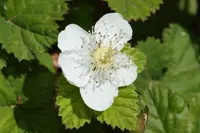
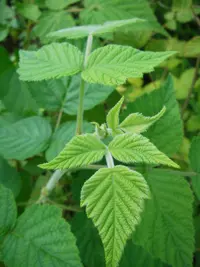
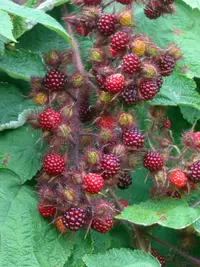
Roughfruit berry (Rubus lasiococcus) is a low, creeping shrub in the rose family, related to raspberries and blackberries. It forms small mats or patches close to the ground. The plant carries small, rounded leaves and produces modest white flowers followed by bright red, somewhat rough-textured berries. It has a delicate, woodland look rather than a dense, bushy form. In nature it grows in cool, moist forests of western North America, often under conifers and along shaded slopes. It prefers consistently moist, humus-rich, acidic soil and protection from strong sun, which shapes how to care for roughfruit berry in gardens or naturalistic plantings.

Care Difficulty
Moderate Care

Light Preference
Partial Shade

Water Requirements
Keep Soil Moist

Temperature Preference
Cold Hardy

Hardiness Zone
5–9

Soil Texture
Loamy, Peaty, Organic-rich

Soil pH
Strongly acidic (4.5–5.5), Acidic (5.5–6.5)

Soil Drainage
Moist but well-drained

Fertilization
Minimal (feed rarely)
Scan your plant to receive care tips personalized for your specific plant
Available on iOS and Android
This shade-loving woodland shrub prefers cool, filtered light that mimics a forest floor.
This plant thrives in consistently moist, cool soil that never dries out completely or stays waterlogged.
This cool-climate shrub is adapted to mild summers and cold, snowy winters.
This creeping shrub prefers consistently moist, cool air but does not require artificially high humidity in most outdoor settings.
Rubus lasiococcus thrives in moist, light, organic-rich soil that mimics cool forest leaf litter.
This species can be grown in containers, but long-term success is easier when conditions closely match its cool, moist woodland habitat.
This woodland native needs only light feeding in cultivation, as it is adapted to nutrient-poor forest soils.
Rubus lasiococcus needs minimal pruning, mainly to keep low mats healthy and tidy.
This species is usually grown in the ground, so care focuses on gentle transplanting rather than frequent repotting.
Rubus lasiococcus is commonly propagated by division or simple layering rather than seed for faster establishment.
This low shrub is generally cold hardy in its native range and needs little active winter care in the ground.

Plant Health Check
Not sure what's wrong with your plant? Check your plant's health inside the app.
This species occurs mainly in cool, moist coniferous forests of western North America, often under spruce, fir, and hemlock canopies at mid to high elevations where many other Rubus species do not thrive.
Unlike many tall, arching Rubus shrubs, this plant forms very low, creeping mats, with slender stems rooting as they spread across the forest floor and creating dense groundcover in suitable conditions.
Its fruits are tiny red aggregate berries that are structurally true Rubus fruits, providing food for small mammals and birds despite being far less conspicuous and much smaller than common blackberries or raspberries.
This species spreads slowly by creeping stems and underground rhizomes, forming low mats over time. It is not usually aggressive but can gradually fill moist, cool woodland beds if conditions are favorable and competition is low.
Keep your plants happy and healthy with plant identification, disease detection, and easy care guidance.