Install sturdy supports
Set up a strong wire trellis or tensioned wires between posts before the canes reach 30–40 cm, then fan out and tie new growth loosely every 20–30 cm to keep canes upright, well lit, and easy to harvest.

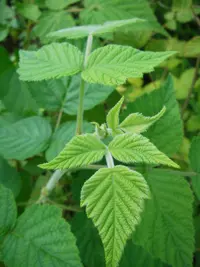
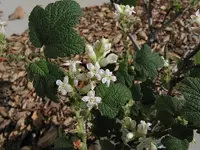
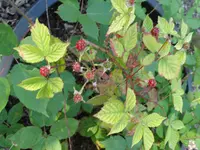
Rubus hirtus is a deciduous bramble species in the rose family, related to blackberries and raspberries. It typically forms arching or scrambling thickets with prickly stems. Leaves are divided into several toothed leaflets and the plant bears white flowers followed by dark purple to black aggregate fruits. It naturally occurs in woodland edges, scrub, and hedgerows across parts of Europe and western Asia, often on slopes and open forest margins. This species is generally vigorous and adaptable, which makes it fairly easy to establish where the climate is suitable. To care for Rubus hirtus, provide sun to light shade, moderately moist but well-drained soil, and enough space for its spreading growth habit.

Care Difficulty
Moderate Care

Light Preference
Partial Shade

Water Requirements
Moderate Water

Temperature Preference
Cold Hardy

Hardiness Zone
5–8

Soil Texture
Loamy, Sandy, Organic-rich

Soil pH
Acidic (5.5–6.5), Slightly acidic (6.5–7.0)

Soil Drainage
Moist but well-drained

Fertilization
Minimal (feed rarely)
Scan your plant to receive care tips personalized for your specific plant
Available on iOS and Android
This bramble prefers bright conditions but tolerates some shade, especially in warmer climates.
This shrub prefers consistently moist, well‑drained soil rather than frequent shallow watering.
This hardy species tolerates a wide temperature range but grows best in cool to mild conditions.
This bramble tolerates a wide humidity range, so indoor air is usually adequate.
This shrub prefers loose, well-drained, moderately fertile soil with steady moisture.
This species can be grown in containers if the pot is large and stable enough for its spreading growth.
This wild bramble uses soil nutrients efficiently and usually needs only light feeding in average garden ground.
Thoughtful pruning keeps Rubus hirtus productive, accessible, and within bounds.
This species is more often transplanted in the ground than kept as a long-term container plant.
Rubus hirtus is commonly propagated vegetatively to maintain desirable traits.
This bramble is generally cold hardy in temperate climates and needs only modest winter attention in the ground.

Plant Health Check
Not sure what's wrong with your plant? Check your plant's health inside the app.
This bramble is native to central and southern Europe, where it typically forms dense thickets along shaded forest margins, hedgerows, and ravines rather than open fields. It often dominates semi-natural woodland edges and can shape the local understorey plant community.
Rubus hirtus belongs to a taxonomically complex group, and its leaves, stem hairiness, and prickles can vary considerably between populations. This variability has led to the description of numerous closely related microspecies that can be difficult even for specialists to distinguish.
The species provides nesting and refuge sites for small birds and mammals in its thorny thickets. Its dark berries are eaten by many bird species, which helps disperse the seeds over considerable distances.
This bramble spreads readily by arching canes that root where they touch soil and by bird‑dispersed seeds. In suitable conditions it can form dense thickets, so plan space, edge beds, or use barriers if needed.
Keep your plants happy and healthy with plant identification, disease detection, and easy care guidance.