Two-wire trellis
Install a sturdy 1.8–2 m post-and-wire trellis with wires at about 90 cm and 150 cm, then loosely tie canes to the wires to keep fruit off the ground and improve airflow for cleaner harvests.

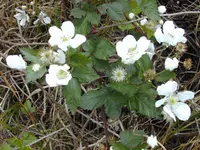
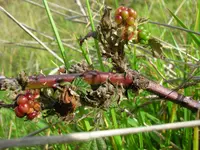
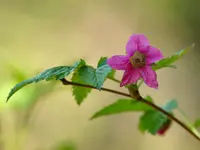
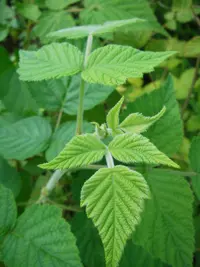
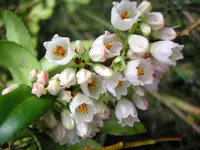
Sawtooth blackberry, Rubus argutus, is a vigorous deciduous bramble known for its arching, thorny canes and white spring flowers followed by dark edible berries. It typically forms dense thickets and is often used in informal hedgerows, wildlife gardens, or naturalized areas.
This species is native to the southeastern United States but has spread widely in many temperate regions. It is considered easy to grow, as it tolerates a range of soils and moderate neglect, though its strong growth can become invasive if not managed.
It generally prefers full sun to light shade, moist but well-drained soil, and some structural support. Understanding how to care for sawtooth blackberry mainly involves controlling its spread and renewing old canes regularly.

Care Difficulty
Easy Care

Light Preference
Full Sun

Water Requirements
Moderate Water

Temperature Preference
Cold Hardy

Hardiness Zone
5–9

Soil Texture
Sandy, Loamy, Organic-rich

Soil pH
Acidic (5.5–6.5), Slightly acidic (6.5–7.0)

Soil Drainage
Moist but well-drained

Fertilization
Minimal (feed rarely)
Scan your plant to receive care tips personalized for your specific plant
Available on iOS and Android
Rubus argutus produces best fruit when grown in consistent, direct outdoor sun exposure.
Rubus argutus prefers evenly moist, well-drained soil rather than constant wetness or drought.
This species is hardy and adapted to outdoor temperature swings in many temperate regions.
This species handles typical outdoor humidity and rarely needs special humidity management.
Rubus argutus performs best in loose, moist, well-drained, organically enriched soil.
This species can be grown in containers if the pot provides enough root depth and stability for vigorous canes.
Rubus argutus benefits from modest feeding in cultivation, especially in lean soils, but heavy fertilization is unnecessary.
Pruning Rubus argutus is important for keeping plants fruitful, manageable, and healthy.
This bramble is usually grown in the ground, so focus on planting and occasional transplanting rather than frequent repotting.
Rubus argutus is commonly propagated vegetatively, as this preserves desirable fruiting traits.
This species is generally cold hardy in much of the US and needs only modest winter care in the ground.

Plant Health Check
Not sure what's wrong with your plant? Check your plant's health inside the app.
This blackberry species is native to the eastern and south-central United States, where it naturally forms dense thickets along forest edges, roadsides, and disturbed ground.
Like many blackberries, it has a perennial root system but biennial canes: first-year canes (primocanes) grow vegetatively, and second-year canes (floricanes) bear flowers and fruit before dying back.
Its arching, thorny stems provide nesting cover for small birds and mammals, while the late-spring flowers support pollinators and the summer berries are a major food source for many wildlife species.

Rubus argutus is a parent species of several cultivated blackberry varieties, so some modern garden blackberries trace part of their genetics directly back to this wild eastern North American bramble.
This species spreads by arching canes and rooting where tips touch soil, and by bird-dispersed seeds. In suitable climates it can colonize quickly, so use barriers, regular pruning, and prompt removal of unwanted seedlings to limit spread.
Keep your plants happy and healthy with plant identification, disease detection, and easy care guidance.