Thicket Management
Remove older, congested canes at ground level every 1–2 years to keep the thicket open, which improves airflow, reduces fungal problems, and encourages stronger new fruiting canes.

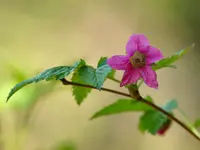
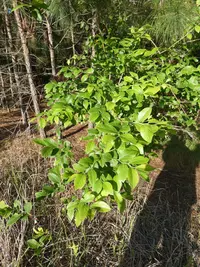
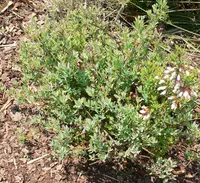
Salmonberry, Rubus spectabilis, is a deciduous shrub from the Pacific Northwest, often found along streams, forest edges, and moist coastal slopes. It forms dense thickets with upright, arching canes and soft, toothed leaves.
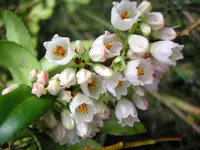
The plant is known for its bright pink to magenta spring flowers followed by yellow to orange-red edible berries that resemble small raspberries. It spreads readily by suckers, so it can naturalize quickly in suitable sites.
Salmonberry is generally easy to grow in cool, moist climates and suits informal, wildlife-friendly gardens. It prefers moist, well-drained soil and light shade to partial sun, and those conditions make it simpler to care for salmonberry over time.

Care Difficulty
Easy Care

Light Preference
Partial Shade

Water Requirements
Keep Soil Moist

Temperature Preference
Cold Hardy

Hardiness Zone
5–9

Soil Texture
Loamy, Silty, Organic-rich

Soil pH
Acidic (5.5–6.5), Slightly acidic (6.5–7.0)

Soil Drainage
Moist but well-drained

Fertilization
Minimal (feed rarely)
Scan your plant to receive care tips personalized for your specific plant
Available on iOS and Android
This shrub prefers bright, cool conditions that mimic open woodland edges.
This species prefers consistently moist but not waterlogged soil.
This plant is adapted to cool, moist climates with mild summers and cold, wet winters.
Rubus spectabilis grows best in moderately moist air but usually does not need special humidity control outdoors.
Rubus spectabilis prefers cool, moist, well-aerated soil that mimics a forest edge or streambank.
This species can be grown in containers for a few years if the pot is large and moisture management is handled carefully.
Rubus spectabilis is a woodland shrub that benefits from modest, soil-building nutrition rather than heavy fertilizing.
Pruning helps maintain healthy structure and good flowering in Rubus spectabilis.
This shrub is usually grown in the ground, so guidance focuses on transplanting rather than routine repotting.
Rubus spectabilis is commonly propagated to expand thickets or establish new hedgerows.
Mature Rubus spectabilis is cold hardy in much of its range and usually needs minimal winter care.

Plant Health Check
Not sure what's wrong with your plant? Check your plant's health inside the app.
The large magenta flowers are primarily pollinated by hummingbirds rather than bees, which is unusual in the rose family and linked to their bright color and tubular shape.
This species spreads vigorously by rhizomes, forming dense clonal thickets that stabilize moist forest edges and streambanks in its native Pacific Northwest range.
In much of its native range, this shrub produces some of the earliest ripening wild berries of the season, providing important food for birds and mammals before many other fruits are available.

Indigenous peoples of the Pacific Northwest have long used salmonberry as a culturally important food plant, traditionally eating the fresh berries and young spring shoots and sometimes pairing the berries with dried salmon roe, which is likely how the plant gained its common name.
This species grows best outdoors in cool, moist, temperate climates with room for its thicket-forming habit. Salmonberry indoor care is rarely successful long term because the plant requires strong natural light, seasonal temperature shifts, and ample soil volume.
Keep your plants happy and healthy with plant identification, disease detection, and easy care guidance.