Install low supports
Use short stakes or a low wire mesh around young plants to keep the lax stems and fruiting branches off wet soil, which reduces fruit rot and makes harvest easier.

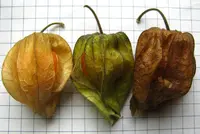
Clammy groundcherry (Physalis heterophylla) is a perennial herb in the nightshade family, native to prairies, open woods, and sandy soils in North America. It forms low, branching stems with soft, slightly sticky foliage and nodding, bell-shaped yellow flowers.
After flowering it develops papery husks that enclose a small berry, giving it the typical groundcherry look. The plant tends to spread by rhizomes, forming loose colonies where conditions suit it.
It adapts to full sun or light shade and prefers well-drained, often sandy or gravelly soil with moderate moisture. Understanding these natural conditions helps guide how to care for clammy groundcherry in gardens or restoration plantings.

Care Difficulty
Easy Care

Light Preference
Full Sun

Water Requirements
Moderate Water

Temperature Preference
Cold Hardy

Hardiness Zone
3–8

Soil Texture
Sandy, Loamy, Rocky

Soil pH
Acidic (5.5–6.5), Slightly acidic (6.5–7.0)

Soil Drainage
Well-drained

Fertilization
Minimal (feed rarely)
Scan your plant to receive care tips personalized for your specific plant
Available on iOS and Android
Physalis heterophylla grows best in open sites with steady sun exposure.
Physalis heterophylla prefers evenly moist but not saturated soil.
This species thrives in temperate climates with warm summers and cold, dormant winters.
This species handles a wide humidity range and rarely needs special adjustment in typical outdoor conditions.
This species prefers loose, well-drained mineral soils that do not stay waterlogged.
This species can be grown in containers if the pot is sized and drained to support its deep, spreading root system.
This native perennial usually manages with minimal feeding, but light fertilization can support better growth when growing clammy groundcherry in lean soils or containers.
Physalis heterophylla needs only light pruning to maintain health and manage spread.
This species is most often grown in the ground, where transplanting is more relevant than container repotting.
Physalis heterophylla is most commonly propagated from seeds, with some potential for division in established clumps.
This cold-hardy perennial usually needs little winter attention in most temperate climates.

Plant Health Check
Not sure what's wrong with your plant? Check your plant's health inside the app.
This species is native to eastern and central North America and typically grows in dry, sandy or gravelly soils where many other herbs struggle, often colonizing open prairies, roadsides, and dry woodland edges.
The plant is covered with fine glandular hairs that exude a sticky substance, which can trap small insects and likely reduces herbivory by making the foliage less palatable.
After flowering, the calyx enlarges into a thin, papery, lantern-like husk that surrounds the developing berry, a trait used by botanists to distinguish it from closely related nightshade species in the field.

The species epithet heterophylla refers to its variability in leaf shape on a single plant, with lower leaves often broader and sometimes lobed, and upper leaves narrower, which has historically caused taxonomic confusion with other Physalis species.
The ripe, fully yellow-orange berries inside the papery husks are edible and mildly sweet, but all green, unripe fruits, leaves, and stems contain toxic alkaloids. Always discard damaged, green, or bitter-tasting fruits and avoid feeding them to children.
Keep your plants happy and healthy with plant identification, disease detection, and easy care guidance.