Morisonia flexuosa Care

Morisonia flexuosa

About Morisonia flexuosa

Morisonia flexuosa is a woody shrub or small tree, typically found in dry coastal habitats and open woodlands in tropical and subtropical regions of the Americas. It develops a sturdy, branching structure with small leaves and often a somewhat sparse, open canopy.

This species is adapted to poor, sandy, or rocky soils and periodic drought, which makes it relatively resilient once established. Growth can be slow to moderate, and seedlings may be more demanding than mature plants.

In cultivation, it generally prefers full sun, well-drained soil, and moderate moisture, without prolonged waterlogging. Understanding these natural adaptations helps clarify how to care for Morisonia flexuosa in gardens or specialized collections.

Main Plant Requirements

Care Difficulty

Moderate Care

Light Preference

Full Sun

Water Requirements

Moderate Water

Temperature Preference

Warm Climate

Hardiness Zone

10–12

Soil Texture

Sandy, Loamy, Rocky

Soil pH

Slightly acidic (6.5–7.0), Neutral (7.0)

Soil Drainage

Well-drained

Fertilization

Minimal (feed rarely)

Get Personalized Care Plan

Scan your plant to receive care tips personalized for your specific plant

Available on iOS and Android

How to Care for the Morisonia flexuosa

This coastal shrub prefers bright, open conditions and handles strong light when established.

  • Provide 6–8 hours of direct sun daily; light morning sun with some afternoon exposure suits young plants best.
  • Accepts light partial shade, but dense shade reduces flowering and can cause leggy, weak growth in Morisonia flexuosa.
  • In hot inland summers, give protection from intense afternoon sun to limit leaf scorch and moisture stress, especially on recently planted shrubs.

This species is drought-tolerant once established and prefers infrequent, deeper watering.

  • Allow the top 5–8 cm of soil to dry before watering; in sandy coastal soils this may happen quickly after hot, windy days.
  • Use well-drained, gritty or sandy soil; standing water or heavy clay encourages root rot and yellowing, mushy stems.
  • Reduce watering in cool seasons, watching for shriveling leaves or twig dieback as signs of underwatering, and blackened roots or sour smell as overwatering indicators.

This shrub favors warm, frost-free climates and copes well with coastal heat when soil moisture is adequate.

  • Optimal growth occurs around 70–86°F (21–30°C), with consistent warmth supporting steady shoot and root development.
  • Tolerates brief dips to about 40°F (4°C), but foliage and young shoots can be damaged near this level; prolonged exposure lower than this is risky.
  • Handles dry heat up to about 95°F (35°C) if roots are established, but benefits from mulch and occasional deep watering during extended hot spells.

This coastal shrub handles a wide humidity range but grows best with moderate ambient moisture.

  • Aim for 40–60% humidity, which is typical of many indoor and outdoor environments in mild climates.
  • It tolerates short dry-air periods, but prolonged air below 30% can cause leaf edge browning and slower growth.
  • Increase humidity by grouping plants, placing a water tray nearby, or growing away from strong heating or cooling drafts.

Morisonia flexuosa prefers free-draining, sandy to loamy soil that mimics coastal or dune habitats.

  • Use a mix of roughly 50–70% coarse sand or sandy loam with 30–50% composted organic matter to balance drainage and nutrition.
  • Ensure very rapid drainage; water should pass through in seconds and not leave the pot or bed soggy.
  • A slightly acidic to neutral pH around 6.0–7.0 is suitable and usually needs no special adjustment.
  • Avoid heavy clay, compacted ground, or peat-heavy mixes that stay wet and limit root aeration.

This species can be grown in containers when provided with stable, well-drained conditions.

  • Choose a deep, heavy container to prevent tipping, as the shrub can become tall and wind-exposed on balconies or patios.
  • Select pots with wide drainage outlets so coarse sandy mixes do not clog and trap water at the base.
  • Use a container diameter that leaves space for a broad root system, as restricted lateral roots reduce drought tolerance.

This species usually grows well in the ground with minimal feeding, especially in reasonably fertile soil.

  • For container-grown Morisonia flexuosa, use a balanced slow-release fertilizer (for example 10-10-10) at the start of spring.
  • During the active growing season, a light top-dressing of compost can support steady growth without excess vigor.
  • Reduce or stop feeding in fall and winter to avoid forcing soft, frost-tender shoots.
  • If using liquid fertilizer, apply at 1/2 strength every 4–6 weeks during peak growth only.

Pruning is mainly needed to maintain structure and remove problem wood rather than for heavy shaping.

  • Carry out main pruning in late winter or very early spring before active growth starts.
  • Remove dead, diseased, or damaged branches first, then thin any crossing or crowded shoots to open the canopy.
  • Use clean, sharp bypass pruners or a pruning saw, making smooth cuts just above a branch collar.
  • Light tip pruning after flowering can refine shape and manage size without stressing Morisonia flexuosa.

This plant is most often grown in the ground; transplanting young specimens correctly is more important than frequent repotting.

  • Transplant in late winter to early spring, when the plant is dormant or just starting growth, to limit stress.
  • Look for signs such as roots circling the pot, water running off quickly, or slowed growth as cues for moving container plants.
  • Shift container plants only every 2–3 years, stepping up 1 pot size and using a free-draining, sandy loam-based mix.
  • Water deeply after planting, keep soil evenly moist for several weeks, and shade temporarily in hot, windy conditions to reduce root shock.

Propagation is usually done on a small scale and can be slow, so patience is important.

  • Sow fresh seeds in spring in a gritty, well-drained mix; some benefit from scarification, gently nicking the seed coat.
  • Provide warm temperatures around 70–75°F and bright, indirect light to encourage germination.
  • Take semi-ripe cuttings in late spring to summer, keeping 2–3 nodes and removing lower leaves.
  • Place cuttings in a humid environment with bottom heat if possible, using a sterile, sandy medium to reduce rot.

In mild to warm climates this species usually needs minimal winter attention once established outdoors.

  • In areas with occasional light frost, apply a 5–8 cm mulch layer around the root zone, keeping it away from the trunk.
  • Young or container-grown plants benefit from a sheltered site out of cold winds and radiating night-sky cooling.
  • Move pots indoors or into a frost-free garage or greenhouse if temperatures are expected to drop well below the plant’s usual tolerance.

Care Tips

Wind-firm training

In the first 2–3 years, lightly stake young plants and gradually loosen ties so the trunk flexes in moderate wind, which encourages stronger wood and better anchoring for coastal or exposed sites.

Deep mulching band

Maintain a 5–8 cm deep, 60–90 cm wide mulch ring around the base, kept a few cm away from the trunk, to stabilize soil moisture, reduce weed competition, and protect the shallow feeder roots from heat.

Salinity monitoring

In coastal areas, periodically hose off foliage and upper stems with fresh water after salt-laden winds to prevent salt burn and keep stomata functioning efficiently.

Thicket management

Where suckering or dense branching occurs, selectively thin interior shoots once a year to maintain air flow, allow light penetration, and reduce the risk of fungal issues while maintaining a natural windbreak form.

Regenerative coppicing

For overgrown or storm-damaged specimens, cut back selected stems to 20–40 cm above ground at the start of the rainy season to stimulate vigorous resprouting and rejuvenate structure, a useful technique when caring for Morisonia flexuosa in hedges or naturalized screens.

Common Pests and Diseases

Scale insects

This pest forms small, hard, brownish bumps on stems and older branches, sucking sap and weakening the plant over time. Symptoms include sticky honeydew on leaves and surrounding surfaces, which can lead to sooty mold growth.

Solution

Scrape off visible scales with a soft brush or cloth, then wash affected branches with a mild soap solution and water. For heavier infestations on ornamental plantings, use a horticultural oil spray targeted to stems and branch joints, repeating every 7–14 days while monitoring for new colonies as part of general Morisonia flexuosa care instructions.

Leaf miners

These insects create pale, winding tunnels inside the leaf blade, usually visible as whitish or translucent trails. Damage is mainly cosmetic in established plants but can reduce vigor in young or stressed shrubs.

Solution

Remove and discard affected leaves to break the insect life cycle, especially on young or container-grown plants. Encourage natural predators outdoors, and if needed, use a systemic insecticide labeled for leaf miners on woody ornamentals, applying during active growth when new tunnels first appear.

Caterpillars

These insects chew irregular holes in the foliage and can strip young shoots when populations are high. Symptoms include ragged leaf edges, droppings on leaves, and visible larvae feeding, especially at night or early morning.

Solution

Hand-pick caterpillars from reachable branches and prune heavily damaged shoot tips. On larger plants or repeated outbreaks, use a selective biological treatment containing Bacillus thuringiensis (Bt) in the evening, targeting young larvae and avoiding unnecessary impact on beneficial insects.

Sooty mold

This disease appears as a black, powdery or velvety coating on leaves and stems, growing on the honeydew excreted by sap-sucking insects such as scale. Symptoms include dulled, dirty-looking foliage and reduced photosynthesis, though the fungus does not invade plant tissues directly.

Solution

Rinse foliage with a steady stream of water to remove loose mold, then gently wipe leaves if needed. Control the underlying honeydew-producing insects and improve light and air movement around the plant so new growth develops clean and unaffected.

Interesting Facts

Neotropical coastal specialist

Morisonia flexuosa is native to coastal and seasonally dry forests of tropical America, where it often grows on sandy or rocky soils exposed to strong sun, salt-laden winds, and pronounced dry seasons.

Root bark mucilage

The root bark of this species contains abundant mucilage, a thick, gel-like carbohydrate substance that has made the plant a documented traditional source of plant glue and binder in parts of its native range.

Pollinated by insects

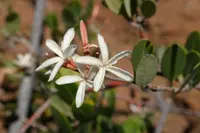
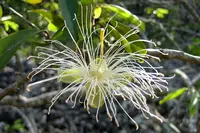
Its white, brush-like flowers with numerous stamens are adapted to attract insect pollinators, especially bees that can efficiently collect the accessible pollen in open, daytime blooms.

Botan icon

Did you know?

In some regions, Morisonia flexuosa is locally valued as a multipurpose woody species, providing not only traditional plant glue from its root bark but also durable wood and practical shade in small-scale agroforestry systems in seasonally dry tropical landscapes.

FAQs about Morisonia flexuosa

The fleshy fruits are edible and traditionally consumed, though taste and quality vary with ripeness and local form. Only eat fully ripe fruit from correctly identified plants, and avoid seeds and any plant parts that taste bitter or irritant.

Grow Healthy Plants with Botan Care

Keep your plants happy and healthy with plant identification, disease detection, and easy care guidance.

Botan plant care app — identify plants on mobile

Explore More Plants