Wind protection planning
Provide a windbreak such as a fence or shrub line on the prevailing-wind side, since strong winds can shred the large leaves and reduce fruit set on Vasconcellea cauliflora.

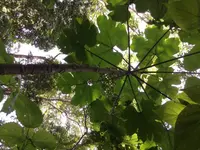
Vasconcellea cauliflora is a small, tree-like shrub in the papaya family, grown mainly for its unusual cauliflorous fruits that form along the trunk and main branches. It typically has an upright habit, soft green stems, and large, lobed leaves that give it a tropical look even at a young age.
This species is native to higher-altitude regions of South America, where it grows in mild, frost-free climates. It can be somewhat demanding outside its natural range, as it dislikes cold, waterlogged soil, and prolonged drought.
Gardeners who want to care for Vasconcellea cauliflora should provide consistent warmth, bright light, and well-drained, fertile soil. In suitable conditions it can grow relatively fast and produce distinctive, papaya-like fruits.

Care Difficulty
Moderate Care

Light Preference
Full Sun

Water Requirements
Regular Water

Temperature Preference
Tropical / Frost Sensitive

Hardiness Zone
10–12

Soil Texture
Loamy, Sandy, Organic-rich

Soil pH
Acidic (5.5–6.5), Slightly acidic (6.5–7.0)

Soil Drainage
Moist but well-drained

Fertilization
Moderate (every 2–4 weeks)
Scan your plant to receive care tips personalized for your specific plant
Available on iOS and Android
This subtropical fruit tree performs best in bright, direct sun with some protection from harsh extremes.
This species prefers evenly moist, well-drained soil that never stays saturated for long periods.
This subtropical tree needs warm, frost-free conditions to grow and fruit reliably.
This species benefits from moderately humid air but usually adapts to typical home conditions.
Vasconcellea cauliflora prefers a loose, airy substrate that drains quickly yet holds some moisture.
This species is suitable for container growing when root space, drainage, and stability are managed carefully.
Nutrient-rich soil supports steady growth and fruiting for Vasconcellea cauliflora, especially in containers or poor ground soils.
Thoughtful pruning keeps Vasconcellea cauliflora manageable, healthy, and productive.
Transplanting and occasional container repotting help this deep-rooted species develop a stable, productive framework.
Raising new plants is usually done from seed, since Vasconcellea cauliflora is not commonly multiplied by cuttings in home settings.
This subtropical species is sensitive to freezing temperatures and needs careful winter management in cool climates.

Plant Health Check
Not sure what's wrong with your plant? Check your plant's health inside the app.
This species often bears its elongated, papaya-like fruits directly on the trunk and older branches, a growth pattern called cauliflory that is unusual among fruit trees and makes harvesting easier from the main stem.
The species is native to cooler, mid- to high-elevation regions of the northern Andes, where it grows in relatively mild, frost-free climates rather than the hot lowland tropics typical of common papaya.
Plants are typically dioecious, meaning individual plants produce either male or female flowers, so fruit production usually requires both sexes to be present for successful pollination.

This species has been used in breeding programs within the Vasconcellea–Carica group because it shows greater tolerance to cooler temperatures and some diseases than common papaya, making it a valuable genetic resource for developing more resilient papaya-like crops.
The fruits are generally considered edible when fully ripe and are used locally much like papaya, often cooked or processed. Unripe fruit and latex can be very irritating, so handle carefully and avoid consuming them raw.
Keep your plants happy and healthy with plant identification, disease detection, and easy care guidance.