black pepper Care (Piper nigrum)

Also known as: Pepper plant
black pepper

About black pepper

Black pepper, Piper nigrum, is a woody climbing vine grown mainly for its spicy berries that are dried to make the familiar kitchen spice. It typically grows on supports or trees, forming long, hanging spikes of small round fruits that ripen from green to red before drying.

This species is native to the humid tropics of South and Southeast Asia but is now cultivated in many warm regions worldwide. It prefers warm temperatures, consistent moisture, and well-drained, rich soil, which makes indoor growing more demanding.

Understanding how to care for black pepper starts with recognizing that it is a tropical vine that dislikes cold, dry air, and prolonged drought. With stable warmth and moderate humidity, it can adapt to container culture in bright, filtered light.

Main Plant Requirements

Care Difficulty

Moderate Care

Light Preference

Partial Shade

Water Requirements

Keep Soil Moist

Temperature Preference

Tropical / Frost Sensitive

Hardiness Zone

12–13

Soil Texture

Loamy, Sandy, Organic-rich

Soil pH

Acidic (5.5–6.5), Slightly acidic (6.5–7.0)

Soil Drainage

Moist but well-drained

Fertilization

Moderate (every 2–4 weeks)

Get Personalized Care Plan

Scan your plant to receive care tips personalized for your specific plant

Available on iOS and Android

How to Care for the black pepper

Piper nigrum grows best in bright, gentle light that mimics filtered tropical sun.

  • Provide 4–6 hours of bright, indirect light daily, such as dappled shade under taller plants or 1–2 hours of mild morning sun.
  • Tolerates partial shade, but deep shade causes weak, leggy vines and poor fruiting; increase light gradually if growth is thin and pale.
  • Protect from strong midday and afternoon sun, which can scorch leaves; in summer, use light shade cloth or plant on an east or north-facing aspect.

This vine prefers consistently moist but not waterlogged soil around its fine, shallow roots.

  • Water when the top 2–3 cm of soil feels barely dry, using slow, deep watering so moisture reaches the root zone, then let excess drain fully.
  • In warm growing seasons, expect to water more often; in cooler months, allow the surface to dry a bit more to prevent root rot in Piper nigrum.
  • Warning signs include yellowing, soft leaves or a sour soil smell from overwatering, and limp, curling leaves with very dry soil from underwatering.

This tropical species needs warm, stable temperatures for reliable growth and pepper production.

  • Aim for 70–85°F (21–29°C) for active growth; plants slow markedly below 65°F (18°C).
  • Protect from cold; growth is damaged below about 50°F (10°C) and the plant can be killed by frost or brief drops near 32°F (0°C).
  • In hot weather above 90°F (32°C), provide extra shade and soil moisture to limit heat stress, and avoid sudden temperature swings from drafts or exposed sites.

This species prefers consistently humid air to mimic its tropical origin.

  • Aim for 50–70% humidity; prolonged levels below 40% often slow growth and reduce leaf size.
  • Dry indoor air causes brown, crispy leaf edges and stalled new shoots, especially in heated rooms.
  • Increase humidity with a nearby humidifier, grouped plants, or a pebble tray that allows evaporation without letting the pot sit in water.

Piper nigrum prefers a loose, moist, well‑aerated mix that drains freely yet holds some organic moisture.

  • Use a loamy mix built from roughly 50% peat or coco coir, 30% compost, and 20% perlite or fine bark for structure and aeration.
  • Target slightly acidic to neutral pH around 6.0–7.0, avoiding strongly alkaline substrates that limit nutrient uptake.
  • Ensure water drains through in seconds and the mix never stays soggy; standing water around roots promotes rot and weak growth.
  • Improve compact or heavy mixes by blending in additional perlite, bark, or coarse sand to create air pockets and faster drainage.

This species adapts well to container growing when its climbing habit and root needs are considered.

  • Choose a tall, heavy container that resists tipping once the vine climbs and develops dense foliage on a support.
  • Allow at least 25–30 cm diameter so roots can spread vertically and laterally without quickly circling the pot wall.
  • Use a potting mix that stays slightly moist but never waterlogged, and empty saucers promptly so runoff does not wick back into the root zone.

Piper nigrum benefits from moderate, consistent feeding during its active growing season.

  • Use a balanced liquid fertilizer (for example 10-10-10) at 1/2 strength every 2–4 weeks in spring and summer.
  • Alternatively, apply a slow-release balanced fertilizer or a thin top-dressing of mature compost at the start of the growing season.
  • Reduce feeding to once every 6–8 weeks in fall and stop in midwinter, especially for black pepper grown indoors.
  • Always water before applying fertilizer to limit root burn and avoid piling granules directly against the stem.

Pruning supports manageable size and productive growth in Piper nigrum.

  • Carry out main pruning in late winter or early spring before vigorous new growth starts.
  • Remove dead, diseased, crossing, or heavily shaded stems with clean, sharp pruning shears.
  • Shorten overly long vines to maintain a balanced framework and encourage branching and fruiting spurs.
  • Disinfect tools between plants to reduce disease spread, especially in humid, high-density plantings.

Container-grown Piper nigrum benefits from occasional repotting to maintain root health and growth.

  • Check for roots circling the pot, pushing through drainage holes, or for unexplained slow growth as signs a larger container is needed.
  • Plan repotting for late winter or early spring and expect it about every 2–3 years under good growth conditions.
  • Move the plant only 1 pot size up, keeping the root ball intact and disturbing roots as little as possible.
  • Water thoroughly after repotting, keep in bright indirect light for 7–10 days, and avoid heavy fertilization until new growth appears.

Piper nigrum is most often propagated from vegetative material rather than seed for predictable growth.

  • Take 10–15 cm semi-ripe stem cuttings in late spring or early summer, each with at least 2–3 nodes.
  • Insert cuttings into a moist, well-drained medium such as a peat-free mix with perlite, keeping at 75–85°F and high humidity.
  • Use bottom heat and a rooting hormone to improve success and maintain bright, indirect light during rooting.
  • Air layering mature stems on the mother plant is another reliable option where cutting survival is uncertain.

This tropical vine needs careful winter management in climates cooler than its native range.

  • Black pepper indoor care is essential where outdoor winter lows drop below 55°F, so move containers indoors before cold snaps.
  • Keep overwintered plants in bright, draft-free locations at 60–75°F with reduced but consistent watering.
  • In mild frost-free regions, apply a 5–8 cm mulch layer around the root zone while avoiding direct contact with the stem.
  • Avoid heavy pruning or repotting in midwinter when growth is slow and plants experience environmental stress.

Care Tips

Provide sturdy support

Install a rough-textured stake or trellis 1.5–2 m tall and loosely tie young vines as they grow, because good vertical support encourages strong climbing stems and more productive fruiting later on.

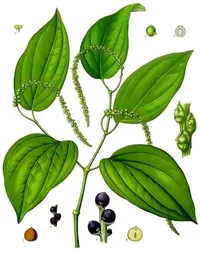
Manage aerial roots

Gently press aerial roots against the support or into a moss pole or coir totem, keeping that surface slightly moist so roots can anchor securely and improve water and nutrient uptake.

Time pruning to harvest

Plan heavier structural pruning right after the main berry harvest, removing weak, crossing, or unproductive vines so the plant can direct growth into strong new fruiting shoots for the next season.

Use light mulching

Apply a thin 2–3 cm layer of fine bark or coconut husk chips over the root zone, keeping it a few cm away from the stem, to stabilize soil moisture and protect shallow feeder roots without causing waterlogging.

Monitor for mites

Inspect the undersides of leaves weekly with a hand lens in warm, dry conditions and respond early to spider mite speckling with a gentle shower and, if needed, a labeled horticultural oil, which is a key part of disciplined caring for black pepper.

Common Pests and Diseases

Pollu beetle

This pest bores into young spikes, berries, and tender shoots, causing shedding of flower spikes and distorted or empty berries. Symptoms include shot holes on spikes and small black beetles hiding in crevices.

Solution

Collect and destroy heavily damaged spikes and prune dense, tangled growth to improve light and airflow. For repeated problems, use yellow or white sticky traps to monitor adults and apply a targeted contact insecticide or neem oil to young spikes and shoots, repeating after 7–10 days if needed.

Top shoot borer

This pest tunnels into the terminal shoot, causing wilting and dieback of the growing tip and a characteristic dead top portion. New lateral shoots may emerge below the damaged area, leading to stunted, bushy growth.

Solution

Cut off and destroy affected top shoots as soon as wilting or boring frass is noticed. Encourage strong regrowth with balanced fertilization and, in outdoor plantings, time pruning to reduce available tender shoots during peak borer activity, using a systemic insecticide only if infestations persist.

Mealybugs

These insects cluster on nodes, undersides of leaves, roots, and spikes, sucking sap and excreting honeydew that encourages sooty mold. Symptoms include sticky leaves, black fungal coating, yellowing, and poor growth.

Solution

Isolate affected plants, then dab visible insects with cotton dipped in 70% isopropyl alcohol and rinse foliage with a strong but gentle water spray. For heavier infestations, apply insecticidal soap or neem oil to all above‑ground parts every 7–10 days until no new insects appear, and check roots of potted plants for hidden colonies when repotting as part of Piper nigrum care.

Quick wilt (Phytophthora foot rot)

This disease causes sudden yellowing, leaf drop, and rapid collapse of vines, often starting with dark, water‑soaked lesions at the collar region near the soil line. In wet conditions, roots and lower stems rot and the plant may die quickly.

Solution

Remove and destroy infected vines and surface mulch, then improve drainage and avoid waterlogging or frequent shallow watering. In high‑risk rainy periods, keep the collar region dry, avoid soil mounding against the stem, and drench the root zone with a labeled phosphonate or other Phytophthora‑specific fungicide according to directions.

Fusarium wilt

This disease blocks the water‑conducting tissues, leading to gradual yellowing, leaf drop, wilting, and decline, often starting on one side of the plant. Stems may show brown streaks inside when split open.

Solution

Uproot and discard severely affected plants with as much surrounding soil as possible and avoid replanting pepper in the same spot immediately. Improve soil aeration and drainage, use clean planting material, and in beds with a history of the disease consider solarizing the soil in hot weather or rotating with non‑host crops to reduce the pathogen load.

Interesting Facts

Single species spice

Black, white, and green peppercorns are all harvested from the same species, Piper nigrum, with their different colors and flavors resulting from harvest timing and post-harvest processing rather than from different plants.

Climbing vine habit

Piper nigrum is a woody perennial climber that anchors itself to tree trunks or supports with short adventitious roots that emerge from its stem nodes and cling to rough surfaces.

Specialized pollination mode

The plant produces many small, inconspicuous flowers on narrow spikes that are mainly self-pollinated or wind-pollinated, so it does not rely on showy petals or strong scents to attract animal pollinators.

Botan icon

Did you know?

Archaeological and historical evidence shows that dried fruits of Piper nigrum were traded from India to the Mediterranean region for at least 2,000 years, and during parts of the Middle Ages black pepper was valuable enough in Europe to be used directly as a form of currency and rent payment.

FAQs about black pepper

Yellowing leaves often result from waterlogged soil, poor drainage, or nutrient imbalance, especially nitrogen or magnesium deficiency. Check the root zone, adjust watering, and consider a balanced fertilizer. Older leaves yellowing first usually indicates a normal aging process.

Grow Healthy Plants with Botan Care

Keep your plants happy and healthy with plant identification, disease detection, and easy care guidance.

Botan plant care app — identify plants on mobile

Explore More Plants