Deep root training
During the first 2–3 seasons, water less often but deeply and avoid shallow daily watering so the vine develops a deep, drought-resilient root system anchored in the gravelly or rocky layer it prefers.

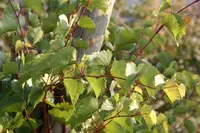
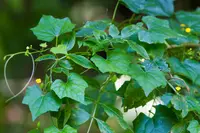
Sand grape, Vitis rupestris, is a small, scrambling grapevine native to rocky riverbanks and gravel bars in central parts of North America. It typically forms low, bushy clumps rather than tall climbing vines.
The plant has small leaves, fine stems, and clusters of dark, berry-like grapes that attract wildlife. Its naturally deep, fibrous root system gives it strong drought tolerance and resilience.
Because of this toughness, sand grape is often used in breeding and as a rootstock for cultivated grapes. It adapts best to full sun, well-drained, sandy or gravelly soil, which makes it relatively straightforward to care for sand grape in suitable outdoor conditions.

Care Difficulty
Moderate Care

Light Preference
Full Sun

Water Requirements
Moderate Water

Temperature Preference
Cold Hardy

Hardiness Zone
3–9

Soil Texture
Sandy, Loamy, Rocky

Soil pH
Acidic (5.5–6.5), Slightly acidic (6.5–7.0)

Soil Drainage
Well-drained

Fertilization
Minimal (feed rarely)
Scan your plant to receive care tips personalized for your specific plant
Available on iOS and Android
This sun-loving North American grape thrives in open, bright positions with long daily light exposure.
This species prefers consistently moist but not saturated soil, especially during its active growing season.
This hardy grape tolerates a wide temperature range but performs best under moderate seasonal conditions.
Humidity is rarely critical for this drought-adapted grape species.
This species prefers mineral, well-drained substrates and tolerates relatively poor, dry sites.
This species can be grown in containers if the pot is prepared for deep, searching roots and vigorous top growth.
Vitis rupestris is adapted to lean soils and usually needs only light, targeted feeding when cultivated.
Pruning helps manage the vigorous habit of Vitis rupestris and supports healthy, well-lit growth.
Vitis rupestris is usually grown in the ground, so care focuses on transplanting young vines rather than frequent repotting.
Vitis rupestris is commonly propagated for rootstocks using cuttings and, less often, seed.
This species is quite cold hardy and usually needs minimal winter care when planted in the ground.

Plant Health Check
Not sure what's wrong with your plant? Check your plant's health inside the app.
This species is native to central and southern parts of the United States and naturally occurs on gravel bars, rocky streambeds, and exposed riverbanks where few other grapes can persist.
Vitis rupestris played an important role in saving European vineyards from the grape phylloxera insect in the late 19th century, because its roots show strong resistance that allowed it to serve as a rootstock for grafted wine grapes.
Unlike many climbing grape species, this plant often grows as a low, bushy shrub with short, stiff shoots, a trait that has made it valuable in breeding programs aiming to control vine vigor and growth form.

Genetic material from Vitis rupestris is used in modern grape breeding to improve disease resistance and drought tolerance in commercial cultivars without significantly altering wine quality, making it a silent but important contributor to global viticulture.
This species grows moderately fast, often adding 30–90 cm of new stem growth per year once established. Growth rate depends on sun exposure, soil fertility, and water availability, and is slower in poor, dry sites.
Keep your plants happy and healthy with plant identification, disease detection, and easy care guidance.