Discreet Climbing Support
Install thin wire, nylon mesh, or a low trellis near the emerging shoots in spring so the vine can twine naturally without damaging nearby shrubs or perennials.

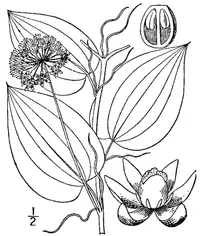
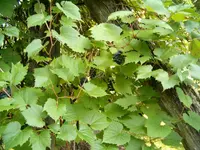
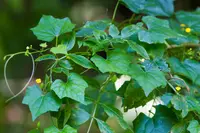
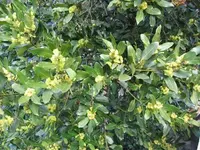
Smooth carrionflower (Smilax herbacea) is a native woodland vine found across much of eastern North America. It grows from underground rhizomes and forms twining stems that climb nearby vegetation. Leaves are broad, glossy, and heart-shaped, giving the plant a lush, green appearance through the growing season. The small greenish flowers have a strong, often unpleasant scent that attracts specific pollinating insects. This species prefers partial shade, moist but well-drained soil, and a site with natural leaf litter or organic matter. Once established, it is relatively resilient, so learning how to care for smooth carrionflower mainly involves providing suitable woodland-like conditions and space to climb or sprawl.

Care Difficulty
Moderate Care

Light Preference
Partial Shade

Water Requirements
Moderate Water

Temperature Preference
Cold Hardy

Hardiness Zone
4–8

Soil Texture
Loamy, Silty, Organic-rich

Soil pH
Acidic (5.5–6.5), Slightly acidic (6.5–7.0)

Soil Drainage
Moist but well-drained

Fertilization
Minimal (feed rarely)
Scan your plant to receive care tips personalized for your specific plant
Available on iOS and Android
This woodland vine prefers bright, indirect to dappled light that mimics a forest edge.
This species prefers consistently moist, well-drained soil rather than extremes of dryness or saturation.
This hardy perennial vine is adapted to temperate climates with cold winters and warm summers.
This woodland vine manages well in typical indoor humidity but benefits from slightly moist air.
Smilax herbacea prefers loose, humus-rich soil that mimics a moist forest floor.
This species can be grown in containers if the pot allows room for its twining stems and rhizomes.
Native Smilax herbacea typically needs little feeding in the ground, but light fertilization can support growth in nutrient-poor soils or containers.
Pruning Smilax herbacea is mainly about tidiness and access rather than plant health.
For Smilax herbacea, transplanting established plants is more common than container repotting.
Smilax herbacea can be propagated, but it is slower and less straightforward than many garden perennials.
This species is cold hardy in much of its native range and usually needs minimal winter care outdoors.

Plant Health Check
Not sure what's wrong with your plant? Check your plant's health inside the app.
The flowers emit a faint odor that resembles decaying organic matter, which helps attract certain flies and beetles that act as pollinators in its native woodland habitats.
This species produces slender, coiling tendrils from its leaf petioles that allow the vine to climb over shrubs and small trees without investing in thick, woody stems.
Its spherical fruits transition from green to deep blue-black berries as they mature, providing late-season food for birds that then disperse the seeds.

Smilax herbacea is dioecious, meaning individual plants produce only male or only female flowers, so successful seed production in the wild depends on male and female plants growing within the same local population.
This species is a twining vine that climbs by wrapping its flexible stems around nearby supports. Without vertical structure, it scrambles over nearby vegetation or along the ground, forming loose thickets rather than dense groundcover.
Keep your plants happy and healthy with plant identification, disease detection, and easy care guidance.