velvet tamarind Care (Dialium guineense)

velvet tamarind

About velvet tamarind

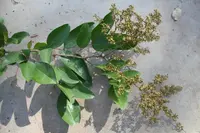
Velvet tamarind (Dialium guineense) is a tropical fruit tree from West and Central Africa, valued for its small, tangy, edible pods. It typically grows as a medium to large tree with a dense, rounded crown and fine, feathery foliage.

In its native habitat, it occurs in savanna woodlands and semi-deciduous forests, showing good tolerance to heat and seasonal dryness. The tree is generally robust but slower growing, which can make cultivation from seed a longer project.

It prefers warm conditions, ample light, and well-drained soil, so outdoor planting in frost-free climates is most realistic for those who want to care for velvet tamarind.


Main Plant Requirements

Care Difficulty

Moderate Care

Light Preference

Full Sun

Water Requirements

Moderate Water

Temperature Preference

Tropical / Frost Sensitive

Hardiness Zone

11–12

Soil Texture

Sandy, Loamy, Organic-rich

Soil pH

Acidic (5.5–6.5), Slightly acidic (6.5–7.0)

Soil Drainage

Well-drained

Fertilization

Minimal (feed rarely)

Get Personalized Care Plan

Scan your plant to receive care tips personalized for your specific plant

Available on iOS and Android

How to Care for the velvet tamarind

This tropical tree prefers strong, consistent light similar to its native woodland edge habitats.

  • Provide 6–8 hours of full sun daily once established, with some light afternoon shade in very hot, dry regions to reduce leaf scorch.
  • Young velvet tamarind trees benefit from 3–4 hours of gentle morning sun plus bright, filtered light for the rest of the day.
  • In dense shade growth becomes sparse and leggy; gradually increase light exposure over 2–3 weeks to avoid sudden sunburn on previously shaded foliage.

This species prefers steadily moist but not waterlogged soil, especially during its early growth phase.

  • Allow the top 3–5 cm of soil to dry between deep waterings, then soak the root zone so moisture reaches 20–30 cm deep.
  • During hot, dry seasons increase frequency if leaves begin to droop by midday, but avoid standing water or sour, foul-smelling soil around Dialium guineense.
  • In cooler or rainy periods reduce watering so the surface dries within 1–3 days; persistent yellowing and soft leaves usually indicate overwatering and poor drainage.

This tropical tree needs warm conditions and does poorly in prolonged cold or frost.

  • Optimal growth occurs around 75–90°F (24–32°C), with steady warmth supporting faster shoot and root development.
  • Short exposures down to about 45–50°F (7–10°C) may be tolerated, but repeated nights below this slow growth and can cause leaf drop.
  • Protect from frost, as tissue damage occurs near 32°F (0°C); in very hot periods above 100°F (38°C), use mulch and occasional light shade to limit heat stress.

This species prefers moderately humid air but usually adapts to typical household levels.

  • Aim for 50–70% humidity, especially for young velvet tamarind seedlings or container-grown plants.
  • Leaves curling, browning at tips, or dropping outside of watering issues can indicate air that is too dry.
  • Use a pebble tray, group plants together, or run a small humidifier nearby in very dry indoor climates.

Dialium guineense grows best in deep, well-aerated, freely draining mineral soil.

  • Use a sandy loam or loam with 20–30% coarse sand and 10–20% organic matter such as composted bark or leaf mold.
  • Ensure fast drainage so water does not pool; raised beds or mounded planting help prevent root suffocation.
  • Target a slightly acidic to neutral pH of about 6.0–7.0, avoiding strongly acidic or calcareous soils.
  • Improve aeration and structure in heavy ground by mixing in coarse sand, fine gravel, and stable organic material before planting.

This species can be grown in containers mainly during its juvenile stages or in dwarf form.

  • Choose a deep, heavy pot that resists tipping as the woody trunk and canopy gain height and weight.
  • Use a coarse, fast-draining mix so excess water exits quickly, preventing persistent saturation around the taproot zone.
  • Select a pot material such as thick terracotta if extra evaporation is needed, or plastic if retaining more moisture in hot, dry climates.

Dialium guineense is a slow-growing tropical tree that benefits from light, occasional feeding in cultivation.

  • Use a balanced, slow-release NPK fertilizer or well-rotted compost for young trees in poor soil.
  • Apply a light dose at the start of the warm growing season, then once more mid-season if growth is weak.
  • Dilute liquid feeds to 1/2–1/4 strength to avoid root burn, especially in containers.
  • In winter or dry dormant periods, stop feeding and rely on existing soil nutrients for caring for velvet tamarind.
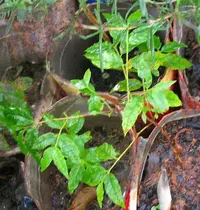
Dialium guineense usually needs only light structural pruning to stay healthy and safe.

  • Plan main pruning for late dry season or late winter before vigorous new growth begins.
  • Remove dead, diseased, crossing, or storm-damaged branches with clean, sharp bypass pruners or a pruning saw.
  • Thin congested interior shoots to improve airflow and light penetration without over-opening the canopy.
  • Limit height or spread gradually over several seasons to reduce stress and maintain a stable tree form.

This species is typically grown in-ground, so focus on careful transplanting of young trees rather than frequent repotting.

  • Transplant when roots circle the nursery pot, growth slows, or the tree becomes unstable in its container.
  • Choose late spring or early rainy season so Dialium guineense can establish before strong heat or dry periods.
  • Move up only 1–2 pot sizes or into a permanent ground site with deep, well-drained soil.
  • Water thoroughly before and after transplanting, keep the root ball intact, and apply mulch to limit moisture loss and root stress.

Dialium guineense is most often propagated from seed, with germination helped by pre-treatment.

  • Collect fully ripe, healthy pods and clean seeds soon after harvest for best viability.
  • Scarify hard seed coats lightly or soak seeds in warm water for 12–24 hours to speed germination.
  • Sow in a free-draining, sandy mix, keep at 75–85°F, and maintain steady, lightly moist conditions.
  • Provide bright, indirect light and avoid disturbance until seedlings develop several true leaves and a firm root system.

This tropical tree has low frost tolerance and needs protection in climates with cool or freezing winters.

  • In regions below 40°F, grow in large containers so plants can be moved indoors or to a heated greenhouse.
  • For in-ground trees in marginal climates, add 5–10 cm of organic mulch around the root zone, keeping it off the trunk.
  • Wrap young trunks with breathable fabric or burlap during cold snaps to reduce freeze damage and bark splitting.

Care Tips

Long‑term root space

Plan from the start to move young trees from nursery bags into progressively larger, deep containers or a ground site within 1–2 years, since restricted root space quickly stunts growth and reduces long‑term productivity when growing velvet tamarind.
Dry‑season mulching

Apply a 5–8 cm layer of coarse organic mulch around, but not touching, the trunk before the dry season to reduce soil moisture loss, buffer soil temperature, and protect fine feeder roots from stress.

Wind‑firm training

Stake only very young trees in windy sites and remove stakes after 1–2 growing seasons so the trunk can flex and strengthen naturally, which reduces the risk of snapping once the crown becomes heavier.

Targeted formative pruning

In the first 3–5 years, selectively remove crossing, steeply upright, or tightly clustered branches to build a few well‑spaced scaffold limbs, which improves air flow and light penetration for future flowering and fruiting.

Regular trunk inspection

Check the lower trunk and major limbs at least twice a year for mechanical damage, borer entry holes, or cankered bark, and promptly prune out or cleanly cut back affected wood to healthy tissue to prevent structural failure later.

Common Pests and Diseases

Scale insects

This pest attaches to young stems and leaves, sucking sap and causing yellowing, leaf drop, and general decline, especially in seedlings and young trees. Symptoms include small, brown or gray bumps that feel hard and do not brush off easily.

Solution

Prune and destroy heavily infested twigs, then wipe remaining colonies with a cloth dipped in diluted alcohol or insecticidal soap. For larger trees or repeated infestations, use a systemic insecticide labeled for woody legumes and encourage natural predators such as lady beetles by avoiding broad-spectrum sprays.

Leaf miners

These insects feed inside the leaf tissue of young foliage, creating pale, winding tunnels that reduce photosynthesis and can deform leaves on nursery stock. Symptoms include serpentine trails and small blotches that turn brown over time.

Solution

Remove and destroy leaves showing fresh mines to reduce the developing larvae population, especially on young container plants. Where damage is frequent, use yellow sticky traps to monitor adult activity and apply a targeted systemic or translaminar product at the start of new flushes of growth, following label directions.

Pod borers

These insects attack developing pods, boring into the pulp and seeds and causing premature pod drop and loss of edible or seed material. Symptoms include small entry holes, frass around pods, and shriveled seeds inside.

Solution

Collect and destroy infested and fallen pods to break the life cycle and reduce carryover between seasons. In small-scale production, bagging selected pods and using light traps for adult moths, combined with timely biological insecticides containing Bacillus thuringiensis during flowering and early pod set, can significantly limit damage.

Sooty mold

This disease develops on the sugary honeydew secreted by sap-feeding insects such as aphids and scale, coating leaves and twigs with a black, powdery film. Symptoms include reduced photosynthesis, dull foliage, and sticky surfaces that attract ants.

Solution

Focus on controlling the honeydew-producing insects with insecticidal soap or horticultural oil, then gently wash affected leaves with water to remove the mold layer. Improving airflow through light pruning and reducing ant activity around the tree helps keep sooty mold from reestablishing.

Leaf spot

This disease causes scattered brown or dark purple spots on leaves, sometimes with yellow halos, which can merge and lead to partial defoliation during wet, humid periods. Symptoms include premature leaf drop on young or stressed trees, especially in dense plantings or poorly ventilated sites.

Solution

Collect and dispose of fallen leaves to reduce fungal inoculum and avoid overhead irrigation that keeps foliage wet for long periods. In nursery or high-value plantings, improve spacing and airflow, and if leaf loss recurs each season, apply a registered copper- or chlorothalonil-based fungicide at the start of the rainy period as part of broader Dialium guineense plant care.

Interesting Facts

African velvet pods

The tree produces small, velvet-textured pods with a dry, orange pulp that is both sour and sweet and is widely eaten fresh or made into drinks in West and Central Africa.

Deep-penetrating taproot

Mature trees develop a very strong, deep taproot system that allows them to withstand seasonal drought and helps stabilize the often fragile, lateritic soils where they commonly grow.

Soil-improving leaf litter

The slowly decomposing leaves contribute calcium and other minerals back to nutrient-poor tropical soils, and in traditional agroforestry the species is valued for improving soil structure under its canopy.

Botan icon

Did you know?

In parts of West Africa, especially Ghana and Nigeria, the edible pulp of this species is such a common street snack that the tree has become a culturally familiar landmark in village centers and along roads, with specific local names and seasonal markets built around its fruiting period.

FAQs about velvet tamarind

Growth is moderate rather than fast. Young trees may add about 30–60 cm in height per year under warm, moist, fertile conditions. Poor soil, low rainfall, or cool temperatures can slow extension growth significantly.

Grow Healthy Plants with Botan Care

Keep your plants happy and healthy with plant identification, disease detection, and easy care guidance.

Botan plant care app — identify plants on mobile

Explore More Plants