


Mesh-mount support
Use fine plastic or stainless-steel mesh over the mount or basket to secure the wiry rhizomes and prevent new growths from wobbling, which reduces breakage and helps roots anchor quickly.

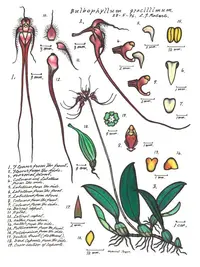
Bulbophyllum gracillimum, commonly called the wispy umbrella orchid, is a small epiphytic orchid that naturally grows on trees in humid forests of Southeast Asia. It forms compact clumps of slender pseudobulbs with thin leaves and produces delicate, dangling flower clusters that resemble tiny umbrellas in motion.
This species prefers warm, moist, and airy conditions with gentle, filtered light rather than direct sun. It can be moderately challenging, as it dislikes drying out completely yet also suffers in stagnant, soggy conditions. Understanding how to care for Wispy umbrella orchid often comes down to balancing moisture, airflow, and stable temperatures.

Care Difficulty
Hard Care

Light Preference
Bright Indirect Light

Water Requirements
Keep Soil Moist

Temperature Preference
Tropical / Frost Sensitive

Hardiness Zone
12–13

Soil Texture
Peaty, Organic-rich, Loamy

Soil pH
Acidic (5.5–6.5)

Soil Drainage
Moist but well-drained

Fertilization
Moderate (every 2–4 weeks)
Scan your plant to receive care tips personalized for your specific plant
Available on iOS and Android
This species prefers bright, filtered light that mimics dappled forest shade.
Bulbophyllum gracillimum requires consistently moist conditions without staying waterlogged.
This orchid thrives in intermediate to warm temperatures with minimal extremes.
This orchid needs consistently high humidity to flower and grow well.
Bulbophyllum gracillimum prefers a very airy, moisture-retentive yet fast-draining epiphytic-style medium.
This species adapts well to container growing when moisture and aeration are balanced.
Bulbophyllum gracillimum benefits from light, steady feeding rather than heavy applications.
Bulbophyllum gracillimum needs only light pruning to maintain health and appearance.
This orchid prefers to stay slightly crowded and dislikes frequent repotting or disturbance.
Bulbophyllum gracillimum is usually propagated by careful division of established clumps rather than from seed at home.
This tropical orchid is not frost hardy and needs sheltered conditions in winter.

Plant Health Check
Not sure what's wrong with your plant? Check your plant's health inside the app.
This species produces many slender, dangling flowers that radiate from a central point, creating an umbrella-like inflorescence that gives rise to its common name, wispy umbrella orchid.
The flowers emit a faint, often musty scent and display long, filamentous petals that mimic decaying material, adaptations thought to attract small fly pollinators in its native Southeast Asian habitats.
It is a small epiphyte that anchors itself on tree bark with compact pseudobulbs and fine roots, enabling it to exploit humid, shaded canopy niches without drawing heavily on host trees.

This species is part of one of the largest orchid genera on Earth, and its extremely narrow, thread-like petals are a striking example of Bulbophyllum gracillimum plant care evolution toward specialized insect pollination within dense tropical forests.
Lack of flowering usually relates to insufficient light, too little day–night temperature difference, or depleted nutrients. Slightly cooler nights, stable moisture, and a light, regular fertilizer program help trigger spikes and support Bulbophyllum gracillimum care.
Keep your plants happy and healthy with plant identification, disease detection, and easy care guidance.

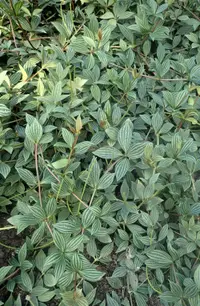
Parallel Peperomia
Peperomia tetragona
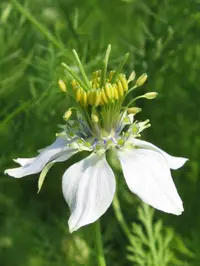
black cumin
Nigella sativa
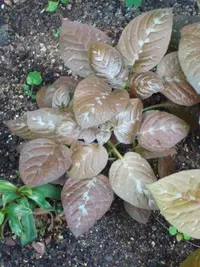
Pseuderanthemum alatum
Pseuderanthemum alatum
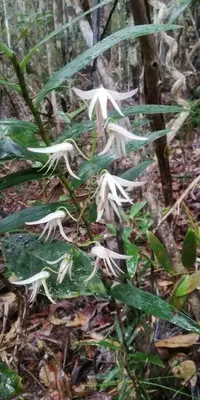
Dendrobium fractiflexum
Dendrobium fractiflexum
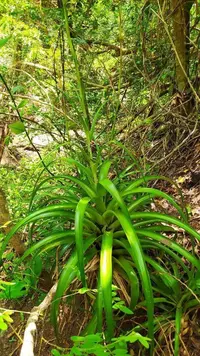
Tillandsia elongata
Tillandsia elongata
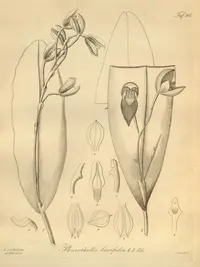
Green bonnet orchid
Pleurothallis ruscifolia

Blushing Philodendron
Philodendron erubescens 'Pink Princess'
Croton schiedeanus
Croton schiedeanus