Tillandsia turneri Care

Tillandsia turneri

About Tillandsia turneri

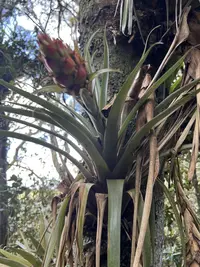
Tillandsia turneri is an epiphytic air plant that usually grows attached to tree branches rather than in soil. It forms graceful rosettes of narrow, often slightly curling leaves.

In nature it occurs in parts of northern South America, where it experiences bright light, good air movement, and regular moisture from rain and mist. Its ability to absorb water and nutrients through specialized leaf scales makes it relatively low maintenance once its basic needs are met.

Those learning how to care for Tillandsia turneri should note that it prefers bright, indirect light, periodic soaking or misting, and fast drying conditions rather than a traditional potting mix.

Main Plant Requirements

Care Difficulty

Moderate Care

Light Preference

Bright Indirect Light

Water Requirements

Moderate Water

Temperature Preference

Tropical / Frost Sensitive

Hardiness Zone

10–12

Soil Texture

Rocky, Organic-rich

Soil pH

Acidic (5.5–6.5)

Soil Drainage

Well-drained

Fertilization

Light (every 4–6 weeks)

Get Personalized Care Plan

Scan your plant to receive care tips personalized for your specific plant

Available on iOS and Android

How to Care for the Tillandsia turneri

This epiphytic air plant prefers bright, gentle light that mimics high-canopy woodland conditions.

  • Provide 6–8 hours of bright, indirect light daily; soft morning sun is suitable, but shield from harsh midday and afternoon rays to prevent leaf scorch.
  • Outdoors, place Tillandsia turneri in dappled or filtered light, such as under a tree canopy or shade cloth that blocks about 40–60% of direct sun.
  • In winter, move plants to a slightly brighter position or closer to a window, compensating for shorter days while still avoiding intense direct sun through glass.

This air plant absorbs water mainly through its leaves, so moisture timing and drying speed matter more than volume.

  • Soak or thoroughly mist until leaves are evenly wet, then allow them to dry fully within 3–4 hours; do this about 2–3 times per week in warm, dry conditions.
  • In cooler or humid seasons, reduce to about 1–2 thorough waterings per week, always allowing leaves to dry completely before the next watering to limit rot risk.
  • Signs of overwatering include limp, browning leaf bases and a sour smell; underwatering shows as curling, crisp leaf tips and overall dull, folded foliage.

This species prefers warm, frost-free conditions similar to tropical to subtropical climates.

  • Aim for 65–80°F (18–27°C) for steady growth, with good air movement to prevent stagnant, humid air around the plant.
  • Short dips to 55°F (13°C) are usually tolerated, but growth slows; prolonged exposure below 45°F (7°C) can damage tissues and should be avoided.
  • In hot weather above 90°F (32°C), increase air circulation and watering frequency, and protect from reflected heat off walls or metal surfaces to prevent leaf stress.

This species prefers moderate to high humidity to keep leaf scales functioning well.

  • Aim for 50–70% humidity; it tolerates brief dips lower if watering is consistent.
  • Crisping leaf tips, curling, or dull, rough patches indicate humidity is too low or watering is insufficient.
  • Increase humidity with frequent misting, placing near a humidifier, or grouping plants to create a slightly more humid microclimate.

Tillandsia turneri is an epiphytic air plant and should never be planted in regular potting soil.

  • Mount the plant on cork, driftwood, or inert rock, using a small amount of waterproof, non-toxic adhesive or soft wire so air can circulate freely around the base.
  • If placing in a decorative container, keep it unpotted and ensure the vessel has wide openings so the plant dries within 3–4 hours after watering.
  • Avoid peat-based mixes, compact substrates, or any material that stays wet, which can suffocate the base and cause rot.
  • A thin layer of large-grade orchid bark or lava rock beneath the plant in a dish can stabilize it while maintaining high aeration.

This air plant is suitable for loose, nontraditional container displays rather than standard pots with soil.

  • Use shallow, open containers or wire baskets that allow unrestricted air flow around all leaf surfaces and the base.
  • Choose heavier materials like ceramic or stone if the plant is mounted upright so the display remains stable and does not tip.
  • Ensure the container shape lets water drain or be poured off quickly so the plant never sits in pooled moisture after soaking or misting.

This epiphytic air plant uses nutrients efficiently and benefits from light, dilute feeding during active growth.

  • Use a balanced NPK air-plant or orchid fertilizer at 1⁄4 strength, formulated for foliar feeding.
  • Apply every 2–4 weeks in spring–summer after soaking Tillandsia turneri, then mist with the diluted solution.
  • Skip or reduce feeding to once every 6–8 weeks in fall–winter when growth slows.
  • Avoid fertilizer with urea-based nitrogen or added copper, which can damage leaves and roots.

This species needs only light grooming, focused on hygiene rather than shaping.

  • Best time for pruning Tillandsia turneri is after flowering or during active warm-season growth.
  • Remove dead, dried leaves and spent flower spikes with clean scissors, cutting close to the base.
  • Thin out decaying or crowded material to improve air flow and reduce rot risk around the plant base.
  • Disinfect cutting tools with alcohol before use to limit entry points for fungal or bacterial problems.

This air plant is usually mounted or placed loosely in containers, so transplanting focuses on repositioning rather than root disturbance.

  • Move the plant when growth is cramped, air flow is poor, or mounting materials decay or stay wet too long.
  • Ideal timing is spring–early summer to match peak growth and faster recovery from handling stress.
  • Typical transplanting frequency is every 2–4 years, or sooner if the clump outgrows its support or becomes unstable.
  • Gently detach the plant, avoid pulling on the base, then remount on inert, well-ventilated material and keep shaded for several days.

Division of offsets is the most practical way to increase this air plant for home growers.

  • Separate pups from the mother plant once they reach about 1⁄2–2⁄3 of its size, usually in spring–summer.
  • Hold both bases and twist gently to detach, avoiding tears at the junction where tissues are soft.
  • Mount each pup on bark, cork, or a wire frame, then provide bright indirect light and good air circulation.
  • Maintain high humidity (50–70%) with regular misting, allowing surfaces to dry fully between waterings to prevent rot.

This tropical air plant is frost-sensitive and needs protection in regions with cold winters.

  • Avoid exposure below 40°F and keep completely above freezing, as tissues are easily damaged by frost.
  • Move outdoor plants indoors to a bright, cool room before night temperatures drop into the low 40s°F.
  • Ensure excellent air circulation and let leaves dry quickly after misting to reduce cold-related rot risk.
  • Keep slightly drier in winter, watering in the morning so the plant dries by evening in cool conditions.

Care Tips

Improve Air Circulation

Mount plants on open structures such as wire, cork, or hardwood and avoid tight glass containers so air can move freely around all sides and dry the leaves within 2–4 hours after misting.

Use Rain or RO Rinse

Once every 4–6 weeks, give the plant a thorough rinse with collected rainwater or reverse-osmosis (RO) water to flush away mineral buildup from tap water and keep leaf surfaces functioning well.

Secure Without Suffocating

Attach plants using plastic-coated wire, soft garden wire, or elastic fishing line, making sure the tie is snug enough to hold the base steady but loose enough that it does not cut into the leaves or stem as the plant grows.

Rotate Mount Orientation

Every 2–3 weeks, rotate or slightly tilt the mount so different sides receive light and airflow, which encourages balanced rosette shape and more even pup formation when growing Tillandsia turneri.

Manage Pup Clumps

After flowering, allow 2–3 pups to form a small clump, then remove and remount any extra offsets once they reach about 1/3–1/2 the size of the parent to prevent overcrowding and shading in the center of the cluster.

Common Pests and Diseases

Scale insects

This pest attaches to leaf surfaces and leaf bases, sucking plant sap and causing yellowing, shriveling, and slow growth. Symptoms include small, rounded, tan to brown bumps that feel hard or waxy on touch.

Solution

Remove infested plants from tight groupings, then gently scrub scales off the leaves and leaf bases with a cotton swab or soft brush dipped in isopropyl alcohol. Improve air circulation, rinse the plant thoroughly with tepid water, and repeat spot treatment weekly until no new scale appears, which supports long‑term Tillandsia turneri care.

Mealybugs

These insects hide in leaf axils and between leaf layers, feeding on sap and leaving sticky honeydew that can lead to sooty mold. Symptoms include cottony white clusters, leaf distortion, and stunted growth.

Solution

Rinse the plant under a strong but gentle stream of water to dislodge visible mealybugs, then dab remaining insects with a cotton swab dipped in isopropyl alcohol. Quarantine affected plants, maintain good air movement, and repeat inspections and alcohol spot treatments every few days until the infestation stops.

Spider mites

This pest thrives on dry, stagnant air around the foliage, puncturing leaf cells and causing a silvery or dusty appearance. Symptoms include fine webbing deep in the leaf rosette, speckled leaves, and reduced vigor.

Solution

Shower the plant thoroughly, focusing on the inner leaf bases to wash off mites and webs, then increase humidity slightly and improve airflow to reduce stress. Inspect weekly and, if needed, repeat forceful rinsing; for persistent issues, use a mild insecticidal soap spray, followed by a clean water rinse after a few minutes.

Fungal crown rot

This disease develops when water remains trapped in the leaf bases for long periods, especially in cool, poorly ventilated conditions. Symptoms include browning or blackening at the center of the rosette, a soft or slimy base, and a foul odor.

Solution

Remove any affected, mushy tissue and discard severely rotted plants to protect nearby air plants. To prevent new cases, always shake excess water from the rosette after soaking or misting, dry the plant fully within 2–3 hours in bright, airy conditions, and reduce watering frequency in cool seasons.

Leaf spot fungi

This disease appears when foliage stays wet too long in low airflow, leading to localized fungal infections. Symptoms include small, dark spots or patches that may enlarge, sometimes with a yellow or pale halo around them.

Solution

Trim out the worst affected leaves with sterile scissors and increase light and airflow so foliage dries quickly after watering. Avoid evening misting, limit prolonged soaking, and if spots continue to spread, use a gentle, copper-free fungicide labeled for epiphytic bromeliads, followed by careful drying practices.

Interesting Facts

Cloud-forest specialist

This species is naturally found in humid montane and cloud forests of northern South America, often growing epiphytically on trees where air movement is strong but light is filtered by canopy cover.

Distinctive upright rosettes

It forms graceful, funnel-shaped rosettes with relatively narrow, silvery leaves that curve slightly outward, a structure that helps channel rainwater and organic debris toward the plant’s center in its native habitat.

Short-lived, post-bloom adult

Like many bromeliads, it is monocarpic, meaning each mature rosette flowers only once and then slowly dies back, leaving survival and spread to basal offsets that develop around the old growth.

FAQs about Tillandsia turneri

Lack of blooming often results from insufficient light intensity, poor air circulation, or irregular fertilizing. Stable warm conditions and a light application of low-nitrogen bromeliad fertilizer during the growing season usually encourage flowering once the plant is mature.

Grow Healthy Plants with Botan Care

Keep your plants happy and healthy with plant identification, disease detection, and easy care guidance.

Botan plant care app — identify plants on mobile

Explore More Plants